
Holy vessels
Other names: Sacred vessels, Church furnishings
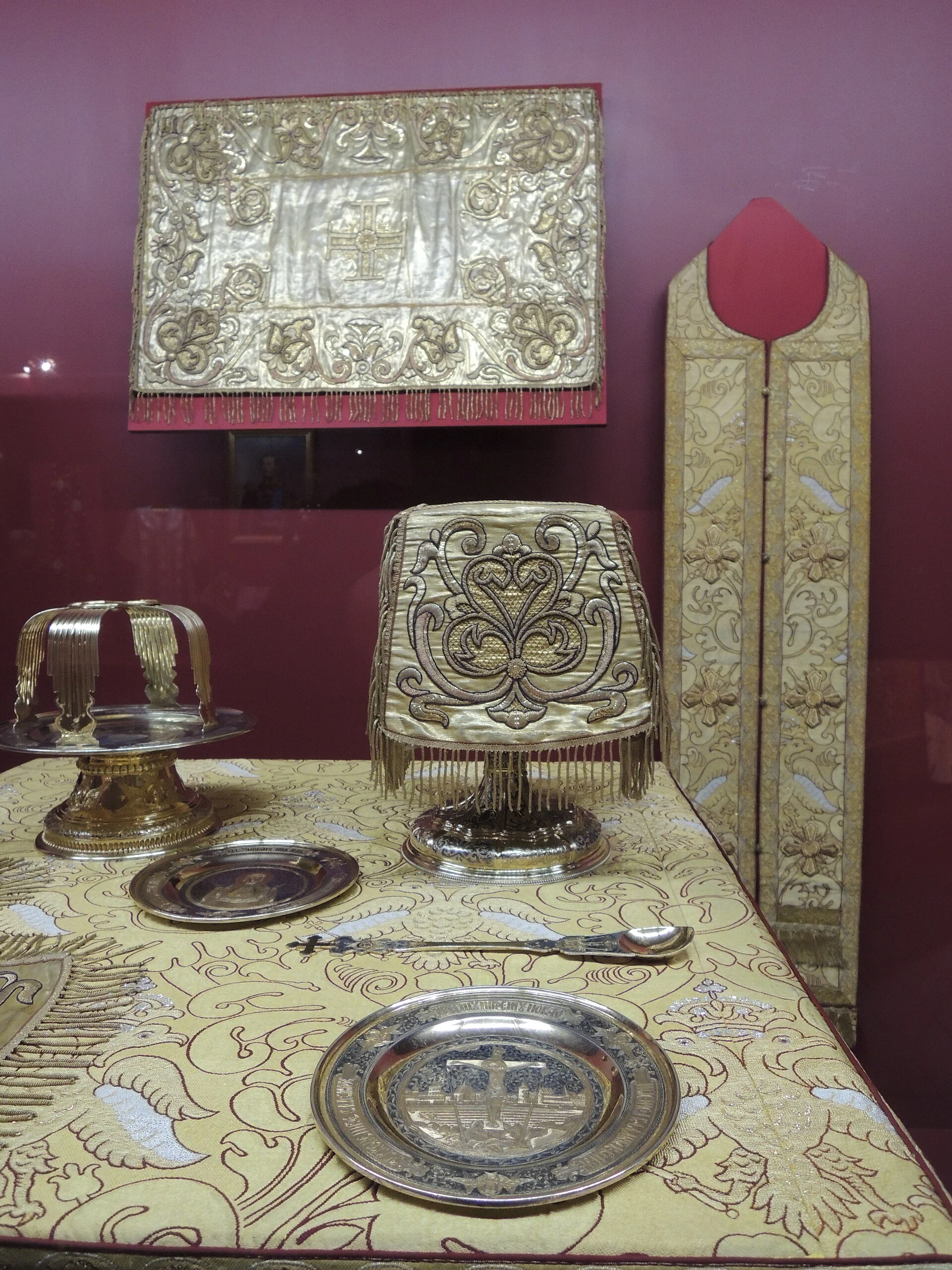
The chalice, diskos, asterisk, spear and spoon — the set used to celebrate the Liturgy, reserved for that alone.
Reading options
The holy vessels are the five objects without which the Liturgy is not celebrated: the chalice (cup), the diskos (a dish on a stem), the asterisk, the spear and the spoon. All of them are kept in the altar and are brought out of it only for the service.
Why they are not touched
These things are consecrated by a special rite and are intended for one purpose only — for the Body and Blood of Christ. They are not used in daily life, nothing extraneous is placed on them, they are not picked up without need. Only a priest and a deacon are permitted to touch them; in the altar they are cleaned and prepared by the one to whom this is entrusted, and always with a blessing.
The vessels are made of metal that does not oxidize — silver, gilded silver, more rarely gold; the inner surface of the chalice and the diskos must be gilded. The church typikon does not permit wood, glass or ordinary tableware for this.
What else lies nearby
Besides the vessels themselves, on the table of oblation there are the covers — two small cloths with which the chalice and the diskos are covered separately — and the aer, a larger cloth covering both at once. They are removed at the Liturgy of the Faithful, before the most important moment of the service, and at that time the aer is waved over the Gifts during the singing of the Creed.
Images
See also
Church utensils
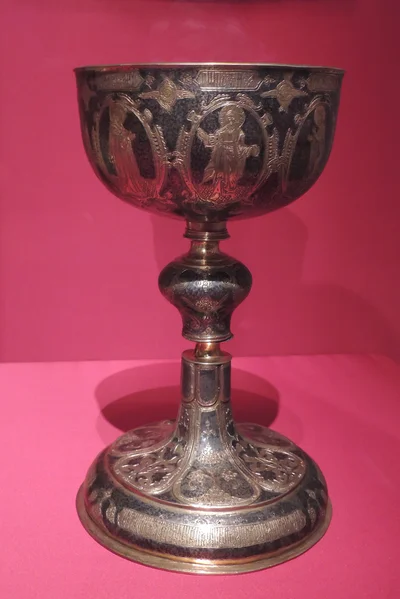
Chalice
The footed cup in which the Blood of Christ is consecrated and from which the faithful receive communion.
Church utensils
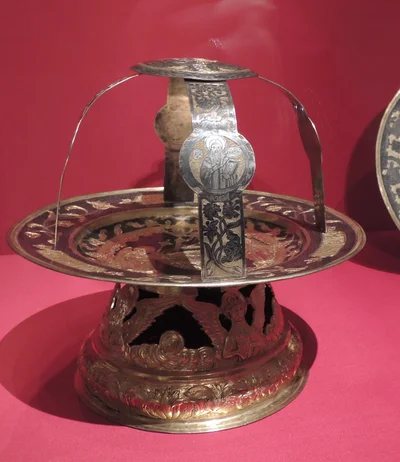
Diskos (paten)
A round footed plate holding the Lamb — the portion of prosphora that becomes the Body of Christ at the Liturgy.
Church utensils
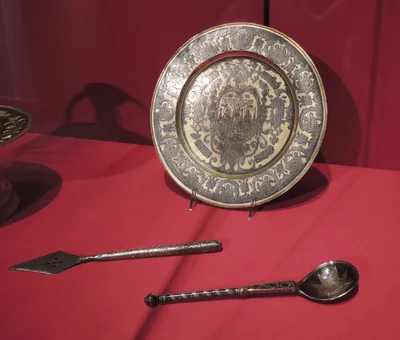
Liturgical spear
A flat double-edged knife shaped like a spearhead, used to cut the Lamb and the commemorative particles from the prosphora.
Church utensils
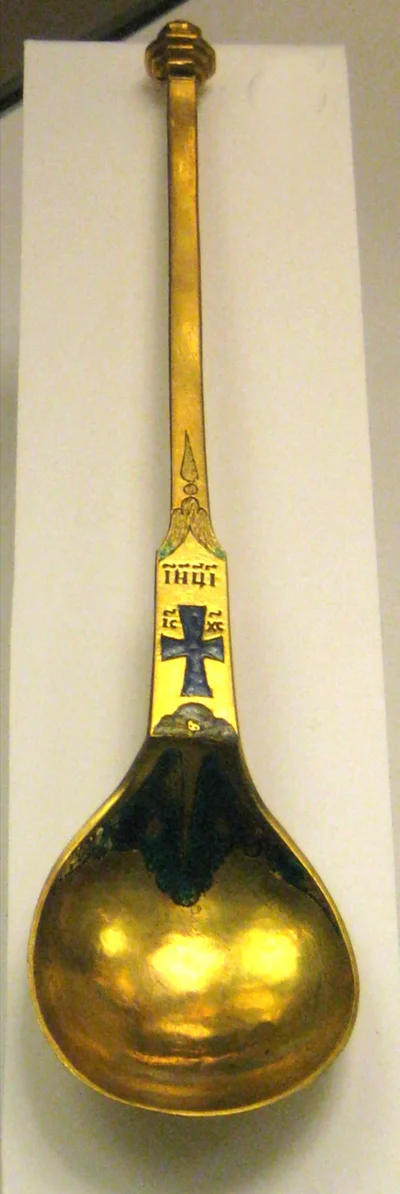
Communion spoon
The long-handled spoon, topped with a cross, used to give communion to the laity.
The church building
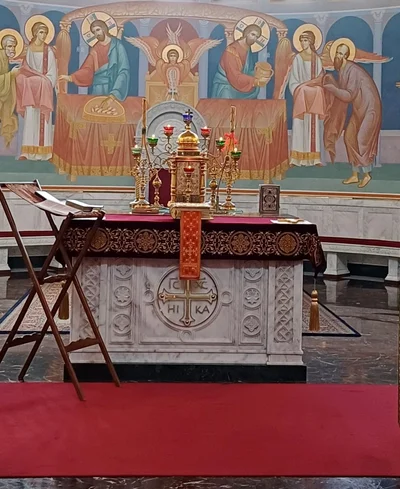
Altar table (holy table)
The four-sided table in the middle of the sanctuary on which the Liturgy is celebrated — the chief holy thing of the church.