Diskos (paten)
A round footed plate holding the Lamb — the portion of prosphora that becomes the Body of Christ at the Liturgy.
Reading options
The diskos is a dish on a short stem, standing on the altar table beside the chalice. The Greek diskos means “a round dish.” Everything that lies on it the priest places there beforehand, at the proskomedia, before the Liturgy begins.
What lies on it
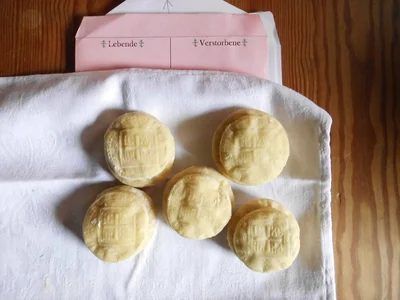
In the middle is the Lamb: the four-cornered portion cut with the spear from the first prosphora. It is this that becomes the Body of Christ at the Liturgy. To the right of the Lamb a particle is placed in honour of the Mother of God, to the left nine particles in memory of the prophets, apostles, hierarchs, martyrs and the other orders of holiness. Below, in two rows, lie the small particles taken out for the living and the departed — according to the very notes that are handed in at the candle desk.
Therefore the diskos is essentially the whole Church in miniature: Christ in the middle, around Him the Mother of God, the saints and the people prayed for today, the living and the departed mingled together.
The manger and the tomb
The diskos is interpreted in two ways, and both interpretations hold together: it is both the manger of Bethlehem where the Infant was laid, and the tomb in which the Body taken down from the cross was laid. The whole proskomedia is built on this duality — birth and burial are spoken over one and the same dish.
See also
Church utensils
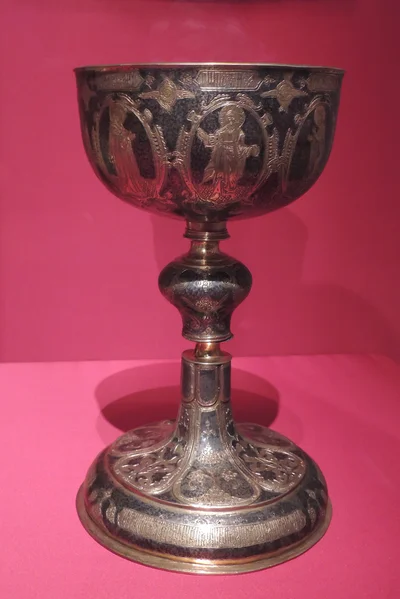
Chalice
The footed cup in which the Blood of Christ is consecrated and from which the faithful receive communion.
Church utensils
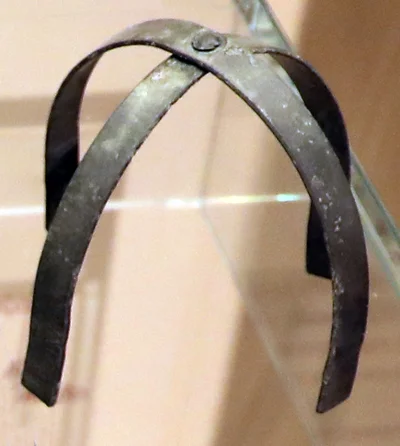
Asterisk
Two metal arcs joined crosswise, set over the diskos so the cover does not disturb the particles beneath.
Divine services
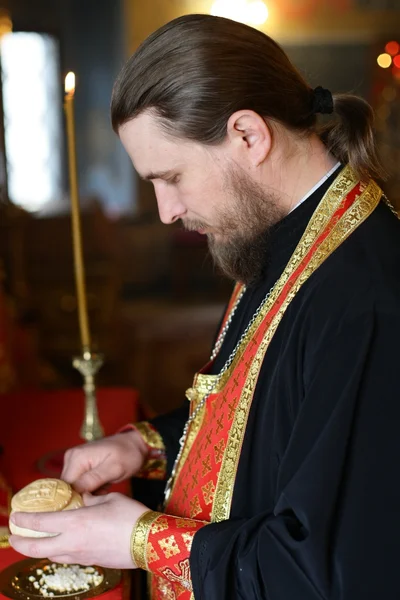
Proskomedia
The first part of the Liturgy: in the sanctuary the priest prepares the bread and wine and takes out particles for the living and the dead.