
Chalice
Other names: Cup, Holy Cup
The footed cup in which the Blood of Christ is consecrated and from which the faithful receive communion.
Reading options
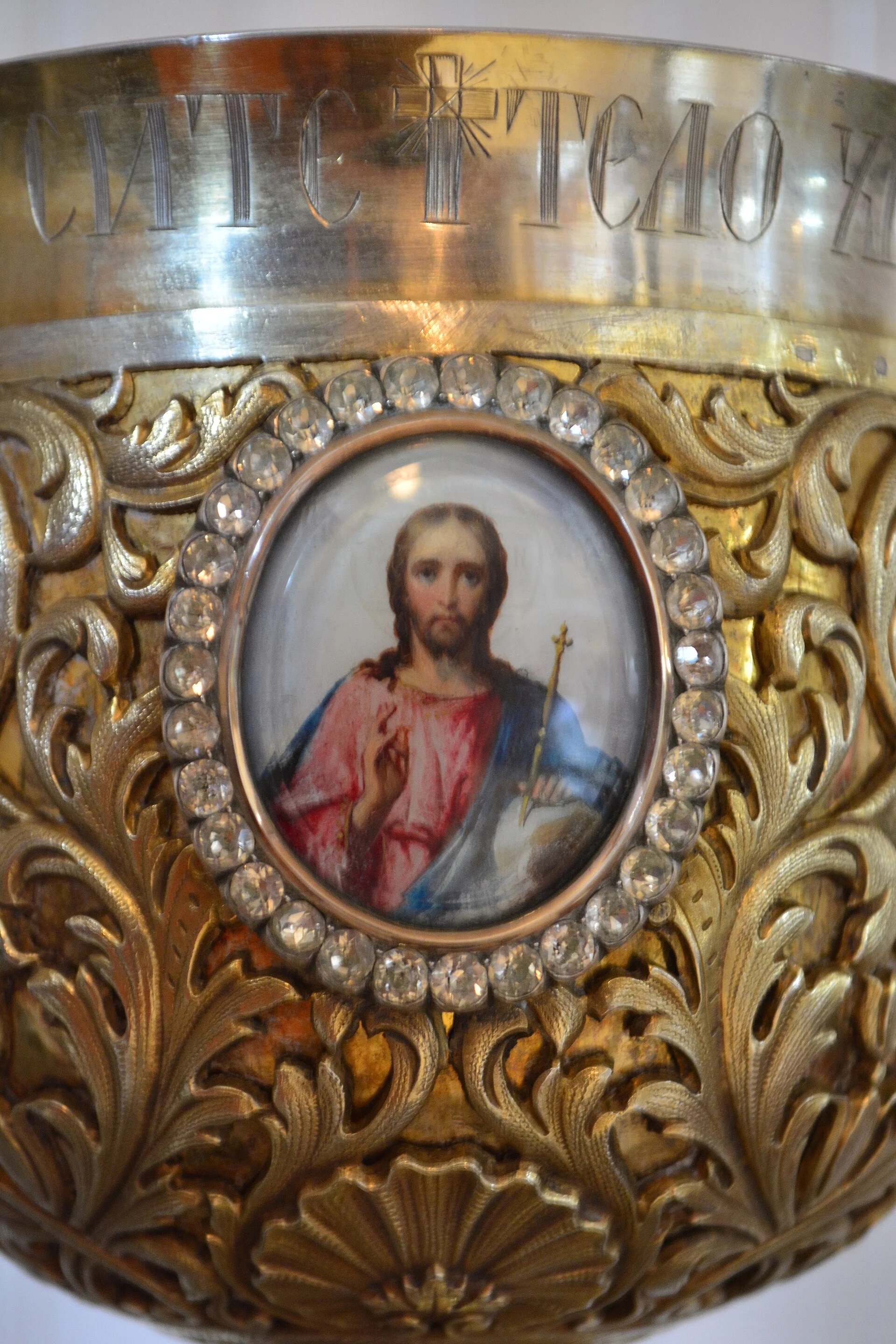
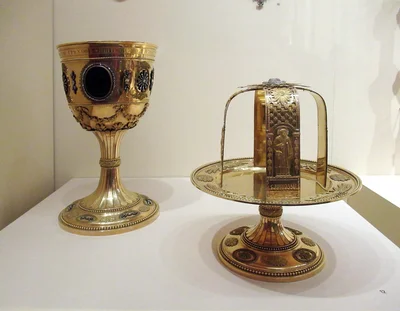
The chalice is a large cup on a high stem with a round base. The word is Greek: potirion is simply “a cup for drinking.” At the proskomedia wine and a little water are poured into it, at the Liturgy of the Faithful the main prayers are read over it, and the contents of the chalice become the Blood of Christ.
The high stem is not decoration but a convenience: the chalice must be held for a long time in one hand, raised, carried through the church. Around the cup there are usually embossed images — the Saviour, the Mother of God, John the Forerunner and the cross.
When you see it
The first time is at the Great Entrance: the priest carries the chalice, covered with a cloth, from the table of oblation across the solea into the altar, and at that time people bow their heads. The second time is when the Royal Doors open and from the ambo sounds “With the fear of God, and with faith and love, draw near”: the chalice is brought out for Communion. The third is afterward, when it is carried back to the table of oblation with the exclamation “Now and ever and unto ages of ages.”
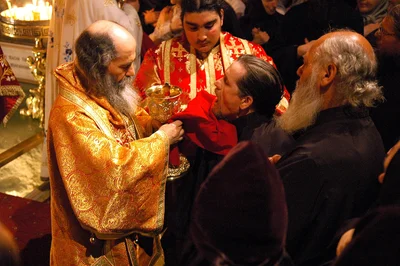
Communion is given from the chalice with a spoon; the priest and deacon in the altar receive Communion differently — the Body separately, and then from the chalice.
Images
See also
Church utensils
Diskos (paten)
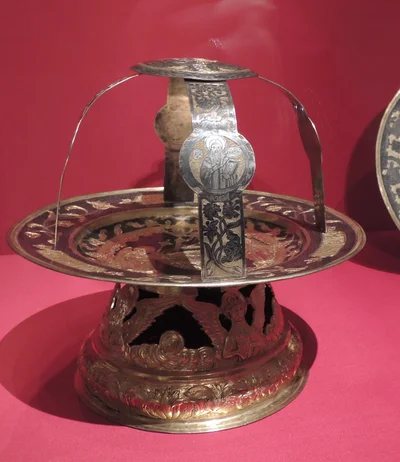
A round footed plate holding the Lamb — the portion of prosphora that becomes the Body of Christ at the Liturgy.
Church utensils
Communion spoon
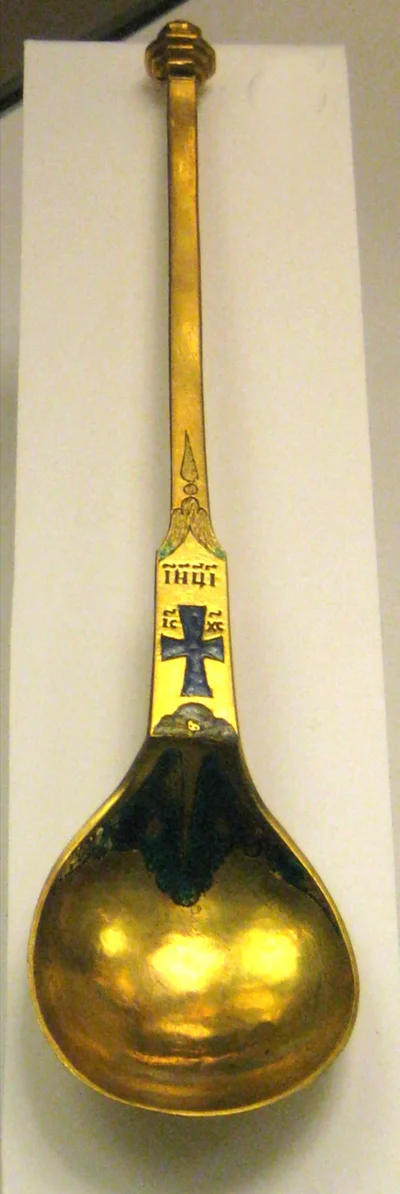
The long-handled spoon, topped with a cross, used to give communion to the laity.
Divine services
Divine Liturgy
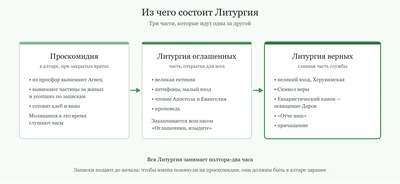
The principal service of the Church, at which the Eucharist is celebrated and the faithful receive Communion. Served in the morning, lasting one and a half to two hours.
Sacraments
Communion
The central sacrament of the Church: at the Liturgy bread and wine become the Body and Blood of Christ, received by the faithful from the chalice.
Church utensils
Holy vessels
The chalice, diskos, asterisk, spear and spoon — the set used to celebrate the Liturgy, reserved for that alone.