
Holy water
Other names: Agiasma, Epiphany water
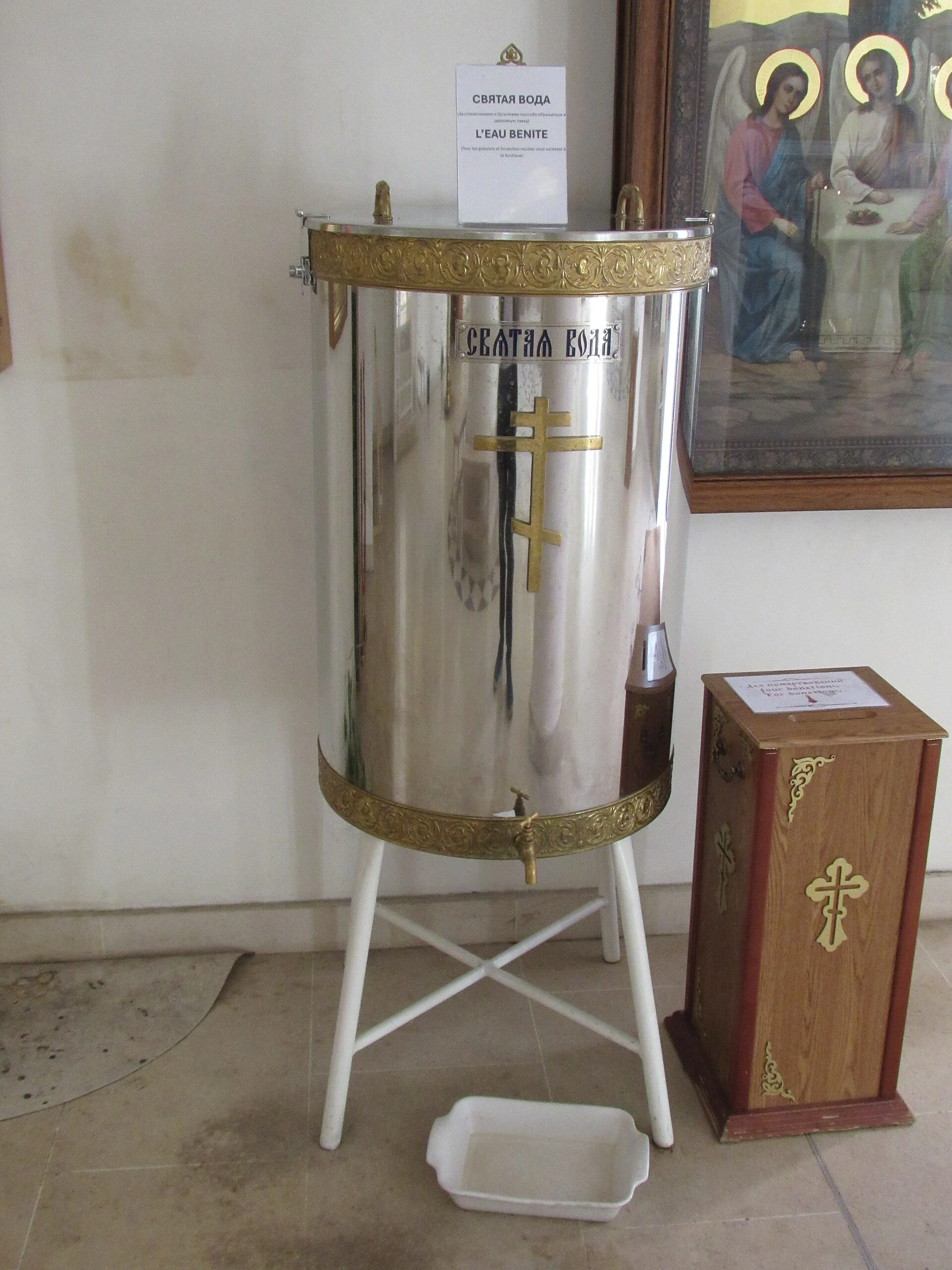
Water blessed by the Church: the Great Sanctification at Theophany, or a lesser blessing at other times.
Reading options
Holy water is ordinary water over which the rite of blessing has been read. It is sanctified by the prayer of the Church and the immersion of the cross, not by the vessel, the source or the time of day.
There are two blessings. The Great one is performed once a year, on the eve of Theophany and on the feast of Theophany itself; this water is called the great agiasma — “the great holy thing.” The Lesser one is performed on any day at the water-blessing moleben — before the start of an undertaking, on a church’s patronal feast, at the request of parishioners.
A common misconception
On the eve and on the very day of Theophany the water is blessed by one and the same rite, and there is no difference between “the water of the 18th” and “the water of the 19th.” Nor does water drawn from the tap on the night of Theophany have any special power: it is not the date that sanctifies but the rite. There is no need to stand in a queue with buckets either — what you bring home is enough, because the agiasma, if necessary, is diluted with ordinary water, and it remains holy.
How to use it
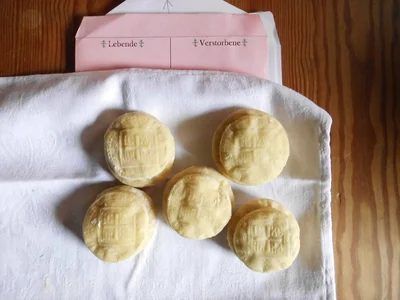
The great agiasma is drunk on an empty stomach, usually in the morning, together with a piece of prosphora and with a prayer; at other times — in illness, in anxiety, when things are hard. It is used to sprinkle the home, belongings, the bed of a sick person. It is kept in the icon corner, and it does not spoil for years — this was noticed long ago and nobody has properly explained it. Unused water must not be poured into the sink: it is poured into a river, under a tree, onto flowers — where people do not walk.
Images
See also
Divine services
Lesser blessing of water
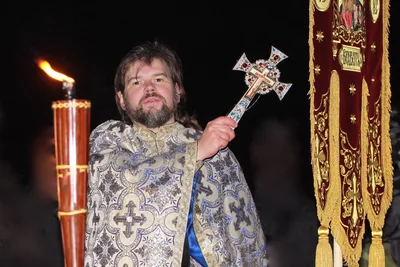
A moleben with the blessing of water — the lesser rite, which may be served on any day, unlike the great blessing performed only at Theophany.
Divine services
Moleben (service of supplication)
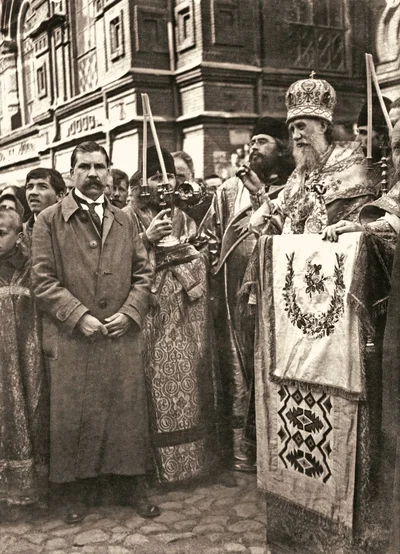
A short service of petition or thanksgiving, usually served after the Liturgy and lasting twenty to forty minutes.
Parish practice
How to prepare for Communion
Fasting, the prayer rule, confession and the Chalice itself: what is customary before Communion and how to approach.