
Prosphora
Other names: Communion bread
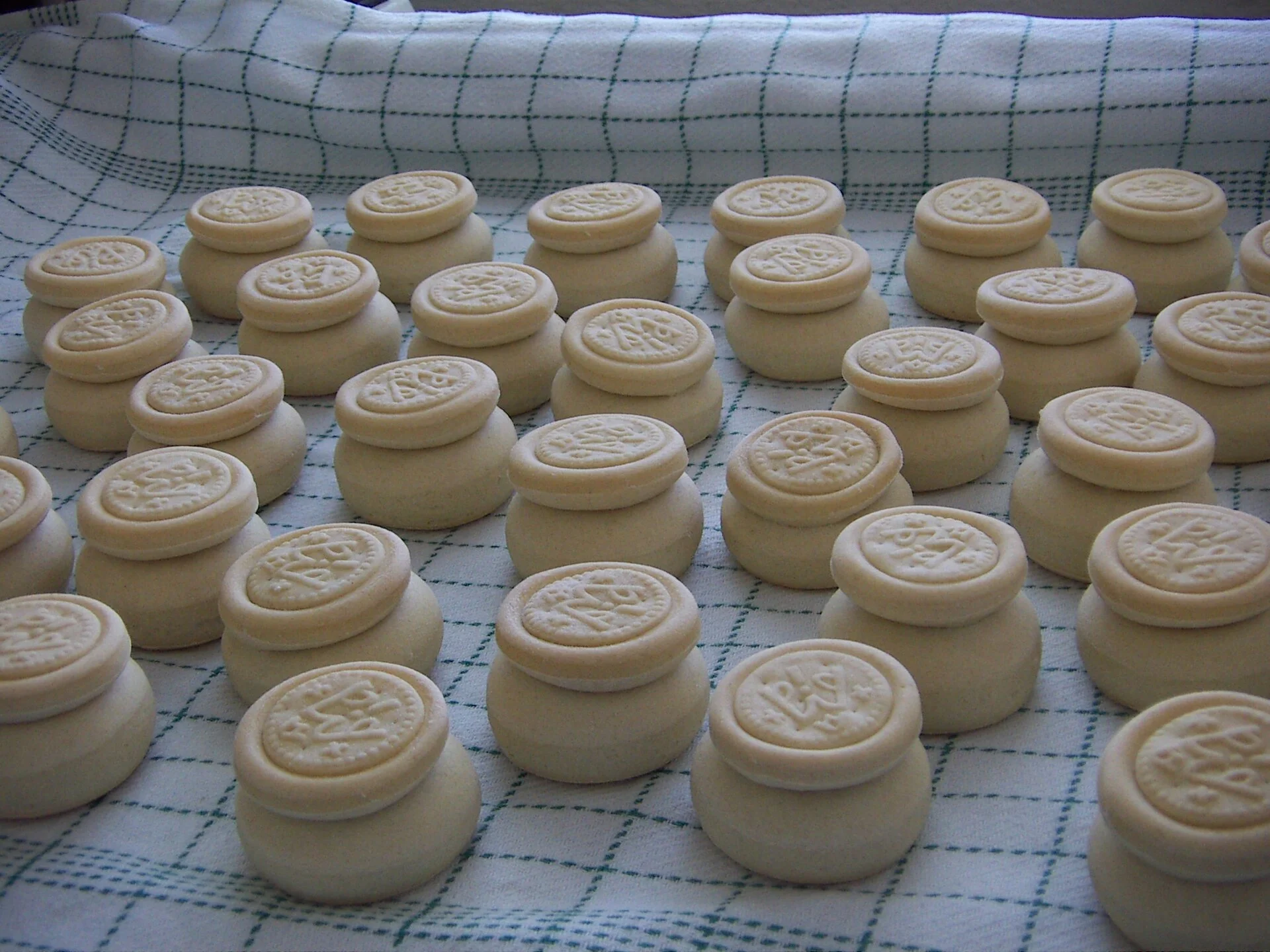
A small round two-tiered loaf stamped with a cross, used at the Liturgy.
Reading options
The prosphora is bread baked for the Liturgy: wheaten, leavened, made of two separately baked pieces joined together, with a seal stamped on top — a cross and the letters IC XC NI KA, meaning “Jesus Christ conquers.” The word is Greek, prosphora, “offering”: in ancient times the parishioners themselves brought the bread for the service from home.
The two parts are not decoration: in them one sees the two natures of Christ, divine and human, united yet unconfused. The leaven distinguishes the Orthodox prosphora from the unleavened Western bread and is likewise given a meaning — as life, as the soul in the body.
What happens to them during the service
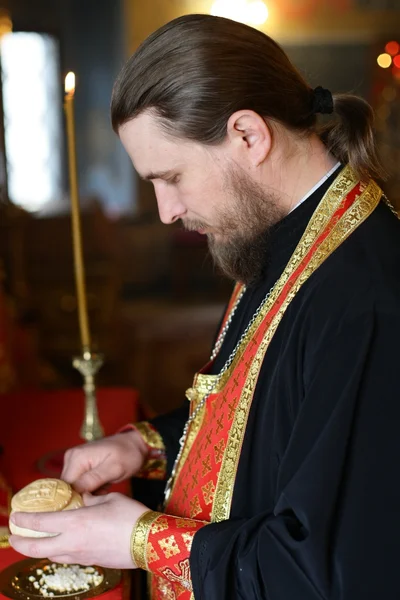
At the proskomedia the priest works with several prosphoras at once. From the first, the Lamb prosphora, he cuts out the middle — the Lamb, the very bread that will become the Body of Christ. From the second a particle is taken out in honour of the Mother of God, from the third in honour of the saints, and from the rest particles for the living and the departed, according to the names submitted on notes. All these particles are placed on the diskos around the Lamb, and at the end of the Liturgy they are lowered into the Chalice.
The prosphora that is given to you
A prosphora received in return for a note is taken home and eaten on an empty stomach, usually in the morning, washed down with holy water and after reading a prayer. It is not Communion and not a substitute for it — it is blessed bread, a sign that a name was commemorated at the service. It should not be crumbled onto the floor; if the prosphora has gone stale, it is soaked or dried, but not thrown away.
Images
See also
Divine services
Proskomedia
The first part of the Liturgy: in the sanctuary the priest prepares the bread and wine and takes out particles for the living and the dead.
Parish practice
Antidoron
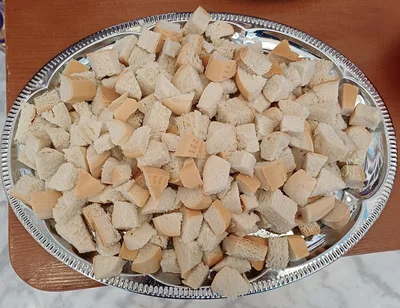
Pieces of the loaf from which the Lamb was cut, distributed at the end of the Liturgy.
Parish practice
Commemoration note
A slip of names handed in at the church shop so that those people are commemorated at the service.
Sacraments
Communion
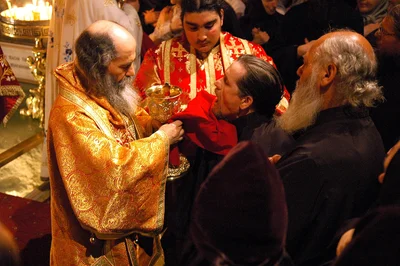
The central sacrament of the Church: at the Liturgy bread and wine become the Body and Blood of Christ, received by the faithful from the chalice.