
Inscriptions on icons
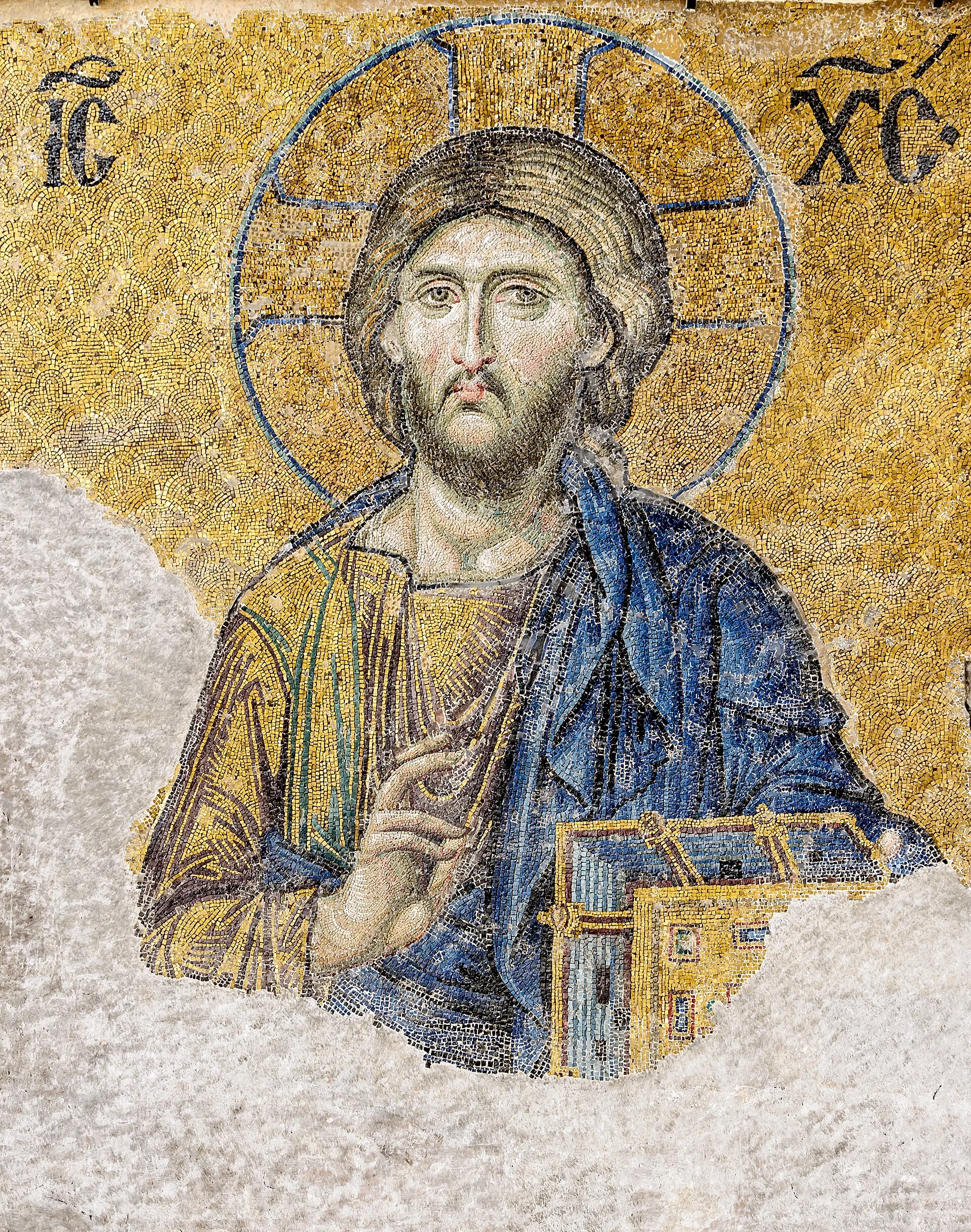
IC XC, MP ΘΥ, NIKA, Ο ΩΝ — the short inscriptions that complete an icon and let you read it rather than merely look at it.
Reading options
An icon without an inscription is considered unfinished: it is the inscription that says who is depicted and turns the image of a person into the image of a particular saint. Inscriptions are almost always abbreviated, and the abbreviation is marked by a titlo, a wavy stroke above the letters.
What is deciphered
- IC XC: Jesus Christ. The first and last letters of each word in Greek are taken (ΙΣ ΧΣ); in Slavonic writing, IS KhS. It is written at the sides of the Saviour’s head.
- MP ΘΥ: Mother of God, the Greek Μήτηρ Θεοῦ, likewise by the first and last letter. It is placed at the sides of the head of the Mother of God, usually on the background at the top.
- O ΩΝ: “He Who Is”. These three letters are placed on the visible arms of the cross inside Christ’s nimbus. A reference to the Book of Exodus: “I AM WHO I AM”, the name by which God called Himself to Moses.
- NIKA: Greek for “conquers”. The inscription of the cross: together with IC XC it reads “Jesus Christ conquers”. It is written on crucifixes and on the prosphora seal.
- TsR SLVY: the King of Glory, the inscription above the crucified Christ; beside it often stands INTsI, the Slavonic rendering of Pilate’s inscription “Jesus of Nazareth, King of the Jews”.
The names of saints
The name is written beside the figure, in a column or along the top edge, also abbreviated: STYI for “holy” (masculine), STAIA for “holy” (feminine), STL for “hierarch”, PRP for “venerable”, MCh for “martyr”, AP for “apostle”, PRO for “prophet”. Above angels stands AGGL: the word “angel” is written on the Greek model with two g’s, but is read “angel”.
On scrolls and open Gospel books actual text is written: a verse of Scripture or the words of the saint himself. They are worth reading: often this is the most substantial thing on the icon.
Images
See also
Icons
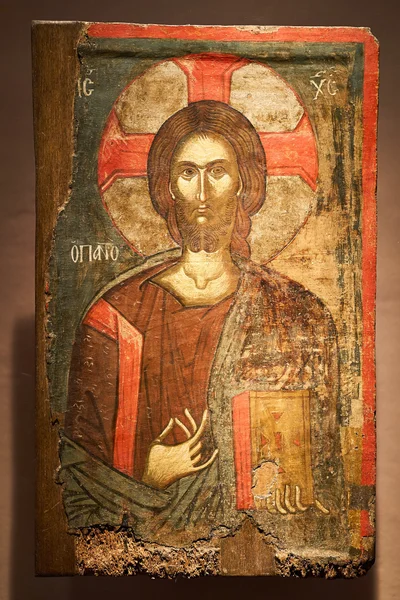
Nimbus (halo)
The circle of light around the head. Christ's always contains a cross and the letters Ο ΩΝ; everyone else's does not.
Icons
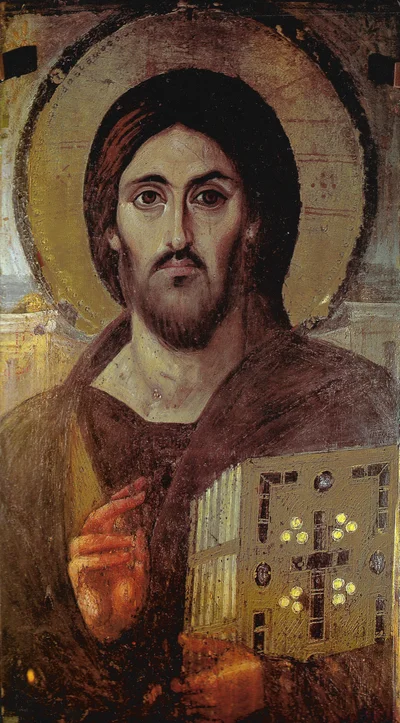
Christ Pantocrator
The principal image of Christ: the right hand blessing, the Gospel in the left. Found in the dome, to the right of the royal doors and at the centre of the deisis.
Icons
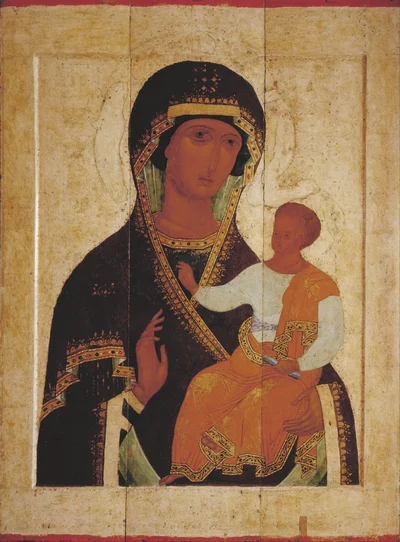
Hodegetria
The Mother of God holds the Child and points to him with her other hand — the most widespread type, including the Smolensk, Tikhvin and Iveron icons.
Icons
The iconographic canon
The rules by which an icon is painted — reverse perspective, light without a source, conventional space — and why an icon is not meant to look like a painting.