
Christ Pantocrator
Other names: Pantocrator
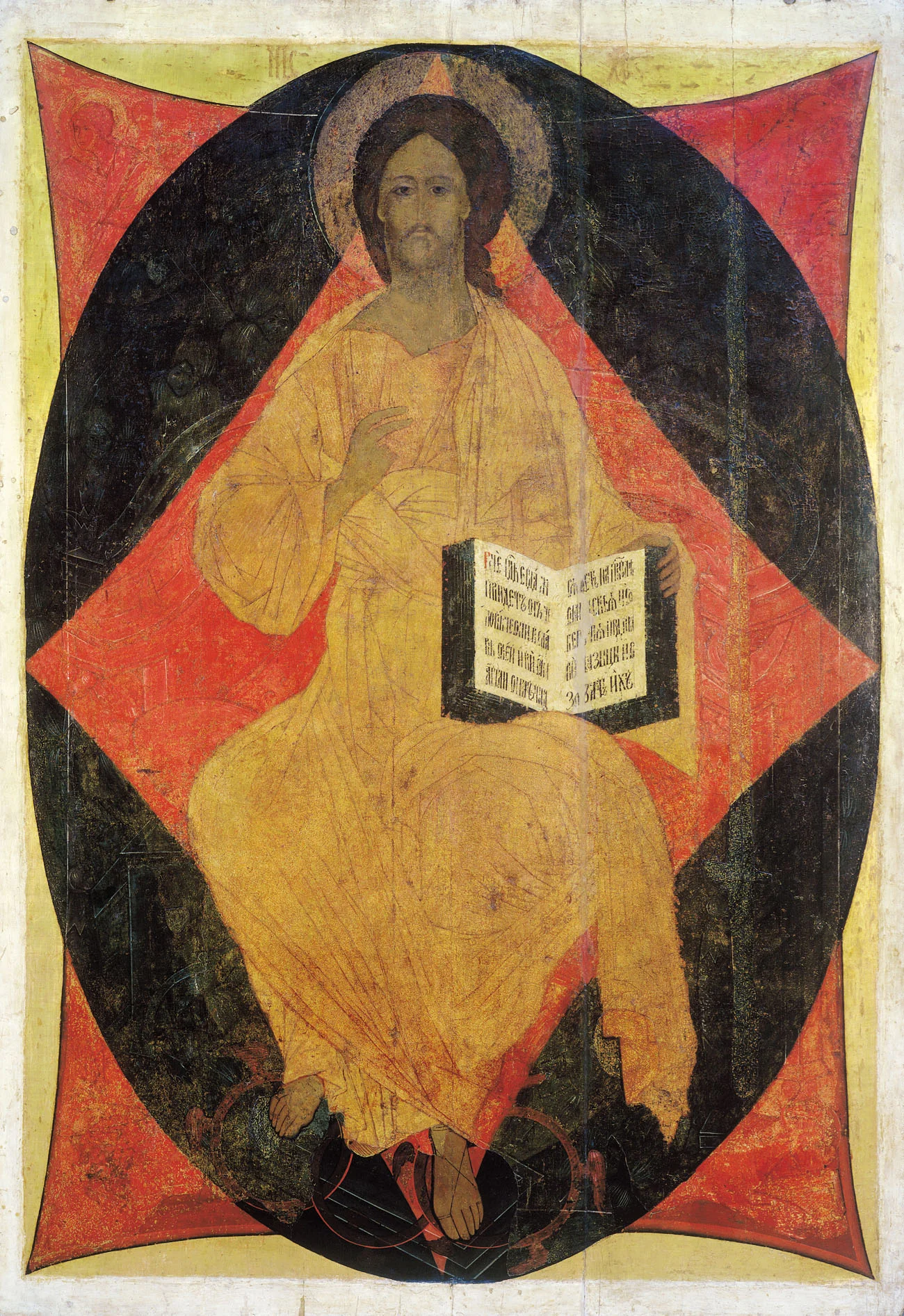
The principal image of Christ: the right hand blessing, the Gospel in the left. Found in the dome, to the right of the royal doors and at the centre of the deisis.
Reading options
“Pantocrator” (Almighty) is the translation of the Greek Pantokrator, “He who holds all things”. Christ is depicted frontally, more often half-length or on a throne: the right hand is raised in blessing, in the left is the Gospel book, open at some verse or closed, in a precious binding. The halo is always cruciform, with the letters O ΩΝ; at the sides of the head are IC XC.
Where to find Him in a church
This is the most “widely placed” image in the Church. In the dome the Pantocrator looks down on the church from above. In the iconostasis He is to the right of the Royal Doors, in the place that is therefore called the local one. In the Deisis row He is in the middle, between the Mother of God and the Forerunner. If a church has one single icon of Christ, it will almost certainly be the Pantocrator.
Stern and merciful at once
Icon painters often paint the face asymmetrically: one half calm, the other sterner. This is neither accident nor damage to the board: it shows that before the beholder is both the Judge and the Saviour at once. The best-known example is the 6th-century icon from the monastery of the Great Martyr Catherine on Sinai, the oldest surviving icon of Christ: the two halves of His face are noticeably different there.
Particular types have received their own names: Christ Enthroned, Christ in Power (Savior in Majesty), Christ in radiance, surrounded by the symbols of the Evangelists, at the centre of the Deisis tier of Russian iconostases.
Images
See also
Icons
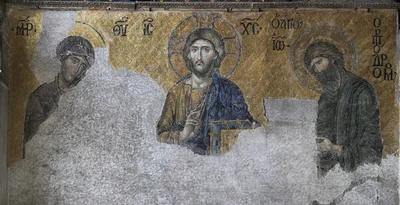
Deisis
Christ between the Mother of God and John the Baptist, both turned to him in prayer; the second tier of the iconostasis is named after it.
The church building
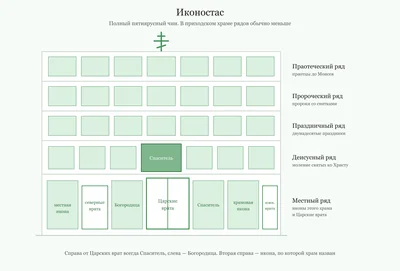
Iconostasis
The icon screen dividing sanctuary from nave; its icons are arranged in tiers, each with its own meaning.
The church building
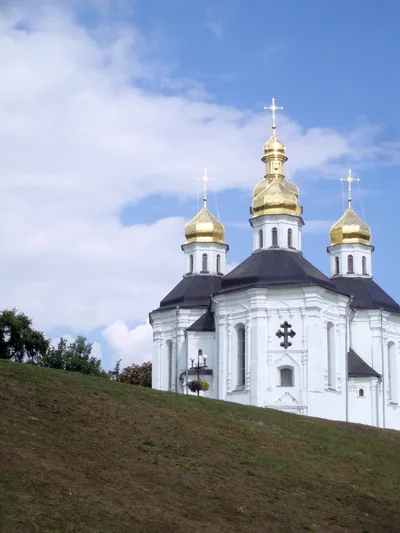
Dome (cupola)
The vault over the nave, crowned outside by a cupola and cross; the number of cupolas always carries a meaning.
Icons
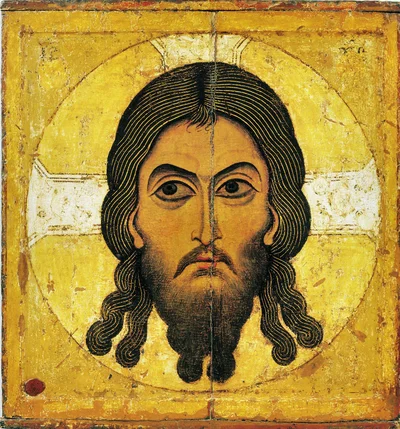
The Image Not Made by Hands
The face of Christ on a cloth — by tradition the first image of the Saviour, not made by a human hand.