
The Image Not Made by Hands
Other names: Mandylion, Holy Face on the cloth
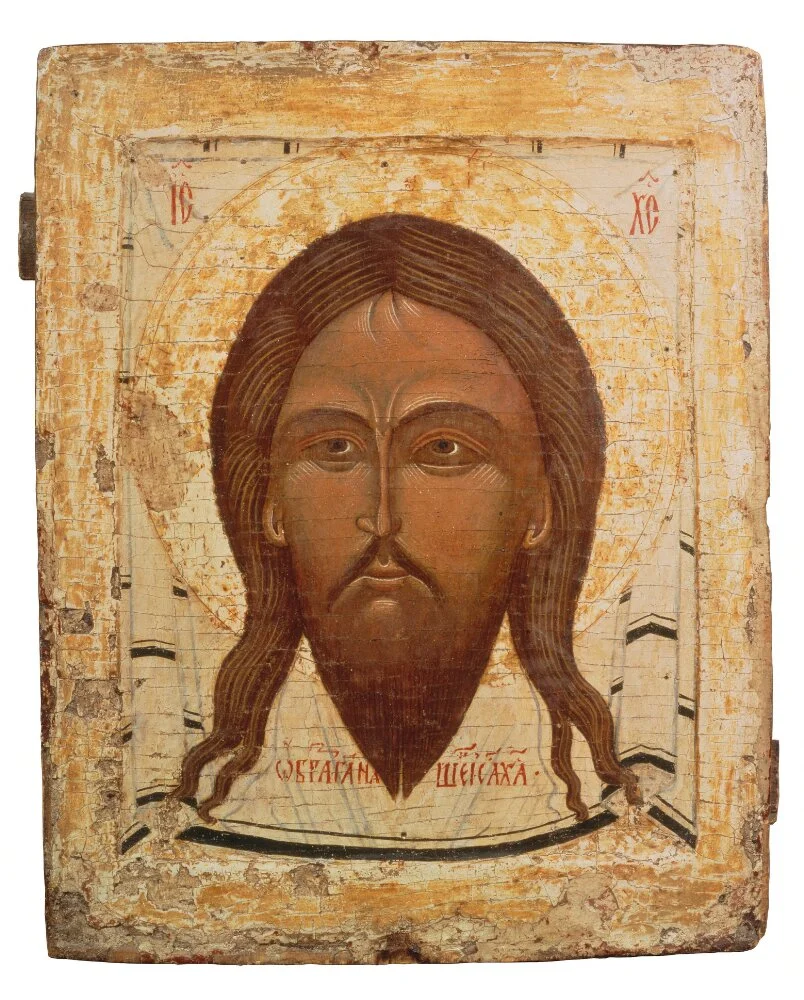
The face of Christ on a cloth — by tradition the first image of the Saviour, not made by a human hand.
Reading options
On this icon there are no shoulders, no hands, no background with buildings: only the face of Christ with a cruciform halo, most often on a spread cloth with knots at the edges. The cloth in Slavonic is ubrus, hence the second name: the Saviour on the Ubrus.
The tradition
The story is told of Abgar, ruler of Edessa, who was ill and sent for Christ. Christ did not come, but wiped His face with a cloth, and His face remained on the fabric; the cloth was brought to the sick man. The image was kept in Edessa, and in 944 it was translated to Constantinople. In memory of this event a feast was established on 16/29 August, right after the Dormition.
There is also a paired image, the Saviour on the Tile (Spas na chrepii): according to tradition, the face was imprinted as well on the tile with which the cloth was covered in a niche in the wall. On such icons the face is painted without the cloth, directly on the background.
Why this image is so important
In the disputes about icons it was cited most often: if the first image of Christ was made by Christ Himself, the question of the permissibility of icons is settled not by human reasoning. For the same reason the Image Not Made by Hands was for centuries placed on military banners; hence the very word “khorugv” as a church banner, and the custom of placing this image over gates and entrances.
Images
See also
Icons
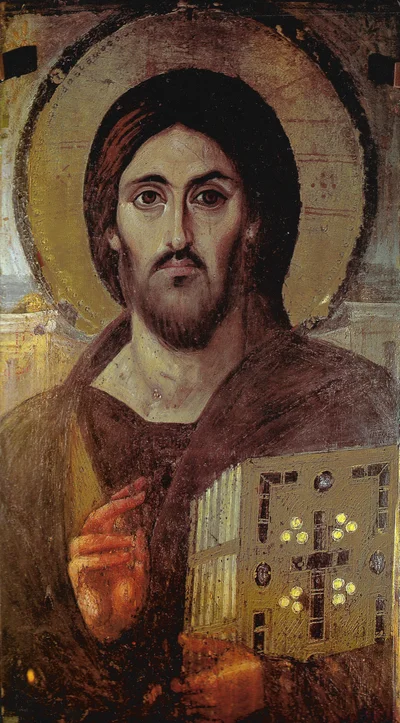
Christ Pantocrator
The principal image of Christ: the right hand blessing, the Gospel in the left. Found in the dome, to the right of the royal doors and at the centre of the deisis.
Icons
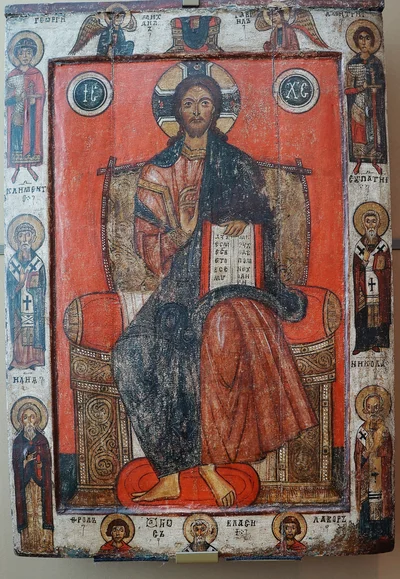
Icon
An image of Christ, the Mother of God, a saint or a sacred event, made for prayer — not a painting and not a portrait.
Icons
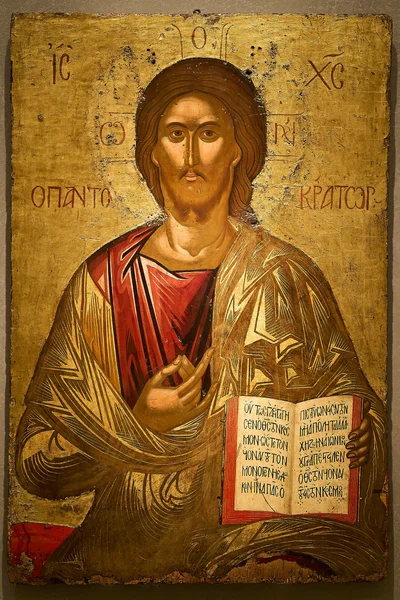
Inscriptions on icons
IC XC, MP ΘΥ, NIKA, Ο ΩΝ — the short inscriptions that complete an icon and let you read it rather than merely look at it.
Icons
Veneration of icons
The Church honours icons but does not pray to the board: the honour given to the image passes to the one depicted. Worship as such belongs to God alone.