
Iconostasis
The icon screen dividing sanctuary from nave; its icons are arranged in tiers, each with its own meaning.
Reading options
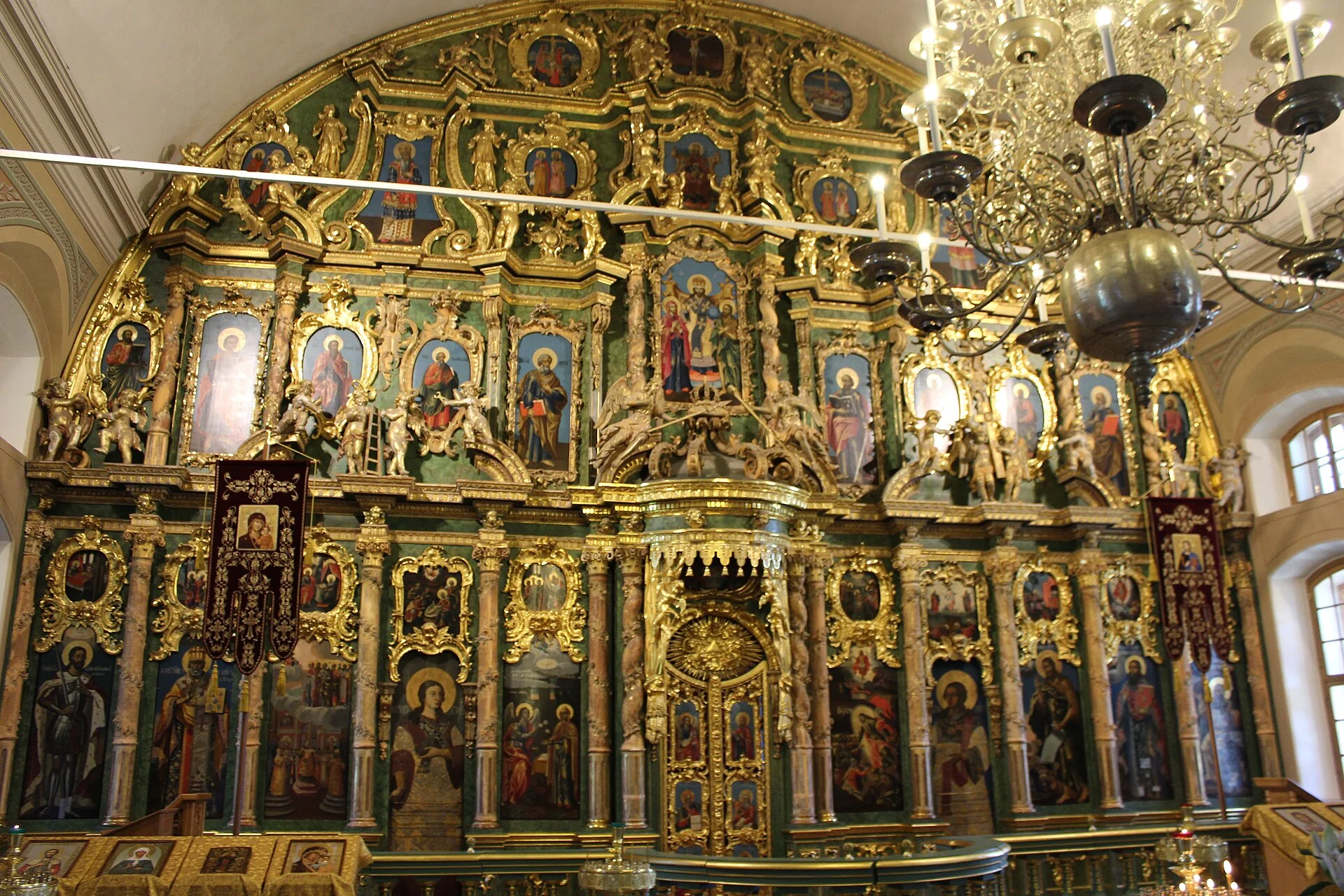
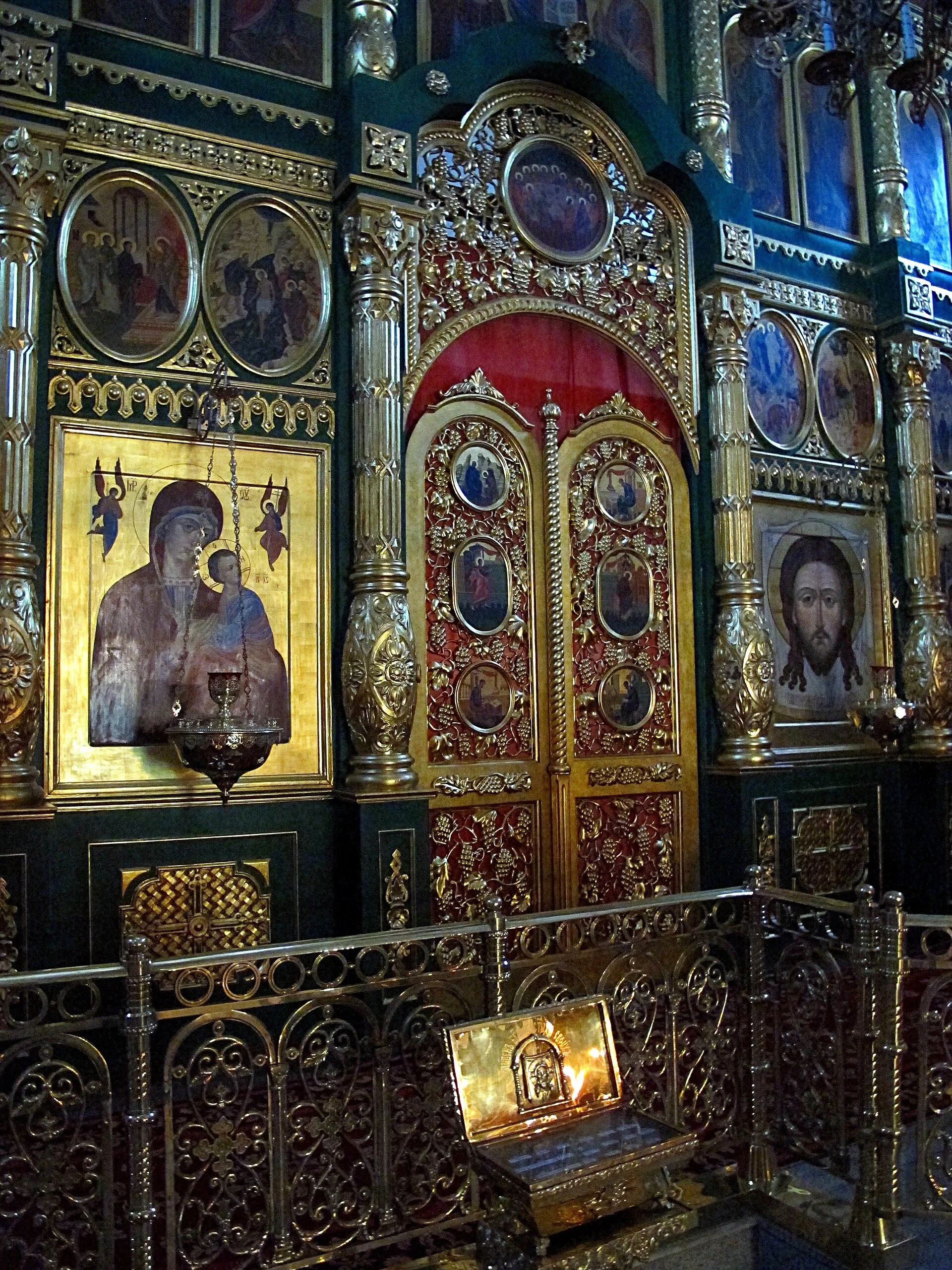
The iconostasis is a wall of icons before the altar. It has three doors: the Royal Doors in the middle and the Deacon’s Doors at the sides. Its meaning is twofold: the altar is hidden but not concealed — instead of a blank barrier, those who are present in the altar stand before a person, and one can look at them throughout the service.
The local row — the lowest
It is at eye level, and its rule is not broken anywhere: to the right of the Royal Doors is the icon of the Saviour, to the left the icon of the Mother of God. The next icon to the right, beyond the Saviour, is the church’s own: it shows the feast or saint to whom the church is dedicated. By it one can tell what the church is called without asking anyone. Further come the icons of saints especially venerated in those places — hence the name of the row.
The rows above
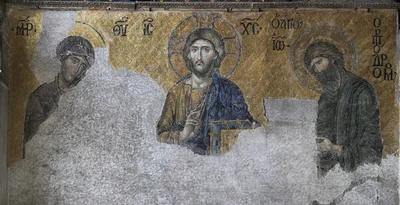
The Deesis row is the chief one in meaning. In the middle is the Saviour enthroned, and turned to Him in prayer from both sides are the Mother of God and John the Forerunner, behind them the archangels, apostles, hierarchs. “Deesis” in Greek means “supplication”: the whole row is the Church praying for the world.
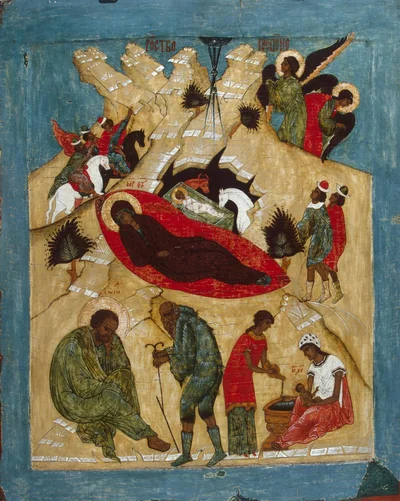
The festal row shows the Twelve Great Feasts, arranged in the order of the church year. The prophets’ row shows the prophets with scrolls on which their predictions about Christ are written; in the middle is the Mother of God with the Child, because it was precisely this that they foretold. The forefathers’ row shows the forefathers from Adam to Moses, with the Trinity in the centre. At the top the iconostasis is crowned by a cross with the Crucifixion.
The order of the two middle rows differs from church to church: in some the festal row is below the Deesis, in others above. This is not a mistake; both arrangements are old.
An ordinary church has fewer rows
The five-tier iconostasis is the tall iconostasis of the great Russian cathedrals of the 15th–17th centuries. In a parish church there are more often one or two rows, and sometimes simply a few icons on a low screen. That is how it was in the beginning: the ancient altar barriers were made low, and the altar table behind them remained visible. Such an iconostasis is not considered incomplete — the local row is what matters, and it is always there.
Images
See also
The church building
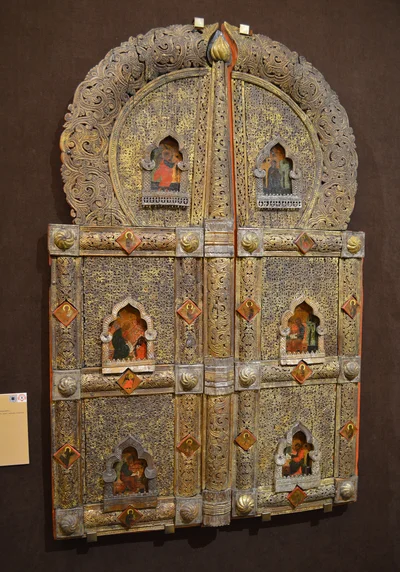
Royal Doors
The double doors in the centre of the iconostasis leading to the holy table; used only by clergy at set moments of the service.
The church building
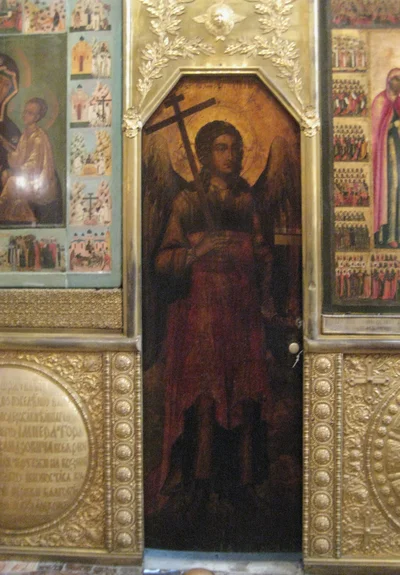
Deacon's Doors
The single side doors of the iconostasis, north and south, used by deacons and servers.
Icons
Deisis
Christ between the Mother of God and John the Baptist, both turned to him in prayer; the second tier of the iconostasis is named after it.
Icons
Feast icon
An icon of an event rather than a person — the festal tier of the iconostasis, and the icon laid on the analogion on the day itself.
The church building
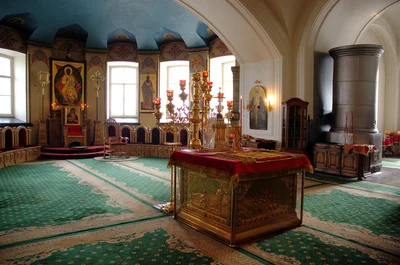
Altar (sanctuary)
The eastern part of the church behind the iconostasis, containing the holy table; entered only by clergy and servers.