
Phelonion
Other names: Chasuble
The priest's outermost liturgical garment: a wide sleeveless mantle covering the whole body.
Reading options
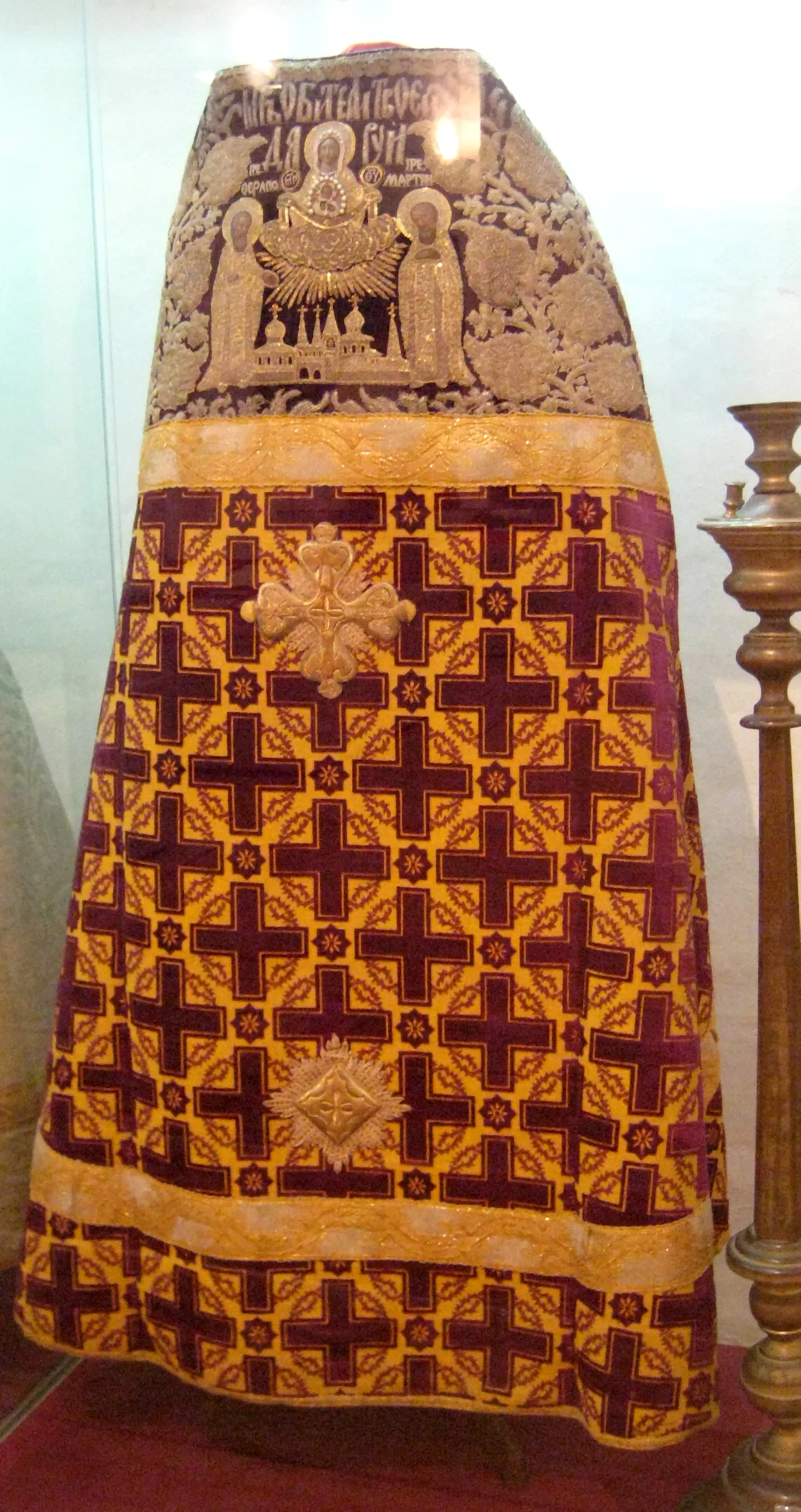
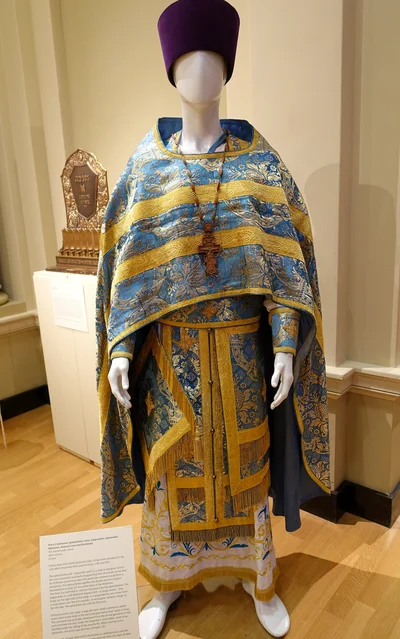
The phelonion is that wide sleeveless vestment in which the priest stands at the altar table. In front it is shortened so that it does not hinder the hands; behind it falls almost to the floor. In conversation it is this that is called the riza: “to serve in the rizas,” “to vest in the riza.”
What it signifies
The interpretation comes from the Passion: the phelonion recalls the purple robe — that mocking royal garment in which the soldiers clothed Christ before the crucifixion. That is why, putting it on, the priest reads the verse “Thy priests shall be clothed with righteousness.”
The absence of sleeves is understood in the same way: the hands are free and open, and the one serving has nothing of his own with which to act.
What it looks like
On the back of the phelonion a cross is embroidered, and below it an eight-pointed star. The colour changes with the days of the year, as with the rest of the vestments. A bishop has no phelonion — he has the sakkos instead; but the ancient episcopal phelonions (the polystavrion, the “many-crossed”) are preserved on icons of the ancient hierarchs.
Images
See also
Vestments
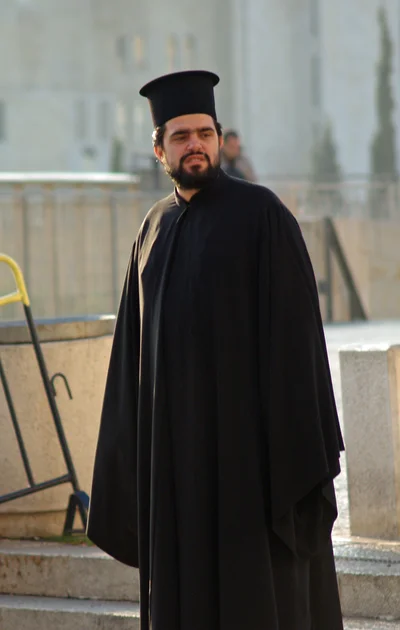
Riassa (outer cassock)
The wide outer garment with long flaring sleeves worn over the podriasnik.
Vestments
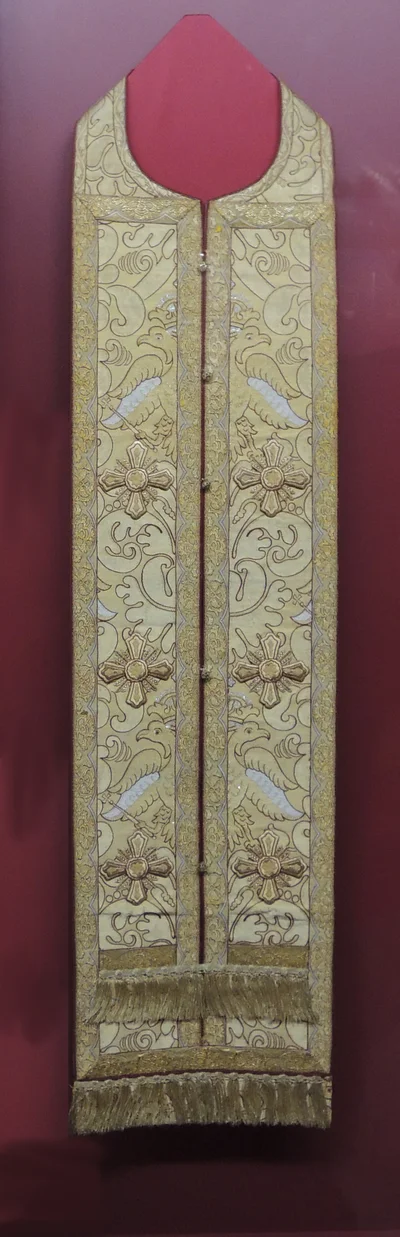
Epitrachelion
A long stole around the neck — the chief sign of priesthood; no service is served without it.
Vestments
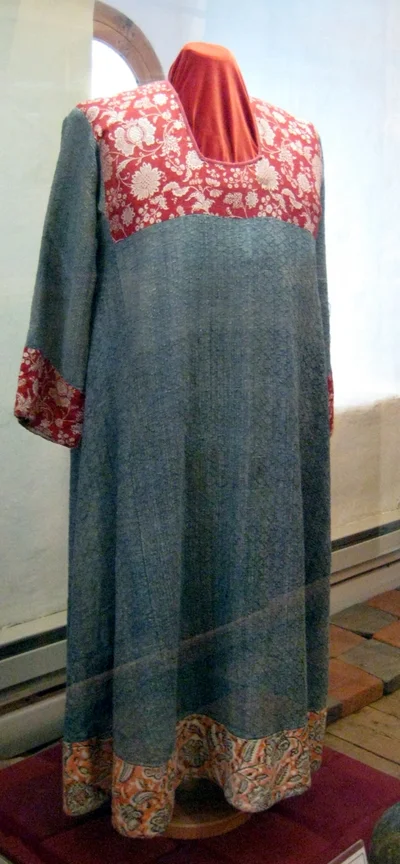
Podriznik
The priest's undermost vestment — a sticharion worn beneath the phelonion or sakkos.
Vestments
Vestments
The garments worn for divine service. Deacon, priest and bishop each have their own set, so the vestments show at a glance who is serving.