
Epitrachelion
A long stole around the neck — the chief sign of priesthood; no service is served without it.
Reading options
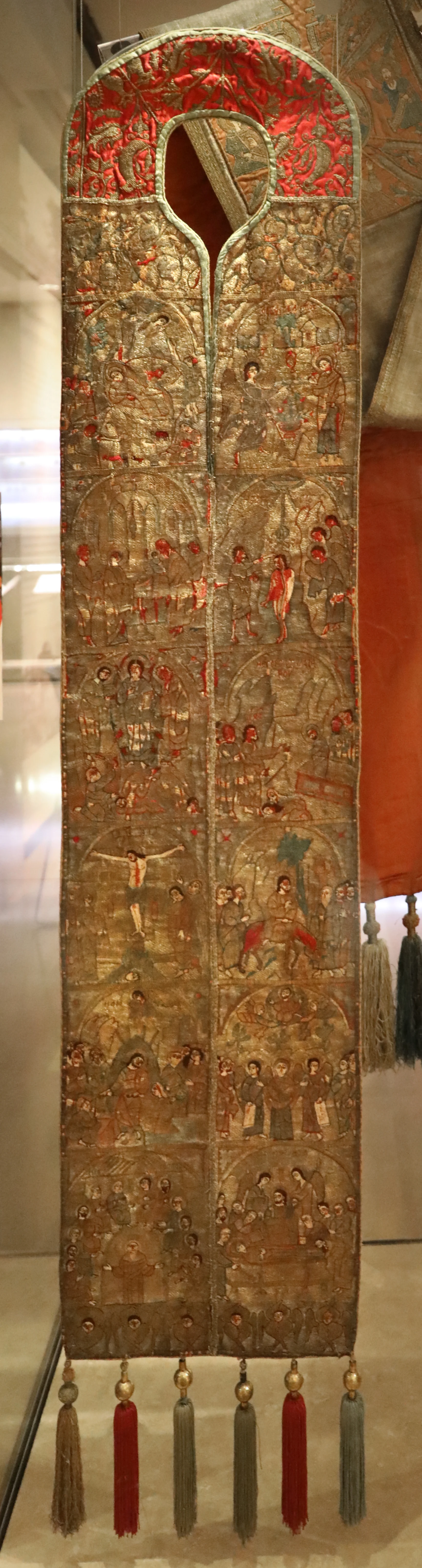
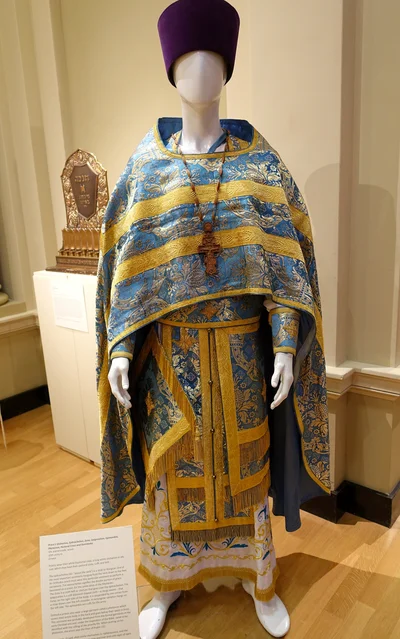
The epitrachelion is placed around the neck and descends to the hem in two sewn-together strips. It is not an ornament or an incidental detail: the epitrachelion is the sign of the grace of the priesthood, and the service is impossible without it. Even where a priest does not vest fully — at confession, at a baptism in a hospital, at a moleben in a home — he is invariably in the epitrachelion.
Where it comes from
When a deacon is ordained priest he is not given a new ribbon: the same orarion that he wore on his shoulder is rearranged so that both ends hang in front. Hence the appearance of the epitrachelion — an orarion sewn double. The meaning is direct: what the deacon carried on one shoulder, the priest carries on both — the ministry has become twice as heavy.
On the epitrachelion crosses and seven buttons are usually sewn — these are interpreted as the seven Sacraments that the priest is henceforth charged to perform.
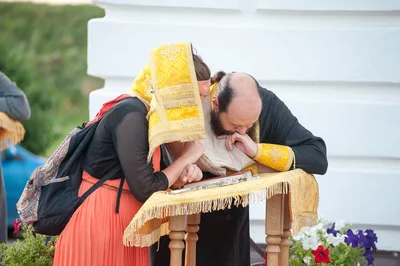
At confession the priest covers the penitent’s head with the epitrachelion and reads over it the prayer of absolution.
Images
See also
Vestments
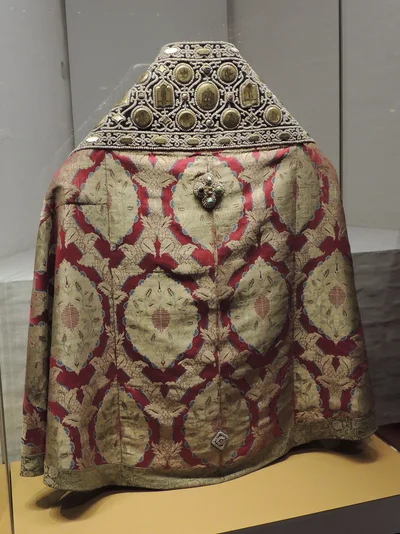
Phelonion
The priest's outermost liturgical garment: a wide sleeveless mantle covering the whole body.
Sacraments
Confession
The sacrament of repentance: a person names his sins aloud before God, with the priest as witness rather than judge, and receives forgiveness.
Clergy and ranks
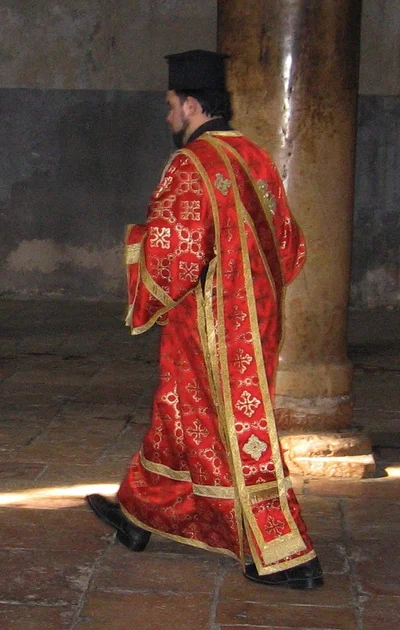
Priest
The second degree of priesthood: celebrates the Liturgy and all sacraments except ordination. Recognised by the epitrachelion and pectoral cross.