
Vestments
Other names: Liturgical vestments, Robes
The garments worn for divine service. Deacon, priest and bishop each have their own set, so the vestments show at a glance who is serving.
Reading options
Vestments are not a uniform or a livery. A priest changes his clothes not so as to be seen from afar, but because he serves not on his own behalf: for the time of the service the man steps, as it were, into the shadow, and what remains is the ministry entrusted to him. That is why these garments are not bought “to one’s own taste” — they are blessed, and put on with prayer, reading over each one its own verse from the Psalter.
Three degrees — three sets
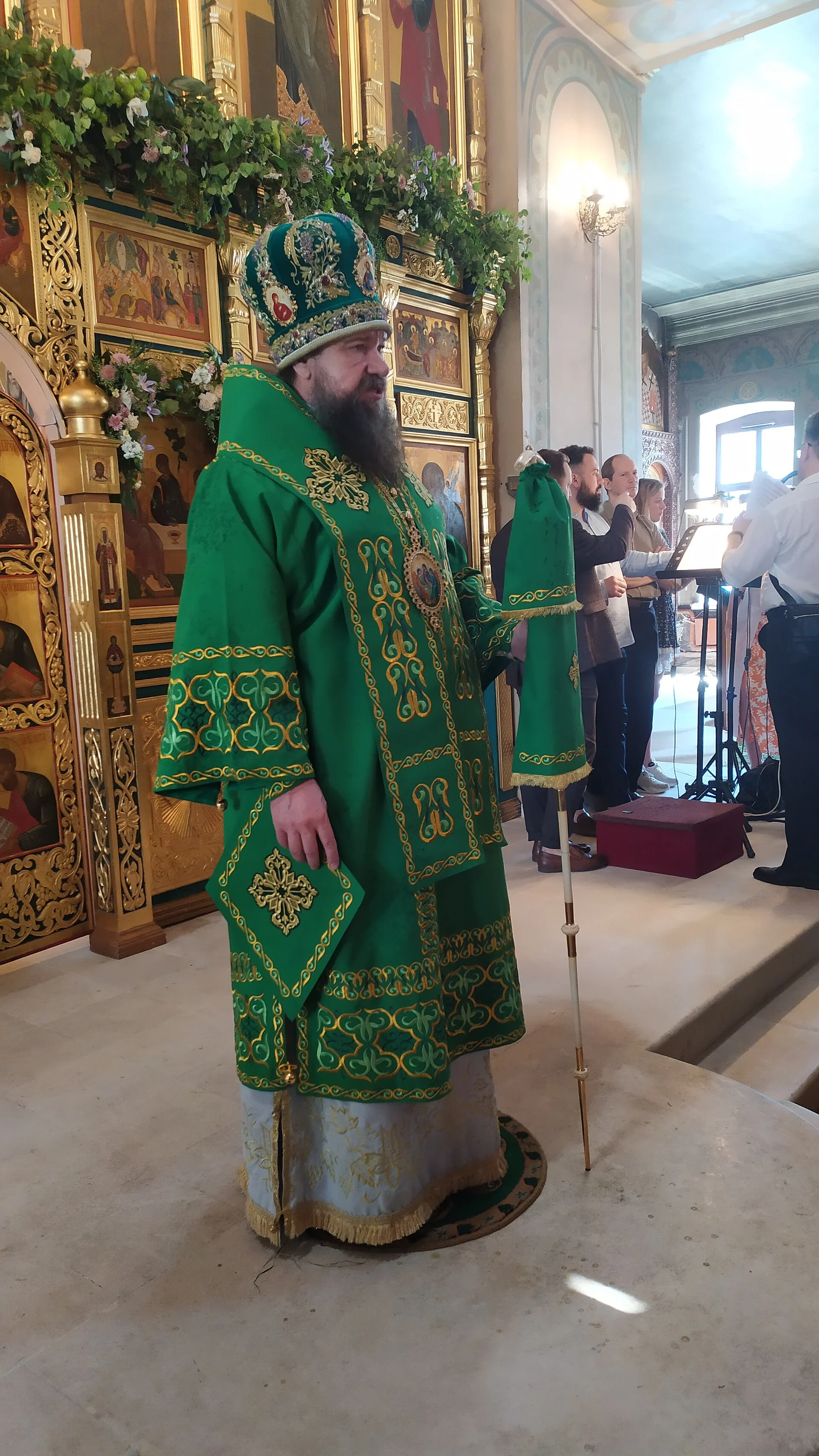
A deacon vests in the sticharion, orarion and epimanikia. A priest vests in the podriznik, epitrachelion, belt, epimanikia and phelonion. A bishop adds to these the sakkos in place of the phelonion, the omophorion, the palitsa, the mitre, the panagia and the crozier. The set grows, but nothing is abolished: in a bishop’s vestments one can see both the deacon’s cuffs and the priest’s epitrachelion.
Everyday and liturgical
The podriasnik and riassa, in which a priest is seen in the street, are not called vestments in the strict sense: they are the everyday dress of the clergy. The vestments proper are put on over them, and only for the service.
Why they are of different colours
The colour of the vestments changes with the days of the Church year: white at Pascha, red on the days of the martyrs, blue on feasts of the Mother of God, black in Great Lent. It is the quickest way to tell what day it is today, before one has heard a single word of the service.
Images
See also
Vestments
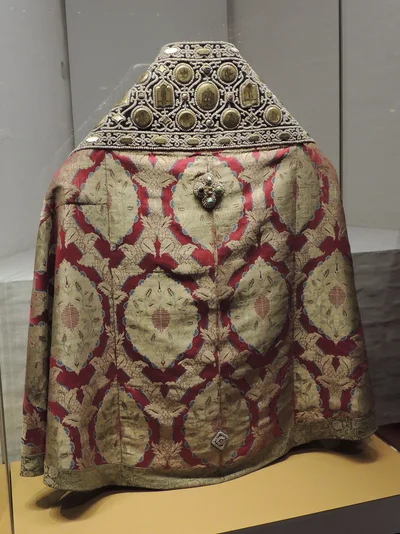
Phelonion
The priest's outermost liturgical garment: a wide sleeveless mantle covering the whole body.
Vestments
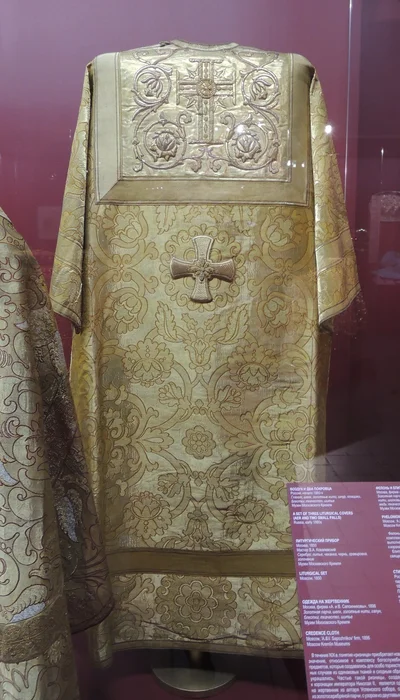
Sticharion
A long straight garment with wide sleeves: outermost for deacons and readers, undermost for priests.
Vestments
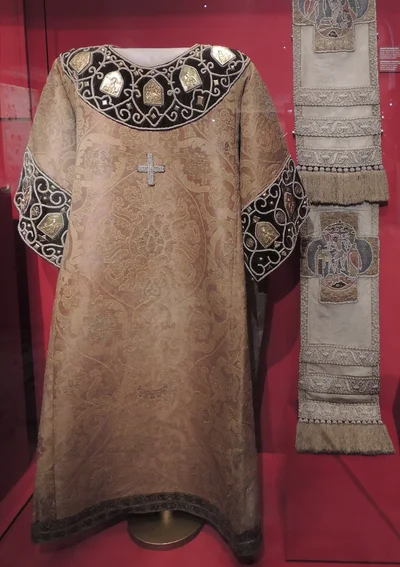
Sakkos
The bishop's outer vestment in place of the phelonion, its edges hung with small bells.
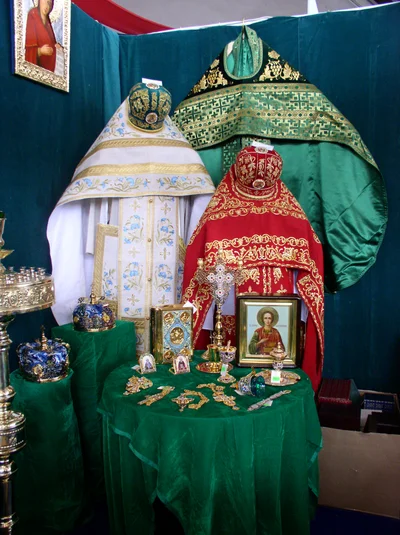
Vestments
Liturgical colours
Vestment colour changes with the church year, telling you what day it is before the service begins.