
Right-Believing
The rank of princes and rulers glorified for holding the right faith and governing by it — literally 'rightly believing'.
Reading options
The word is easily parsed: blago-verny — one whose faith is true. The rank is applied almost exclusively to rulers, and this is no accident. Power is considered the most difficult place for holiness: a prince is judged not by his rule of prayer but by what he did with his power — whether he defended the land, whether he betrayed the faith, whether he shed blood in vain.
The best known is Alexander Nevsky: he won wars in the west, did not go to war with the Horde because he was preserving what could still be preserved, and before his death took monastic vows. Alongside him are Daniel of Moscow, Dmitry Donskoy, Michael of Tver, who went to the Horde to certain death so that the city would not be ravaged on his account. Among women — Anna of Kashin. Among married couples — Peter and Fevronia of Murom, whose memory has become the day of family and fidelity.
Right-Believing and Equal-to-the-Apostles
Prince Vladimir and Princess Olga are not Right-Believing but Equal-to-the-Apostles, although they too were rulers: they are venerated not for their rule but for the baptism of a people. A Right-Believing one is one who ruled already in a Christian country and ruled in a Christian manner.
One more thing: Right-Believing is not the same as a “good ruler” in a textbook. The Church does not glorify success, and there are no fewer unlucky princes among the Right-Believing than winners.
See also
Ranks of sanctity
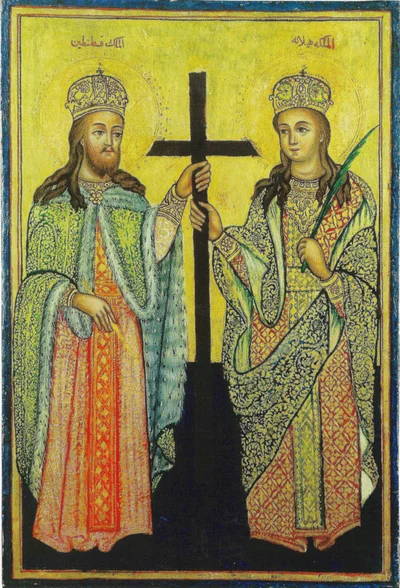
Equal-to-the-Apostles
A saint who brought a whole people to Christ — the apostles' work done centuries after the apostles.
Ranks of sanctity
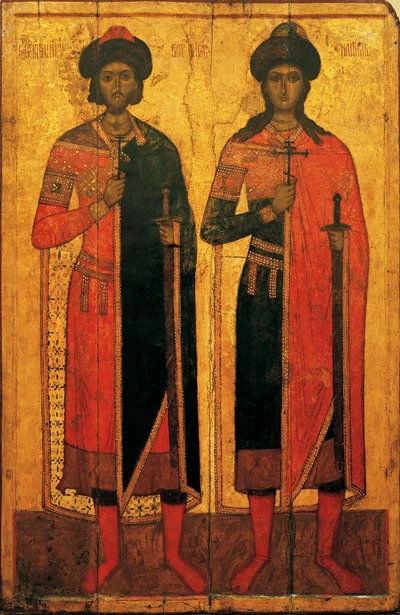
Passion-bearer
A saint killed not for the faith but innocently, usually by fellow Christians, and meeting death without resistance in imitation of Christ.
Ranks of sanctity
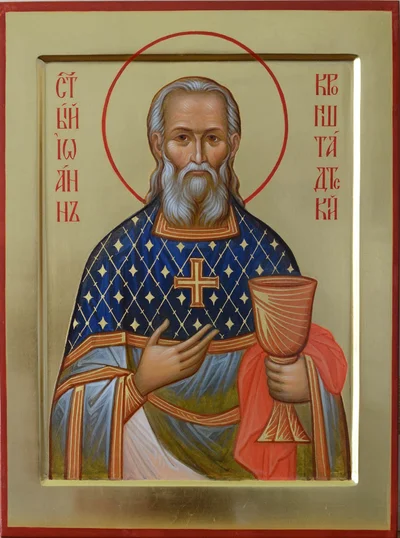
Righteous
A sainted layperson — one who lived an ordinary life in the world, in a family and at work, and lived it holily.
Parish practice
Name day
The feast of the saint whose name one bears — a personal church feast, unrelated to one's birthday.