
The Twelve Great Feasts
The twelve chief feasts of the year after Pascha: nine fall on fixed dates, three are counted from Pascha.
Reading options
The Twelve Great Feasts are twelve feasts which the Church singles out from all the others: they are devoted to events in the earthly life of Christ and the Mother of God. Pascha is not counted among them, as it is above reckoning. They are divided into feasts of the Lord (about Christ) and feasts of the Mother of God, and by the manner of reckoning into fixed and movable.
Nine on fixed dates
- The Nativity of the Most Holy Mother of God: 8/21 September
- The Exaltation of the Precious and Life-Giving Cross: 14/27 September
- The Entry of the Most Holy Mother of God into the Temple: 21 November/4 December
- The Nativity of Christ: 25 December/7 January
- Theophany of the Lord: 6/19 January
- The Meeting of the Lord: 2/15 February
- The Annunciation of the Most Holy Mother of God: 25 March/7 April
- The Transfiguration of the Lord: 6/19 August
- The Dormition of the Most Holy Mother of God: 15/28 August
Three tied to Pascha
- The Entry of the Lord into Jerusalem, Palm Sunday: a week before Pascha
- The Ascension of the Lord: the fortieth day after Pascha, always a Thursday
- The Day of the Holy Trinity, Pentecost: the fiftieth day after Pascha, always a Sunday
How they are celebrated
On the eve of each of the Twelve Great Feasts the All-Night Vigil is celebrated. The day itself is surrounded by the forefeast and the afterfeast, days of preparation and continuation; the last of these is called the leave-taking of the feast. The icon of the feast lies on the analogion in the middle of the church throughout this time, and the colour of the vestments changes according to its meaning. If the feast falls on a Wednesday or Friday, the fast is usually relaxed, except for the Exaltation, which remains a strict fast day.
See also
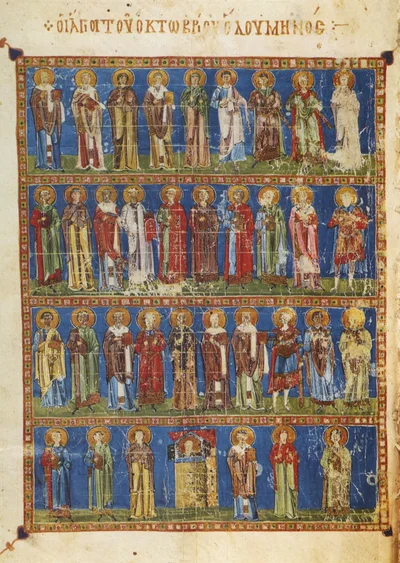
Feasts and fasts
The church year
The yearly round of feasts and fasts. It begins on 14 September and is woven from two overlapping cycles: one fixed to calendar dates, one moving with Pascha.
Feasts and fasts
Great feasts
Feasts served almost like the twelve, yet not counted among them: the Protection, Peter and Paul, two days of the Forerunner, and the Circumcision.
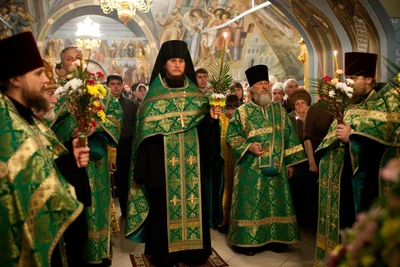
Divine services
All-night vigil
The evening service on the eve of Sundays and great feasts — Vespers, Matins and the First Hour together. Despite the name it lasts two or three hours, not all night.
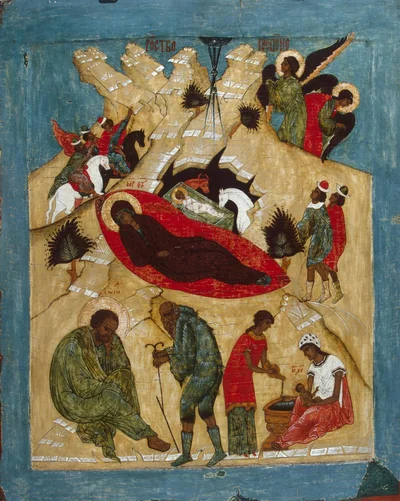
Icons
Feast icon
An icon of an event rather than a person — the festal tier of the iconostasis, and the icon laid on the analogion on the day itself.
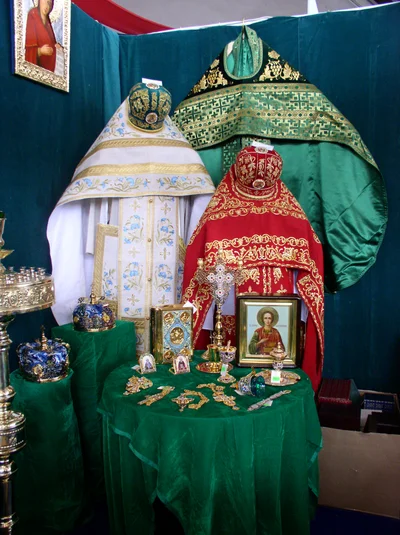
Vestments
Liturgical colours
Vestment colour changes with the church year, telling you what day it is before the service begins.