Venerable
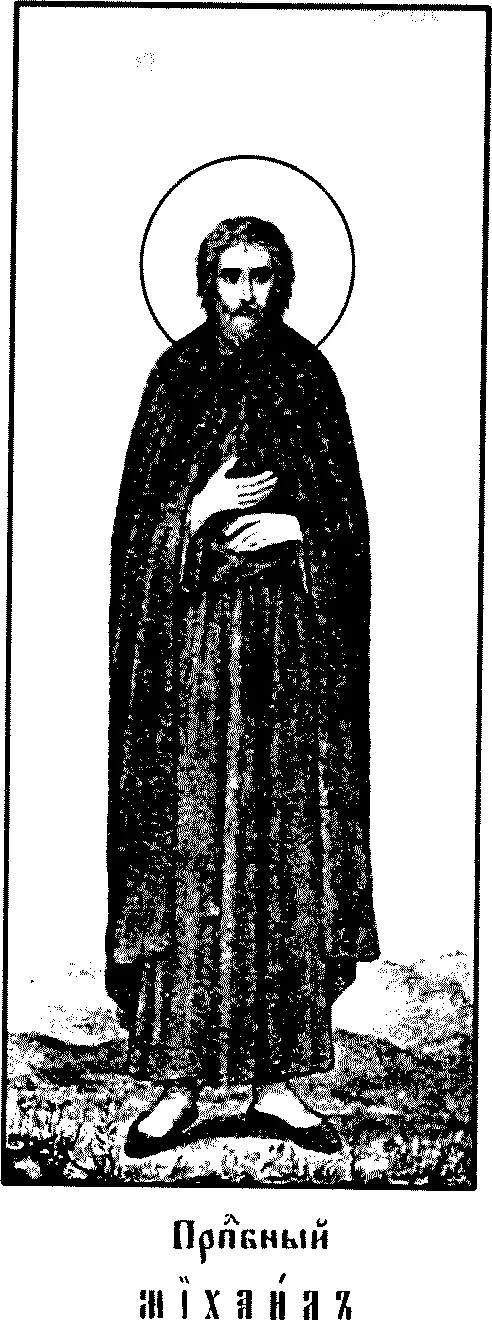
Venerable, Fool-for-Christ Michael of Klopsk
XIV в. — † 1453 или 1456
Venerable Michael of Klopsk — a fool-for-Christ of noble but concealed origin, who labored anonymously at the Klopsky Monastery near Novgorod, renowned for the gift of prophecy.
IMPORTANT CORRECTION: the category has been corrected from "righteous" to "venerable" (with the epithet "fool-for-Christ").
IMPORTANT NOTE: Michael's origin is genuinely disputed in the sources — three competing genealogies exist: grandson of the boyar Bobrok (companion of Dmitri Donskoi); illegitimate son of Prince Andrei Dmitrievich of Mozhaisk (Dmitri Donskoi's brother); or son of Grand Prince Simeon Ivanovich "the Proud." The most common version simply calls him "a relative of Grand Prince Dmitri Donskoi" from a boyar family.
Michael appeared at the Klopsky Trinity Monastery near Novgorod in rags, already tonsured a monk, and lived there anonymously — his noble origin was only revealed when Prince Konstantin Dmitrievich (Dmitri Donskoi's younger son), visiting the monastery and hearing Michael read the Book of Job in the refectory, recognized him and addressed him by name, forcing him to admit: "Michael, son of Maxim, of princely lineage."
He spent about 44 years at the monastery in extreme austerity — sleeping on sand, heating his cell with manure and refuse, deliberately enduring cold and hunger. He became renowned for miracles (a spring of water during a three-year drought, an inexhaustible supply of bread during famine) and the gift of prophecy: he predicted the birth of the future Ivan III (born January 22, 1440) and the coming loss of Novgorod's independence to Moscow, and denounced the cruelty of Prince Dmitri Shemyaka, foretelling his death.
He died on January 11 (1453 or 1456 — sources disagree) after receiving communion. His relics rest beneath the monastery church; he was glorified at the Moscow (Macarian) Council of 1547.
His feast is kept on January 11/24; locally, June 23 (the day of his appearance at the monastery) is also observed, though the standing of this second date as a formal church commemoration is not fully confirmed.
Icons and images