Venerable
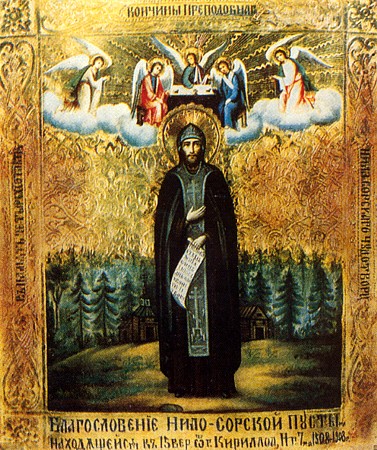
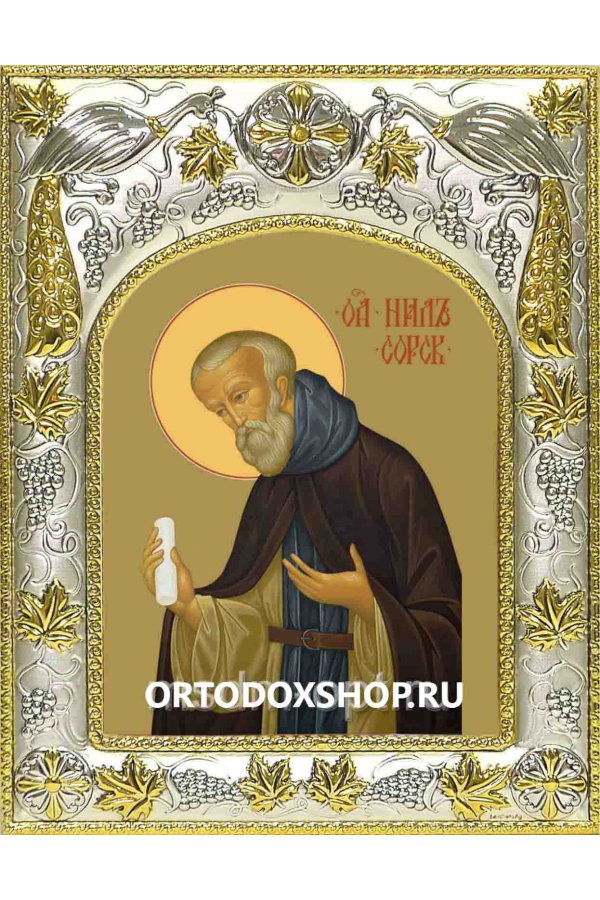
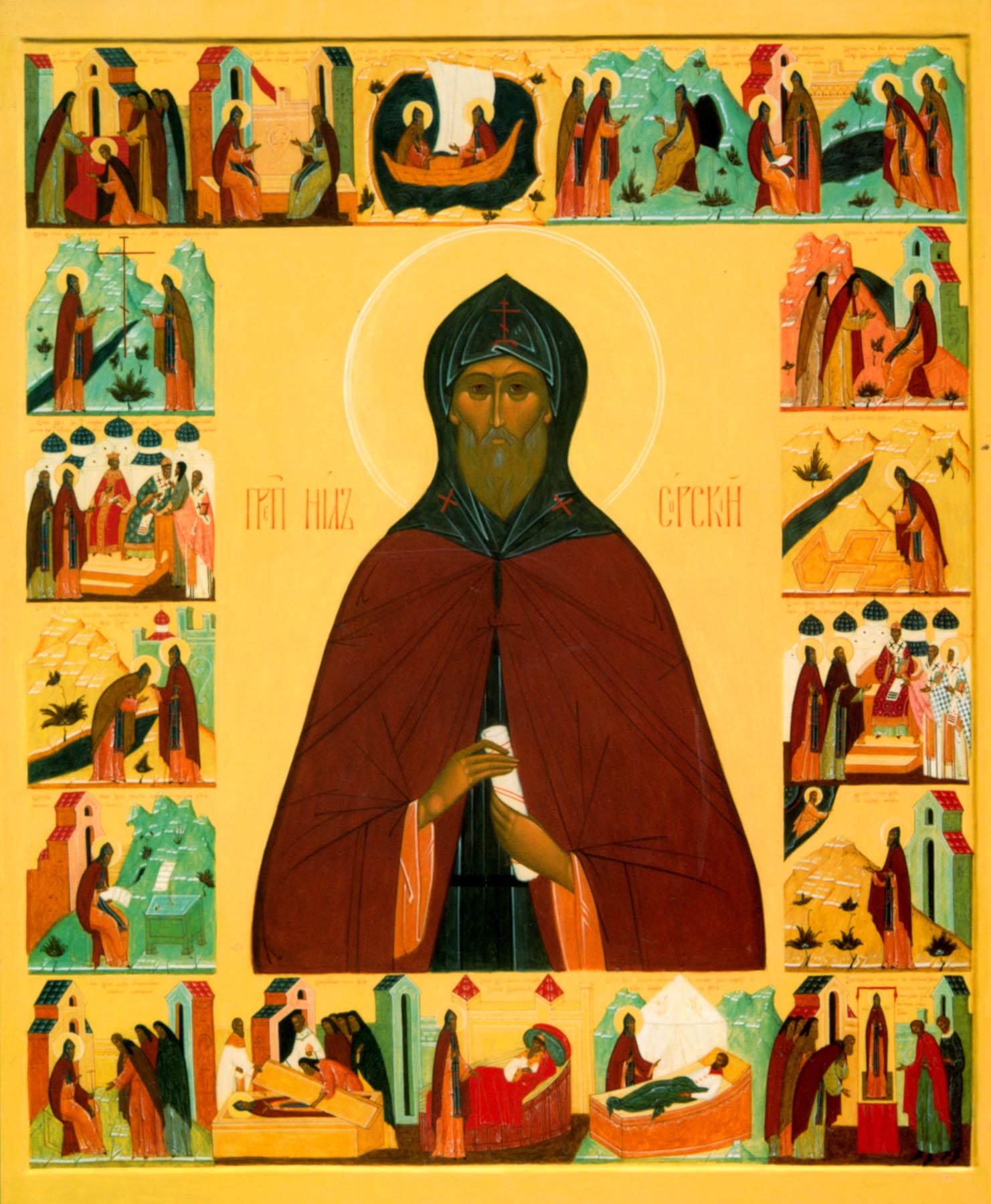
Venerable Nilus of Sora (Nil Sorsky)
1433 — 1508
Also known as: Николай Фёдорович Майков (в миру)
Venerable Nilus of Sora — founder of skete monasticism in Russia, leader of the Non-Possessors movement ("Trans-Volga Elders"), who opposed monastery land ownership in his famous dispute with Venerable Joseph of Volokolamsk.
IMPORTANT CORRECTION: the category has been corrected from "righteous" to "venerable".
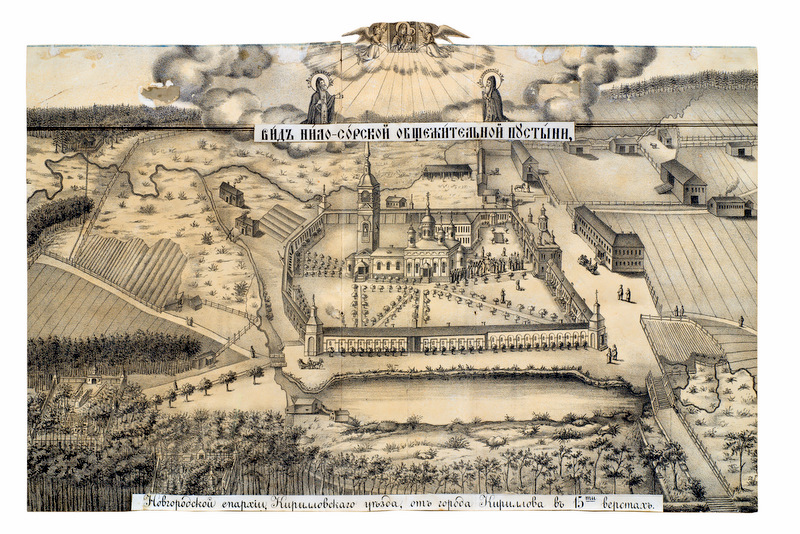
Venerable Nilus, born Nikolai Fyodorovich Maykov, was born in 1433 in Moscow, and began his monastic path at the Kirillo-Belozersky Monastery. Around 1475–1485 he traveled with his disciple Innokenty Okhlyabinin to Constantinople, Palestine, and Mount Athos, where he absorbed the Athonite and Egyptian tradition of skete (semi-eremitic) monasticism and hesychast prayer practice, learning Greek, which gave him direct access to Greek patristic literature. On returning to Russia, he founded a skete on the Sora River near Kirillov — the Nilo-Sorskaya Hermitage — becoming the founder of organized skete monasticism in Russia, where monks lived in separate small cells (60–80 meters apart), combining solitude, manual labor, and communal worship, unlike either full cenobitic community or complete hermitage.
He is best known as the intellectual leader of the "Trans-Volga Elders"/Non-Possessors movement, which opposed monastery ownership of populated land and serfs, insisting that monks should live by manual labor and inner spiritual discipline rather than estate wealth. This led to his famous confrontation with Venerable Joseph of Volokolamsk, leader of the "Possessor" faction, at the Moscow Council of 1503, where Nilus reportedly argued that monasteries should renounce their landholdings — though the two saints also collaborated on anti-heretical writings against the Judaizers, and their disagreement was somewhat narrower and more procedural than sometimes portrayed.
His major works — "The Rule of Skete Life" and "Tradition to Disciples" — remain foundational texts of Russian hesychast spirituality, emphasizing inner "mental prayer" and discernment of thoughts over external ritual or ascetic display. Official veneration is documented from monastery records by 1656, following earlier local veneration.
He died May 7, 1508. His feast is kept on May 7/20; also on the 3rd Sunday after Pentecost (Synaxis of Vologda Saints).
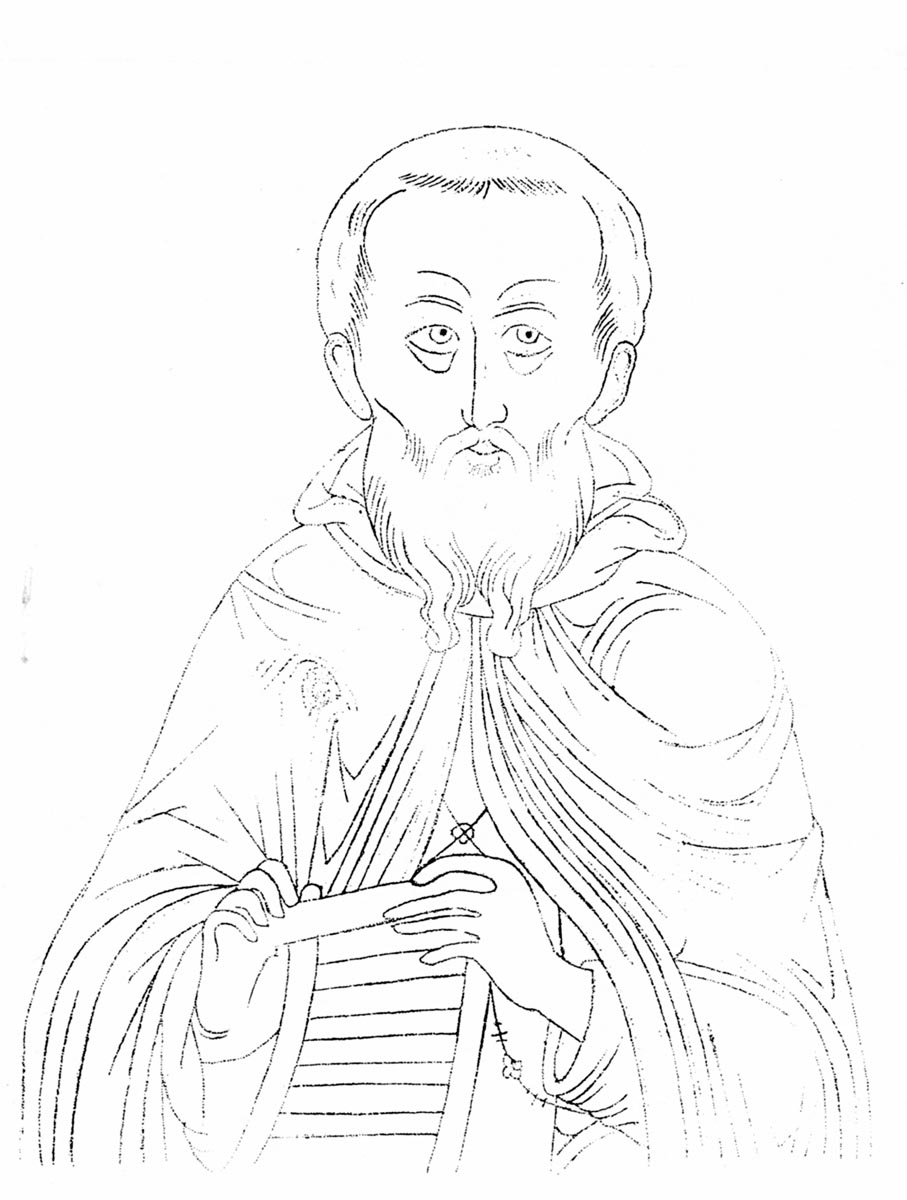
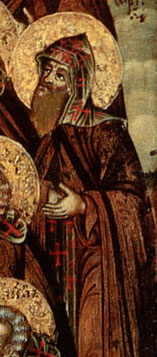
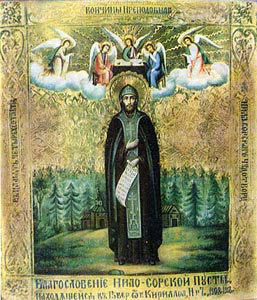
Icons and images