Right-Believing
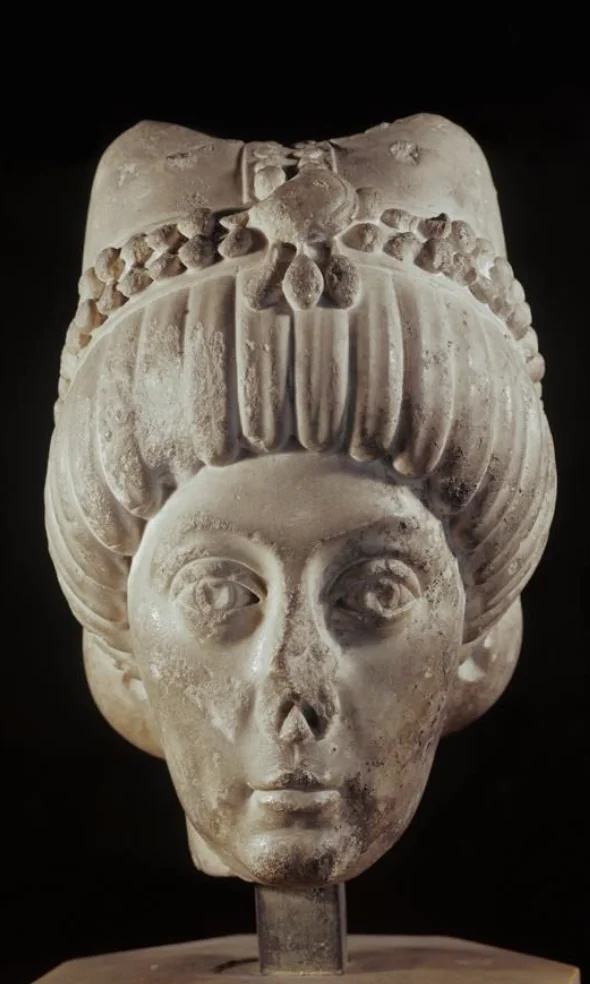
Right-Believing Right-Believing Empress Theodora, Wife of Justinian the Great
ок. 500–548
Right-Believing Empress Theodora — wife of Emperor Justinian the Great, who saved his throne with a bold speech during the Nika riots, venerated jointly with her husband on November 14/27.
CONFIRMED: veneration of Theodora (unlike the disputed case of Empress Irene of Athens from a prior batch) is genuine and standing, invariably joint with her husband ("the right-believing Emperor Justinian and Empress Theodora"); she is not venerated separately from Justinian.
Born c. 500 to a humble family — by tradition, the daughter of a bear-keeper at the Constantinople Hippodrome; in her youth she was a mime-actress, a profession considered disreputable at the time; Procopius of Caesarea's "Secret History" attributes to her a dissolute past as a courtesan — a source modern historians (e.g., Robin Browning) treat as tendentious, though not wholly baseless. Leaving this life, she traveled to Alexandria, where she underwent a spiritual conversion, after which she lived modestly in Constantinople.
There she met Justinian, then heir-apparent under his uncle Emperor Justin I; a law barring senators from marrying actresses was specially repealed by Justin to permit their marriage (c. 525); in 527 the couple were crowned together. As empress, Theodora became one of Justinian's most trusted advisers, wielding genuine independent power — she conducted her own diplomatic correspondence and appointments.
The defining moment of her life came during the Nika riots of January 532: when panicked officials urged Justinian to flee the capital, Theodora's speech before the council — refusing to flee, declaring "royal purple makes a fine burial shroud" — steeled the emperor's resolve and saved his throne. She championed legal protections for women (anti-trafficking laws, expanded divorce and inheritance rights for wives) and founded the Metanoia ("Repentance") convent on the Bosphorus as a refuge for former prostitutes. She was a committed supporter of the Monophysites, despite the empire's official Chalcedonian confession, sheltering Monophysite clergy in the palace — an honest historical detail that creates theological tension with her canonization by a strictly Orthodox Church. She died of cancer on June 28, 548, deeply mourned by Justinian, who never remarried.
Icons and images