
Ambo
The semicircular projection of the solea opposite the Royal Doors, from which the litanies, Gospel and sermon are given.
Reading options
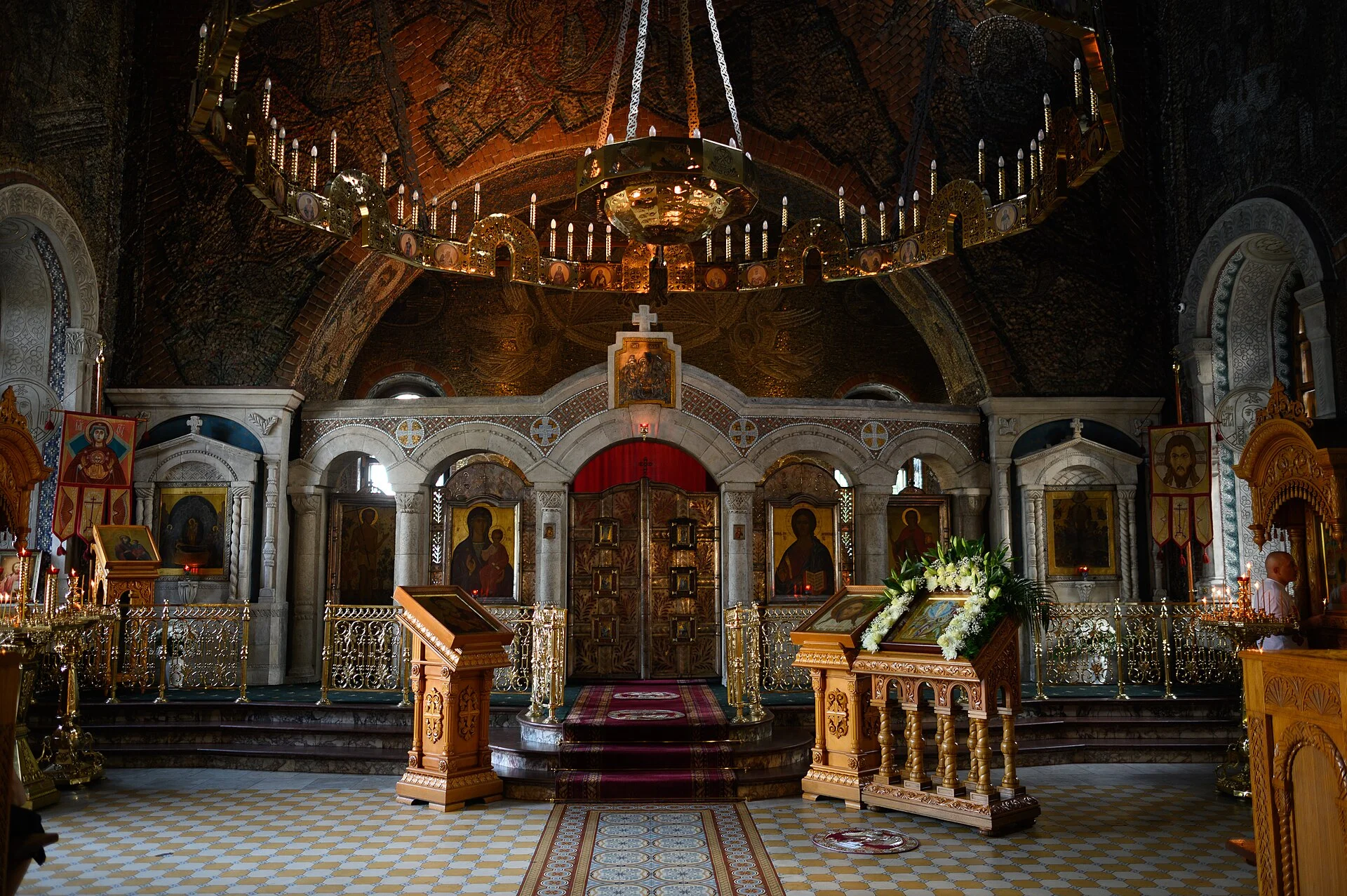
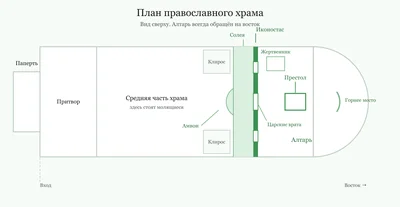
The ambo is the semicircle projecting forward in the middle of the solea, directly opposite the Royal Doors. The name is Greek, from the verb “to ascend”: one really does ascend the ambo in order to speak.
From here the deacon pronounces the litanies, holding the raised end of the orarion; from here the Gospel is read; from here the priest delivers the sermon — “to go out onto the ambo” means to begin to preach. The prayer at the end of the Liturgy is called the prayer behind the ambo, because the priest reads it after coming down from the ambo and standing in front of it, among the people.
What it signifies
The interpretation comes from the Resurrection: the ambo is the stone rolled away from the Tomb, from which the angel announced to the myrrh-bearing women that Christ is risen. The sermon and the reading of the Gospel sound from this place not by chance.
The ambo and the solea
The solea is the whole raised platform along the iconostasis, the ambo only its middle. One says “to stand on the solea” of the place in general and “to go out onto the ambo” of the sermon.
There is also the bishop’s ambo — a platform in the middle of the church on which the bishop is vested before the service. It is more often called the cathedra or the vesting ambo; it has no connection with the altar ambo except the name.
Images
See also
The church building
Solea
The raised platform running the full width of the iconostasis — the sanctuary floor extended into the church.
The church building
Royal Doors
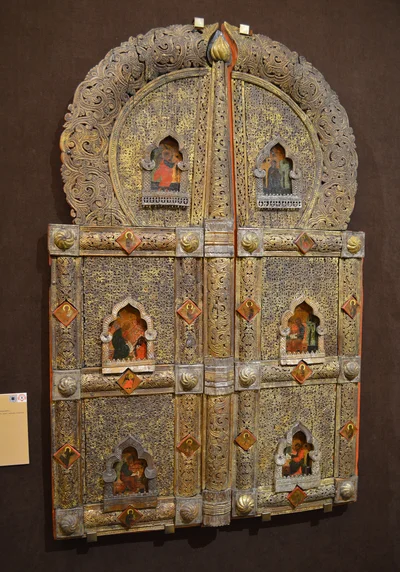
The double doors in the centre of the iconostasis leading to the holy table; used only by clergy at set moments of the service.
Clergy and ranks
Deacon
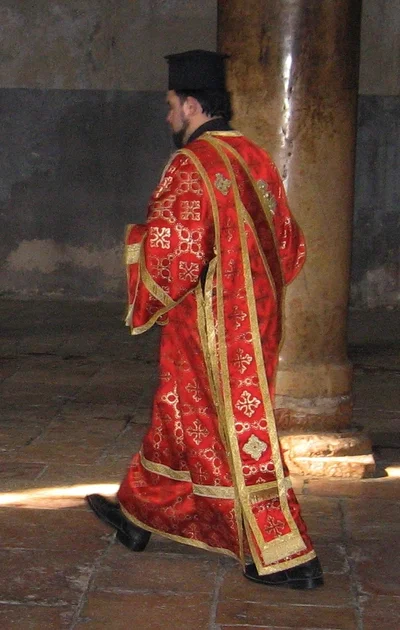
The first degree of priesthood: he assists at services and chants the litanies but celebrates nothing himself. Recognised by the orarion.

Divine services
Divine Liturgy
The principal service of the Church, at which the Eucharist is celebrated and the faithful receive Communion. Served in the morning, lasting one and a half to two hours.

Vestments
Orlets (eagle rug)
A round rug showing an eagle above a city, spread beneath the bishop's feet.