
Divine Liturgy
Other names: Divine Liturgy, Eucharist
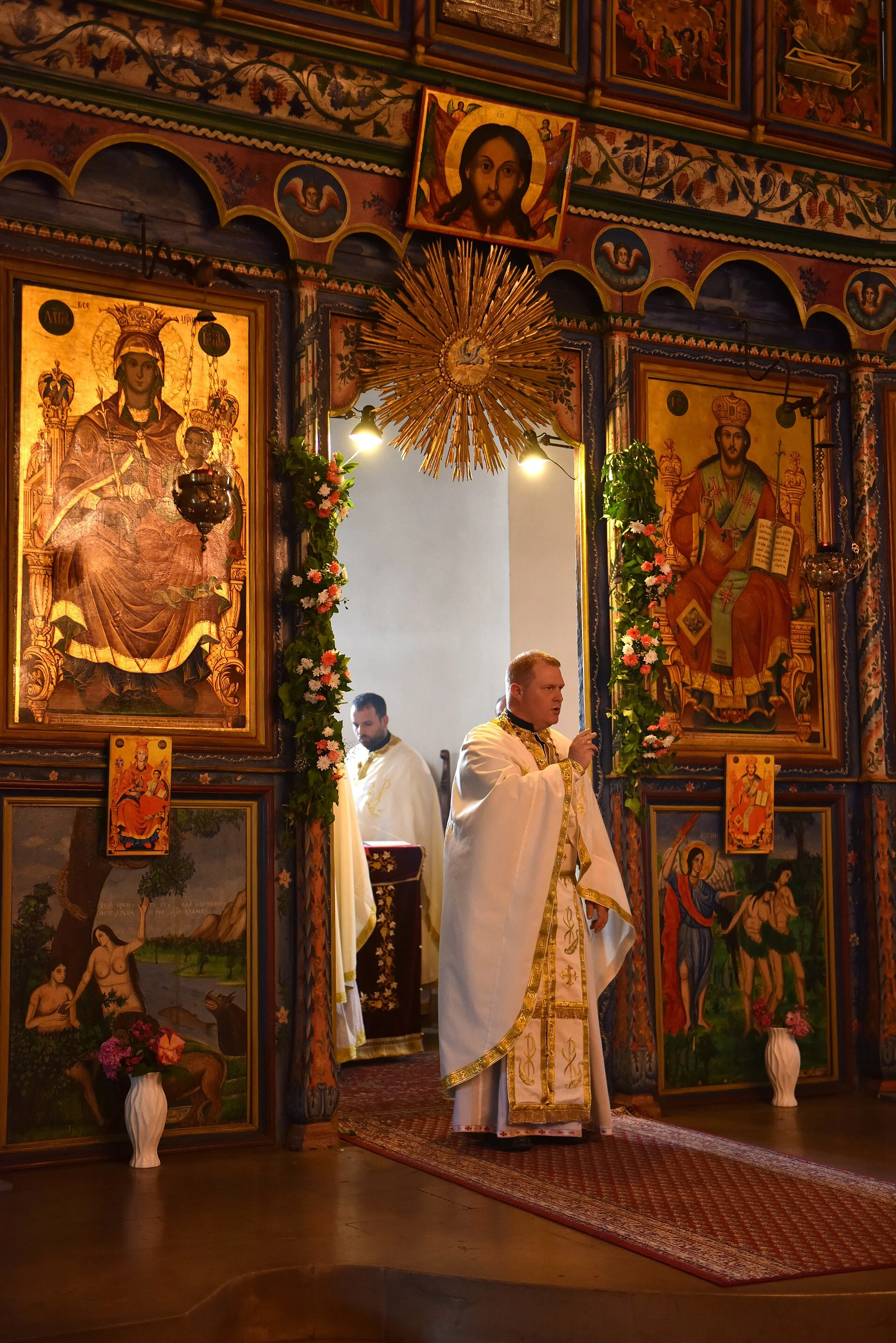
The principal service of the Church, at which the Eucharist is celebrated and the faithful receive Communion. Served in the morning, lasting one and a half to two hours.
Reading options
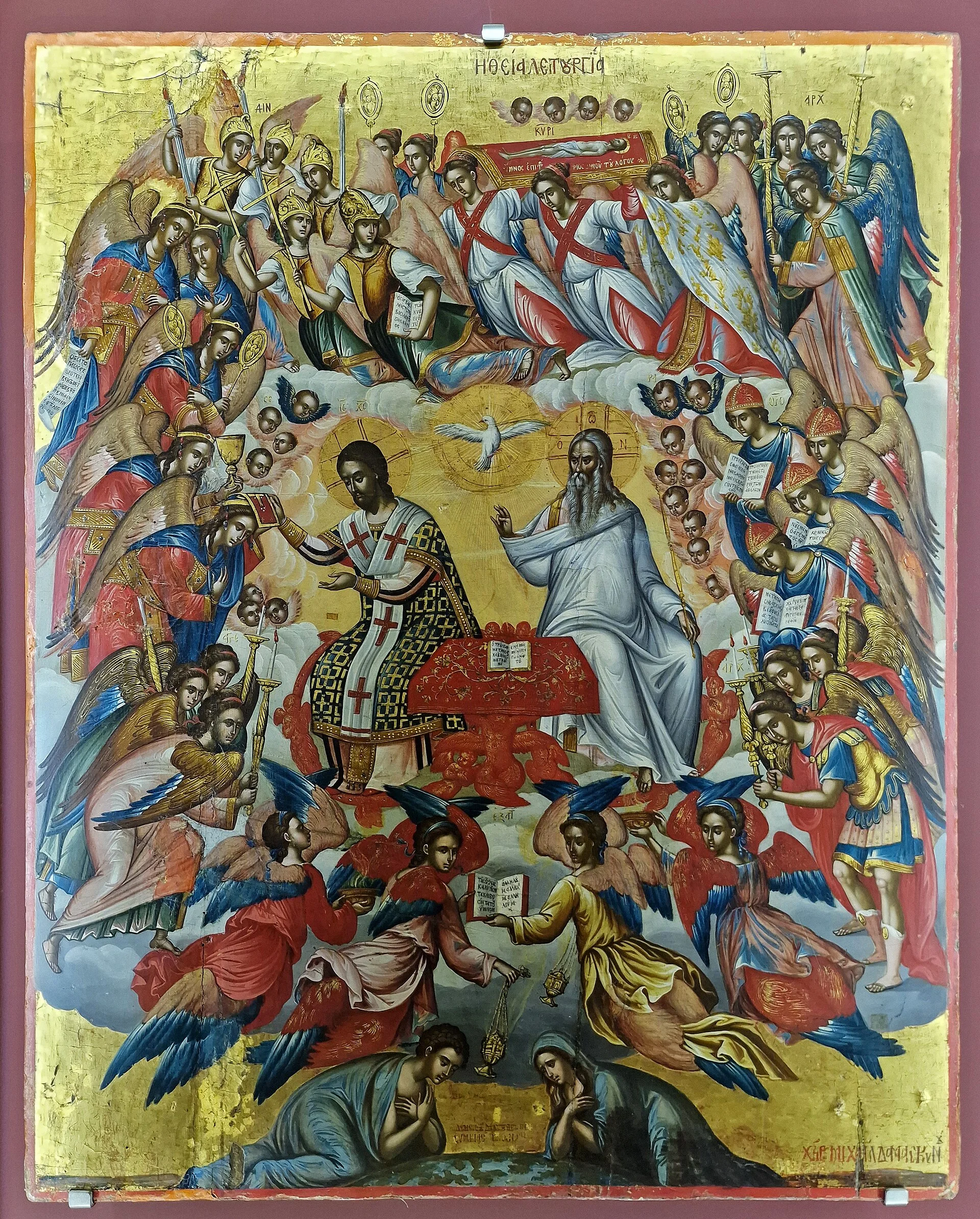
The Liturgy is the service for the sake of which everything else exists. In it the bread and wine become the Body and Blood of Christ, and the people receive communion. All the other services in one way or another lead to it or radiate from it.
The word is Greek: leitourgia — “common work”; in ancient Athens this was the name for work that a citizen did not for himself but for the city. The Church took the word literally: it is not the priest who prays for all, but all together, and the priest is only the one who stands in front.
Why “obednya”
The popular name comes from the time: the Liturgy is served in the hours before the midday meal, and in old Russian life the day was divided into “zautrenya (morning service), obednya (the Liturgy) and vechernya (evening service).” The word is quite fitting, although it has nothing to do with food. The second name is the Eucharist, in Greek “thanksgiving”: the main prayer of the service begins with the words “Let us give thanks to the Lord.”
What it consists of
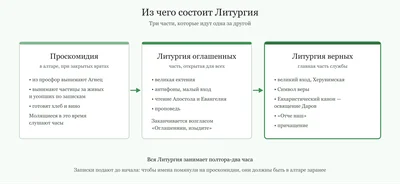
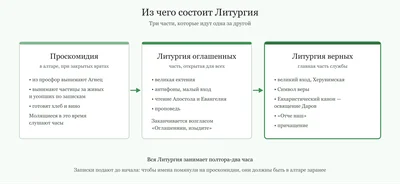
There are three parts. The Proskomedia — the preparation of the bread and wine — goes on quietly in the altar while the Hours are read in the church. The Liturgy of the Catechumens — readings and prayers at which the not yet baptized could once stand. The Liturgy of the Faithful — the main part, with the Eucharistic canon and communion.
When it is served
In the morning, usually beginning around eight or nine o’clock; its length is an hour and a half to two hours, and a hierarchical one is longer. There is no Liturgy on Great Friday or on the weekdays of Great Lent, except those on which the Presanctified is served. There are three orders of the Liturgy in the year — of John Chrysostom, of Basil the Great, and of the Presanctified Gifts.
Images
See also
Divine services
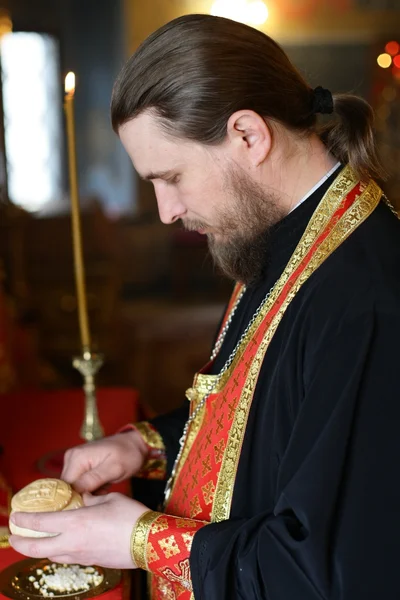
Proskomedia
The first part of the Liturgy: in the sanctuary the priest prepares the bread and wine and takes out particles for the living and the dead.
Divine services
Liturgy of the Catechumens
The second part of the Liturgy, from the opening exclamation to the Gospel and the sermon — the part the unbaptised were allowed to attend.
Divine services
Liturgy of the Faithful
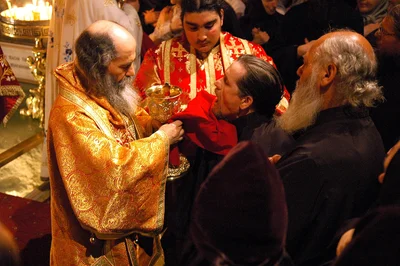
The main part of the Liturgy, from the Cherubic Hymn to the dismissal: the Eucharist itself and the Communion of the faithful.
Sacraments
Communion
The central sacrament of the Church: at the Liturgy bread and wine become the Body and Blood of Christ, received by the faithful from the chalice.
Divine services
Liturgy of St John Chrysostom
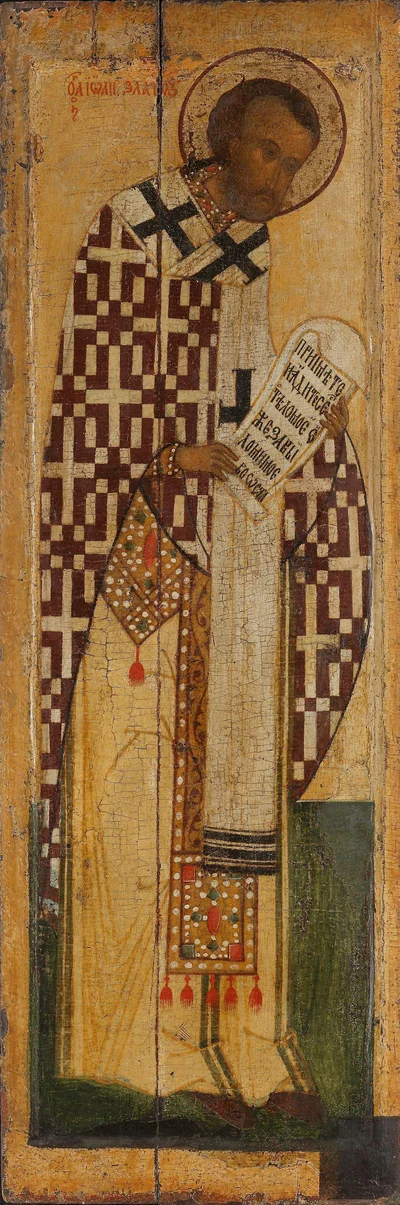
The ordinary form of the Liturgy, served on almost every day of the year — the one heard on any Sunday outside Great Lent.