
Archimandrite
The highest title of a monastic priest, above hegumen and below bishop; he serves in a mitre but cannot ordain.
Reading options
An archimandrite is the senior rank of a monastic priest, above a hegumen. Literally, “head of the enclosure”: in ancient times this was the name for the head of a large monastery or for the overseer of the monasteries of a region. Today it is given to the superiors of large monasteries, the heads of theological schools and distinguished hieromonks.
This is the last step before the episcopate: almost everyone chosen to be a bishop is by that time an archimandrite. But his degree is still that of a priest: he cannot ordain, and he does not consecrate the antimension.
Like a bishop, but not a bishop
An archimandrite serves in a mitre and with a palitsa, things usually associated with a bishop, and this is confusing. Look at other things: he has no omophorion or panagia, no rug with an eagle is spread under his feet, and he does not bless with the dikirion and trikirion. A cross on top of the mitre is placed only on bishops.
The form of address is “Father” with the name, or “Your Reverence”, as to a hegumen and an archpriest.
See also
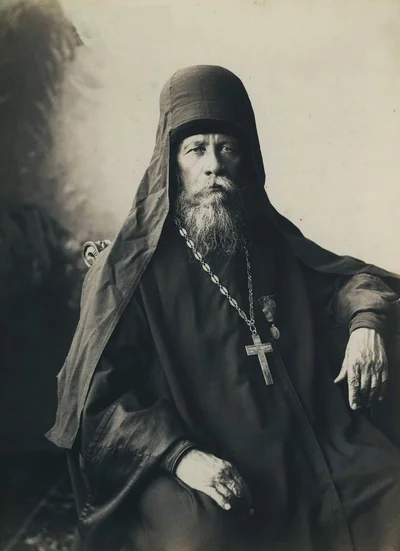
Clergy and ranks
Hegumen
A senior title of a monastic priest, tied above all to heading a monastery; the sign is the staff given at appointment.
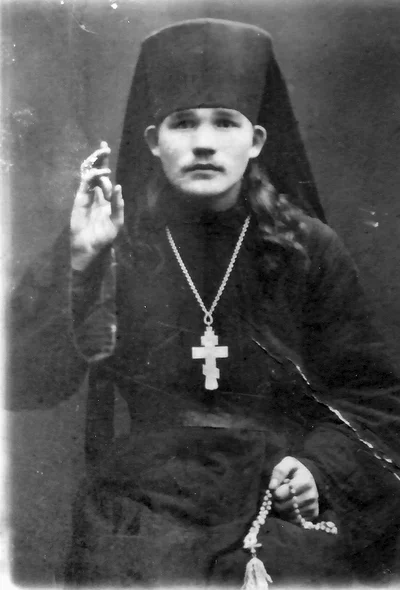
Clergy and ranks
Hieromonk
A monk ordained to the priesthood: he serves exactly as any priest does, but lives under monastic vows.
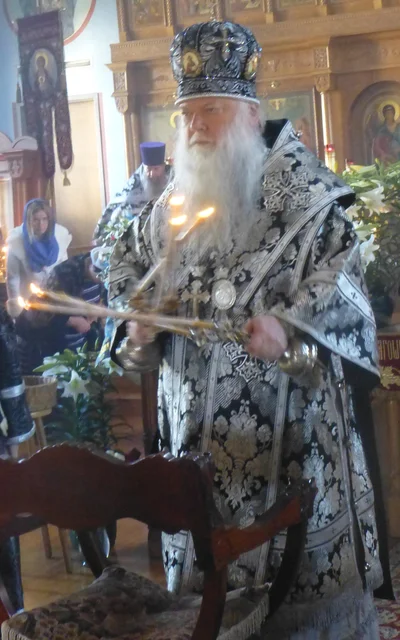
Clergy and ranks
Bishop
The highest degree of priesthood: only a bishop ordains clergy and governs a diocese. Recognised by the omophorion, panagia and staff.
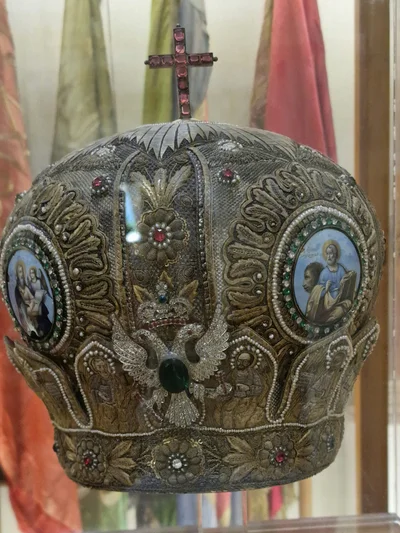
Vestments
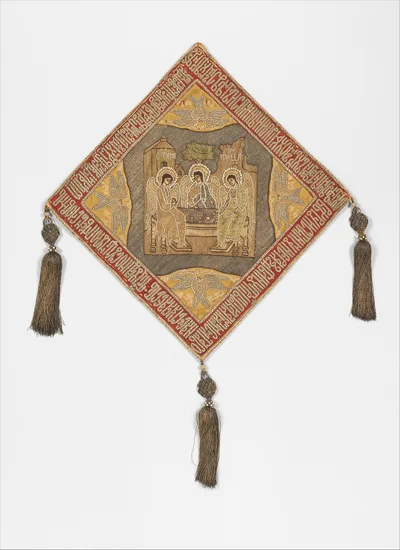
Epigonation (palitsa)
A diamond-shaped cloth at the hip: always worn by bishops, awarded to senior priests.