
Bells
Other names: Bell-ringing
Bell-ringing calls people to church and tells what is happening inside: four distinct kinds of ringing for four occasions.
Reading options
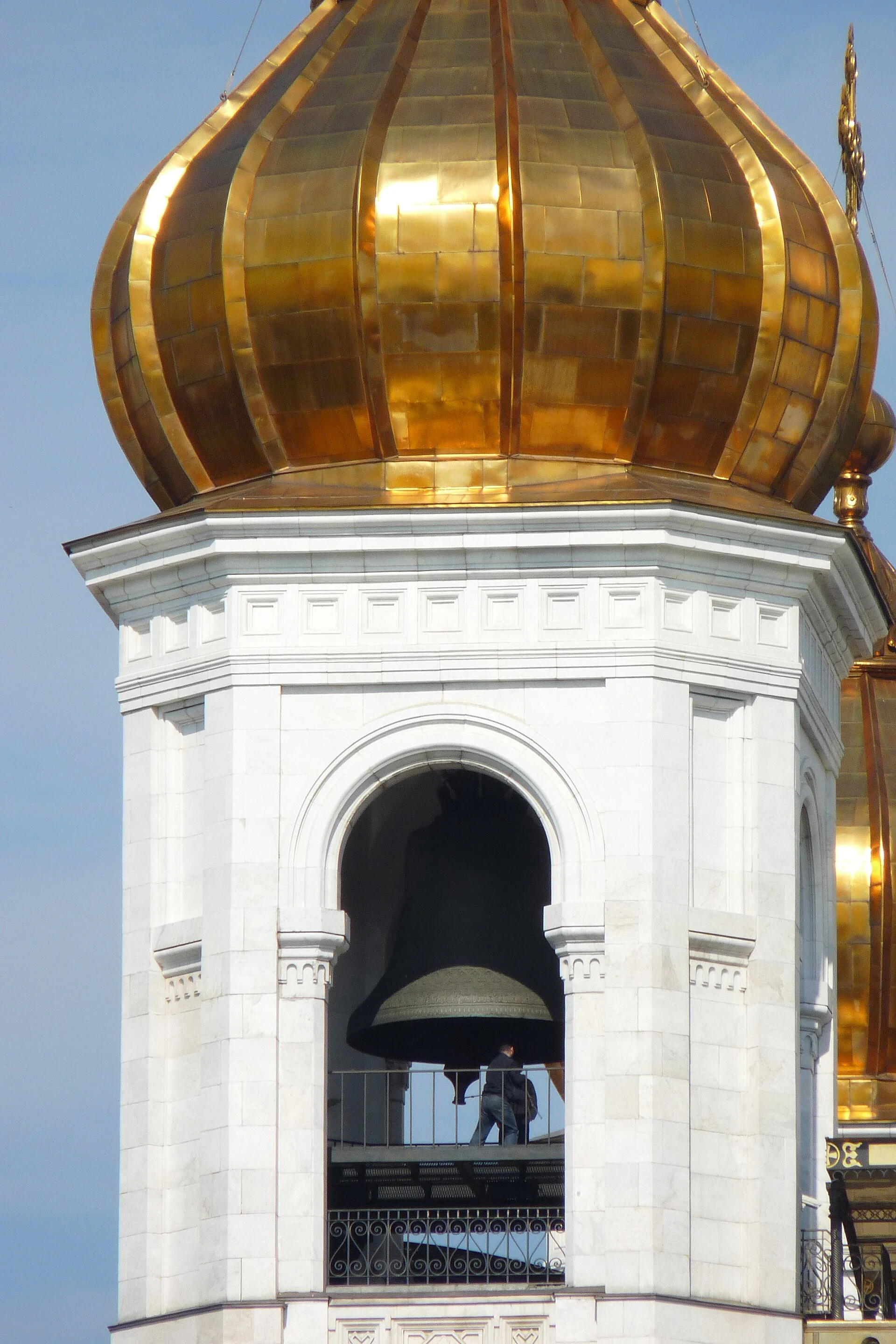
In the Russian tradition the bell is stationary: the bell-ringer swings not the bell itself but its clapper, and so can control both the force of the stroke and the rhythm. Hence the complexity of Russian bell-ringing: it is not reduced to a signal but is distinguished by meaning.
The bells in the belfry are divided into three groups: the blagovestniki, the largest; the podzvonnye, of medium size; and the zazvonnye, the small ones, tied to the bell-ringer’s fingers.
Four kinds of ringing
Blagovest is measured, even strokes on one large bell. It summons people to church and begins in good time before the service. The same single stroke also sounds in the middle of the Liturgy, at the Eucharistic Canon: this is the “ringing for the It is truly meet” (Axion Estin), so that those who have not come may know that the chief moment has arrived.
Trezvon is ringing on all the bells in three rounds, with pauses. This is joy: it ends the blagovest before the beginning of a service, it sends off the Liturgy, and it sounds on feast days and during a procession of the cross. The Paschal trezvon is the longest and loudest of the year.
Perezvon is strokes on each bell in turn, in order, from the largest to the smallest. It is a sorrowful and solemn ringing: at the bringing out of the cross at the Exaltation, at the Great Blessing of Water, at the burial of the Shroud, and at the vesting of a bishop in the middle of the church.
Perebor is also in turn, but in reverse: from the smallest bell to the largest, with a stroke on all of them at once at the end. This is the funeral ringing. The perebor goes from birth to death, while the common stroke at the end speaks of the resurrection; it is heard at the funeral service and when the body is carried out of the church.
When there is no ringing
During Great Lent the bells are rung sparingly and dully, and there is no festal trezvon on the weekdays of the Fast. On Bright Week, however, the opposite rule applies: one may ring all week, and in these days anyone who wishes is allowed up into the belfry with a blessing; hence the unskilled but happy Paschal ringing that can be heard all over the city.
Images
See also
The church building
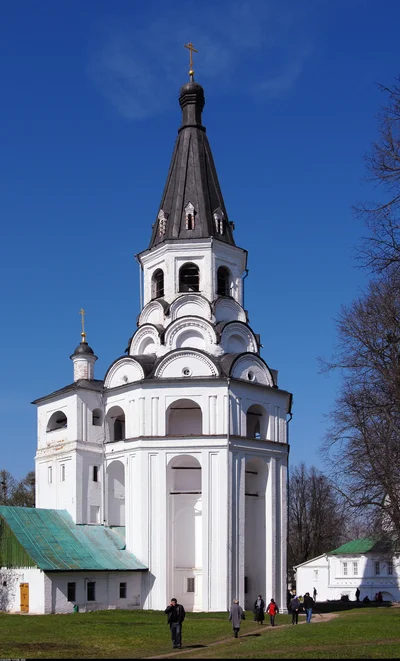
Bell tower
The tower housing the bells; the ringing summons people to service and tells what is happening inside.
Divine services
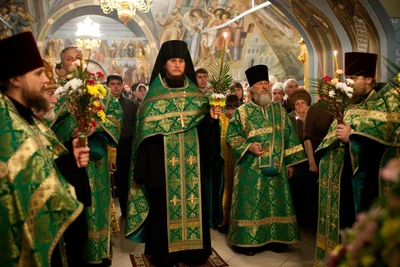
All-night vigil
The evening service on the eve of Sundays and great feasts — Vespers, Matins and the First Hour together. Despite the name it lasts two or three hours, not all night.
Divine services
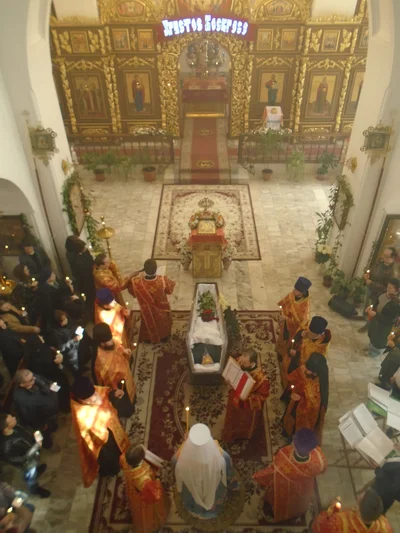
Funeral service
The order of Christian burial, served over the body of the departed once and once only. It is constantly confused with the panikhida.

Feasts and fasts
Bright Week
The week after Pascha, served as one unbroken day: the royal doors stand open, there is no fasting, and a procession follows the liturgy daily.