
Blessing
A blessing asked of a priest and given by him; it replaces an ordinary greeting.
Reading options
A blessing is not a formality and not a mark of respect for a man in a cassock. The priest gives nothing of his own: he calls God’s blessing down upon you and makes the sign of the Cross over you. That is why it is received from any priest, whether or not he is an acquaintance.
How it is done
On approaching, one says: “Bless, Father” — this word serves both as a greeting and a farewell, and no separate “hello” is needed. The palms are folded crosswise before the chest: the right over the left, both open upward. The priest makes the sign of the Cross over you with his hand and places it in your outstretched palms; the hand is kissed — not because of whose hand it is, but because the blessing has been given through it. The priest usually replies: “May God bless you.”
The priest’s fingers are not folded at random: this is the name-shaped position of the fingers, in which the fingers form the letters IC XC. That is, the blessing hand literally writes the name of Christ.
A blessing for an undertaking
A blessing is asked separately for something specific — a journey, medical treatment, the start of a job, a fast, a marriage. This is no longer a greeting but counsel and prayerful support: one briefly explains the matter and listens to the answer. A bishop is asked in the same way, but one says “Master, bless.”
A blessing is not taken from a deacon, a reader or a monk who is not ordained — it is a priest or a bishop who blesses.
See also
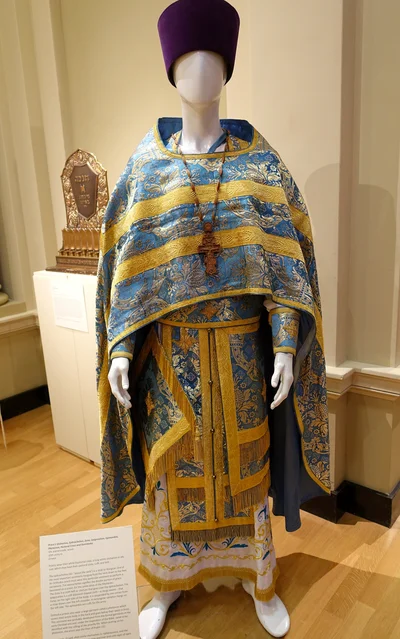
Clergy and ranks
Priest
The second degree of priesthood: celebrates the Liturgy and all sacraments except ordination. Recognised by the epitrachelion and pectoral cross.
Clergy and ranks
How to address the clergy
A priest is addressed as Father with his name, a bishop as Vladyka, the patriarch as Your Holiness.
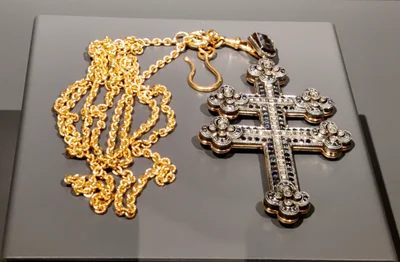
Vestments
Pectoral cross
The cross worn on the breast by priests and bishops, offered to the faithful to kiss.
Parish practice
Sign of the Cross
How to make the Sign of the Cross: three fingers joined, forehead, stomach, right shoulder, then left.