
Great Martyr
A martyr whose sufferings were especially long and severe and whose veneration is widespread — George, Panteleimon, Barbara, Catherine.
Reading options
A Great Martyr is the same as a martyr; the prefix is not about holiness but about what was done to the person and how he was afterwards venerated. This rank includes sufferers of the first centuries whose torments were long and ingenious and whose execution was exemplary: they were usually prominent people — military commanders, courtiers, noble maidens, physicians — and the authorities wanted everyone to learn of their renunciation.
The best known: George the Victorious, a Roman officer who was tormented for many days and who is depicted on a horse with a serpent; Demetrius of Thessalonica; Panteleimon, a physician from Nicomedia, whose full title is “Great Martyr and Healer”; Barbara, who was tortured and put to death by her own father; Catherine, a learned young woman from Alexandria who out-argued the philosophers sent to her.
How it differs from a martyr
There is no formal boundary, and this must be said honestly. There are few Great Martyrs in the calendar of saints, the list took shape in antiquity and is hardly added to: new Great Martyrs are not “appointed” — the rank has remained with those whom the ancient Church itself so named. Those who suffered in the 20th century, however terribly they died, are called martyrs and hieromartyrs, not Great Martyrs.
At a service the difference is heard at once: the memory of a Great Martyr is celebrated solemnly, with the Polyeleos or the All-Night Vigil, while an ordinary martyr is commemorated briefly, at a weekday service.
See also
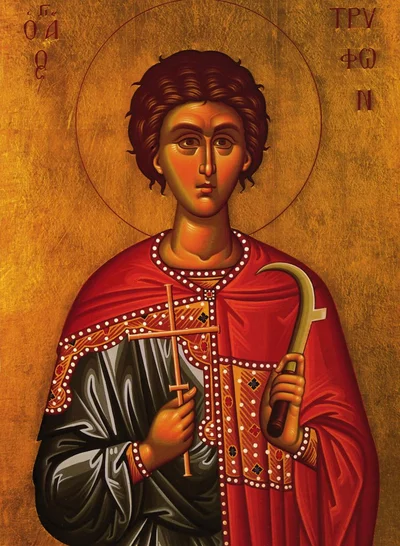
Ranks of sanctity
Martyr
Literally a witness: a Christian who could have renounced the faith and lived, and did not.
Divine services
Polyeleos
The most festive part of Matins: all the lamps are lit, the clergy come out into the middle of the church, the magnification is sung and the Gospel is read.
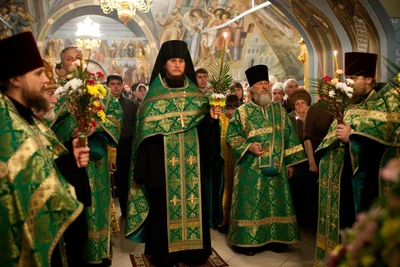
Divine services
All-night vigil
The evening service on the eve of Sundays and great feasts — Vespers, Matins and the First Hour together. Despite the name it lasts two or three hours, not all night.
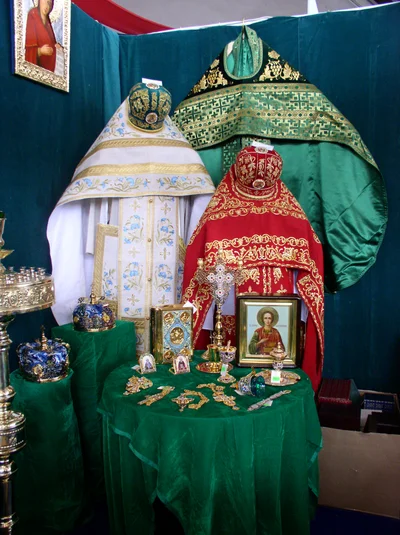
Vestments
Liturgical colours
Vestment colour changes with the church year, telling you what day it is before the service begins.