
Polyeleos
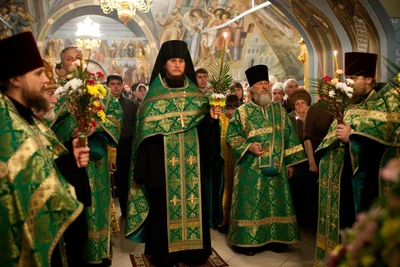
The most festive part of Matins: all the lamps are lit, the clergy come out into the middle of the church, the magnification is sung and the Gospel is read.
Reading options
The polyeleos is the middle of festal Matins and its most noticeable moment. It begins with the singing of two psalms, 134 and 135, with the repeated refrain “for His mercy endures forever.”
Why the name
The Greek word is interpreted in two ways, and both interpretations hold together. Poly-eleos — “of much mercy,” from the psalm’s refrain about God’s mercy. Poly-eleon — “of much oil”: in antiquity at this point in the service all the lamps were lit, and lamp oil is precisely eleon. The second explanation is easier to see: in the church all the lights are in fact turned on.
What happens
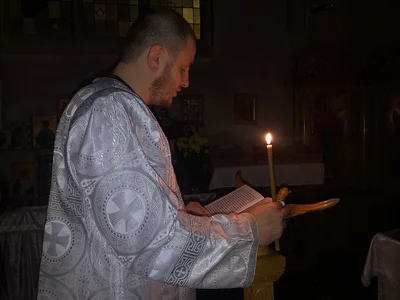
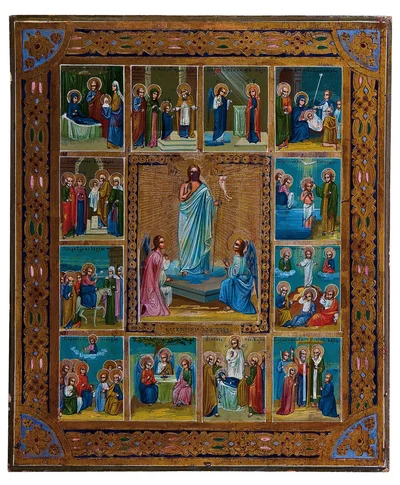
The Royal Doors are opened, the clergy with candles and the censer come out to the middle of the church to the icon of the feast lying on the analogion, and cense the whole church. The magnification is sung — a short phrase of praise to the feast or the saint. Then the Gospel is read: on Sunday, one of the eleven Sunday Gospels, about the Resurrection of Christ; on a feast, the one relating to the event. After the Gospel the anointing with oil begins.
From the beginning of the polyeleos to the end of the anointing in a large parish half an hour and more passes — the line goes on for a long time. If you came to the All-Night Vigil and found the church brightly lit and priests in the middle of it, you have arrived at the polyeleos: about an hour remains until the end of the service.
The rank of a feast is also distinguished by the polyeleos: services are polyeleos ones, vigil ones, and simply daily ones — the last have no polyeleos at all.
See also
Divine services
Matins
The longest service of the daily cycle. Appointed for the morning, but in parishes it is served in the evening as the second half of the vigil.
Divine services
All-night vigil
The evening service on the eve of Sundays and great feasts — Vespers, Matins and the First Hour together. Despite the name it lasts two or three hours, not all night.
Books and chant
Kathisma
One of the twenty divisions of the Psalter for liturgical reading; the name means «sitting».
Church utensils
Altar Gospel book
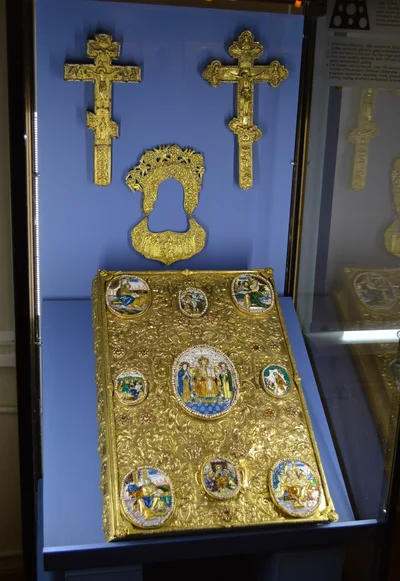
The service Gospel in a heavy metal cover, kept on the altar table and carried out at the Little Entrance.
Feasts and fasts
The Twelve Great Feasts
The twelve chief feasts of the year after Pascha: nine fall on fixed dates, three are counted from Pascha.