
Liturgical colours
Vestment colour changes with the church year, telling you what day it is before the service begins.
Reading options
There is no strict Church rule about colours — the established practice of the Russian Church is as follows:
What each colour means
White — the Divine light: Pascha (at the very beginning), the Nativity of Christ, Theophany, the Transfiguration, the Ascension, and also funerals and baptisms.
Gold (yellow) — the colour of royal glory: Sundays, the days of hierarchs and apostles, most days of the year. The most ordinary colour of vestments.
Blue — purity: all feasts of the Mother of God and the Meeting of the Lord.
Red (crimson) — blood and Paschal joy: the whole of Bright Week and the Paschal period, the days of the martyrs, the Exaltation of the Cross — in dark red.
Green — life: the Trinity, the Lord’s Entry into Jerusalem, the days of venerable ones and fools-for-Christ.
Violet — the Cross and repentance: the Sundays of Great Lent, the Sunday of the Veneration of the Cross.
Black — the weekdays of Great Lent; at other times it is not used.
The most noticeable change
At Paschal Matins the clergy begin the service in white and then change into red — and in Bright Week the church is already entirely red. In autumn, for the Exaltation of the Cross, the same red becomes dark, almost crimson.
Images
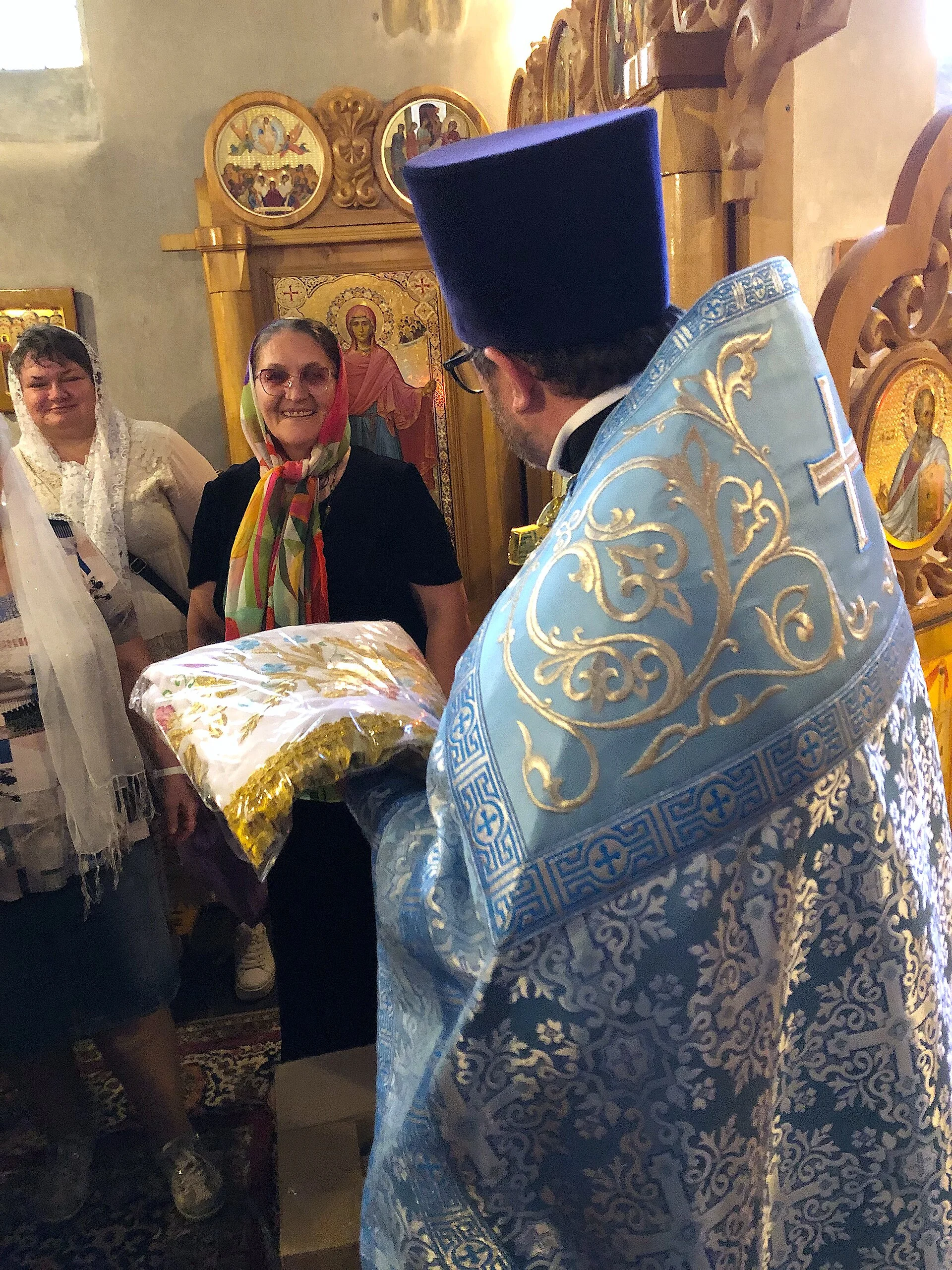
See also
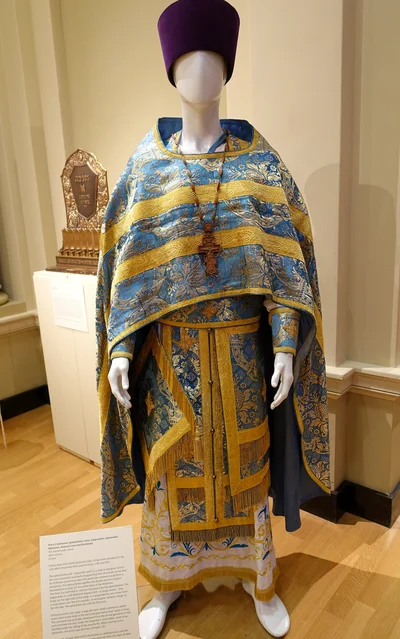
Vestments
Vestments
The garments worn for divine service. Deacon, priest and bishop each have their own set, so the vestments show at a glance who is serving.
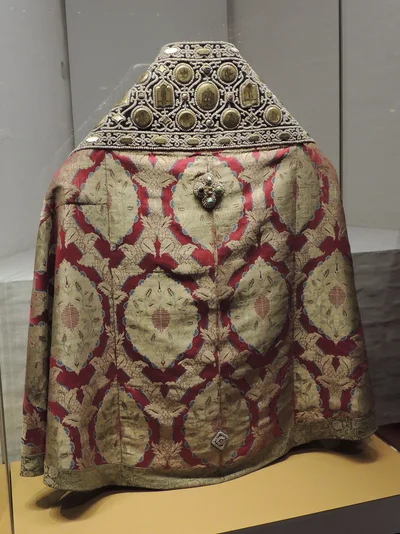
Vestments
Phelonion
The priest's outermost liturgical garment: a wide sleeveless mantle covering the whole body.
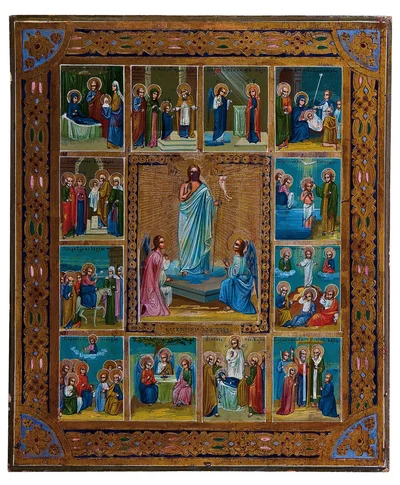
Feasts and fasts
The Twelve Great Feasts
The twelve chief feasts of the year after Pascha: nine fall on fixed dates, three are counted from Pascha.
Feasts and fasts
Great Lent
The longest and strictest fast of the year: 48 days before Pascha, made up of the Forty Days, Lazarus Saturday, Palm Sunday and Holy Week.