Communion
Other names: Eucharist, Holy Communion
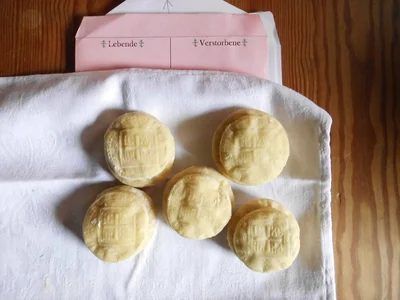
The central sacrament of the Church: at the Liturgy bread and wine become the Body and Blood of Christ, received by the faithful from the chalice.
Reading options
The Liturgy is served for the sake of Communion — everything else in it leads up to this. The bread and wine brought by the people become, at the Eucharistic canon, the Body and Blood of Christ; the faithful receive them and are thereby united with Christ and with one another. The Greek word Eucharist means “thanksgiving” — this is also the name of the Sacrament itself.
What happens in church
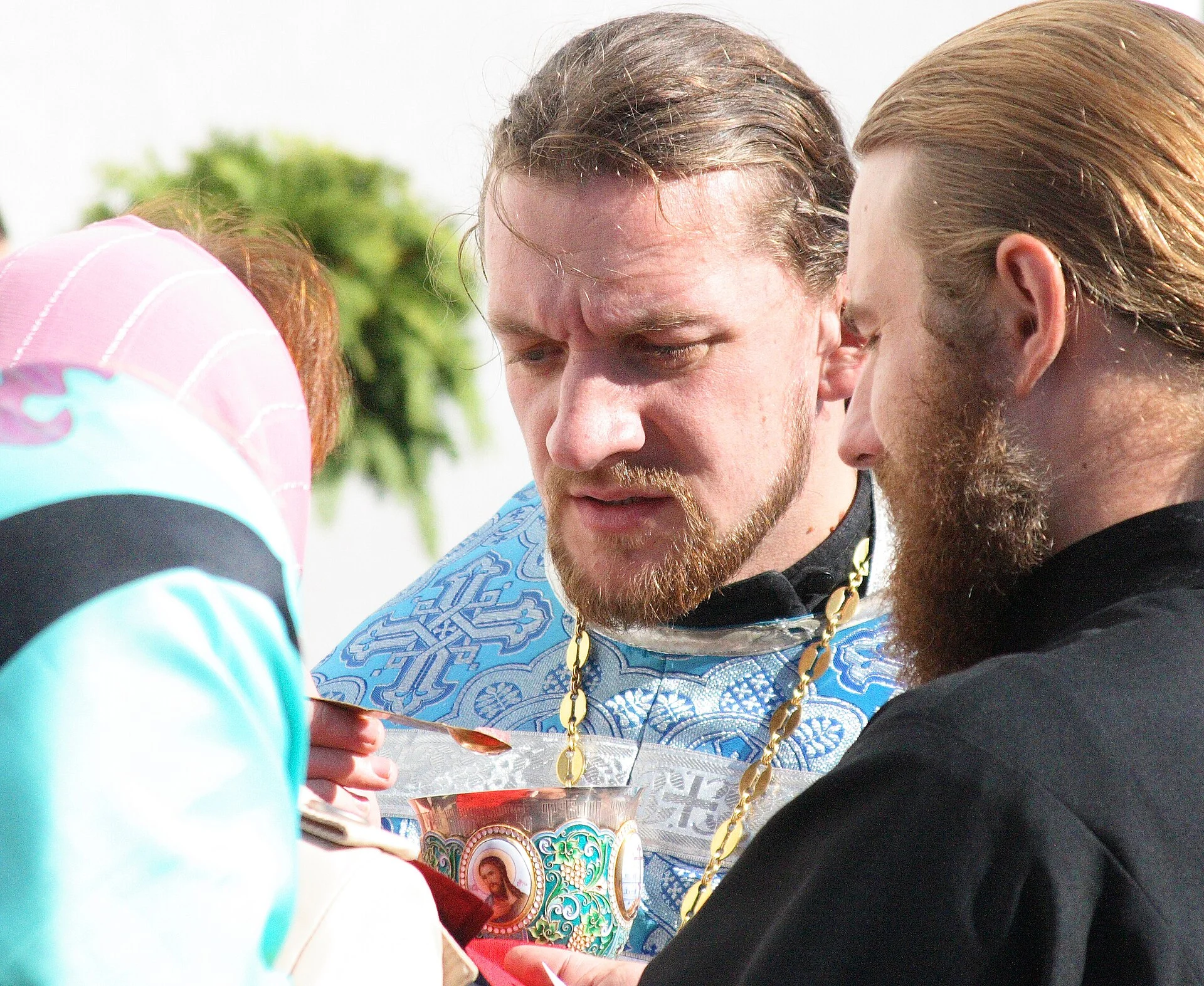
Toward the end of the Liturgy the Royal Doors are opened and the priest brings out the Chalice. People approach in turn, with their arms folded crosswise on the chest — the right over the left; before the Chalice they say their Christian name and receive Communion from the spoon, kissing nothing but the lower edge of the Chalice. Immediately afterwards, at a small table, they are given the drink — warm water with wine — and a piece of prosphora.
Infants and children are given communion first, not in the general line. Children under seven are communed without confession; from about the age of seven a child begins to confess.
Who receives communion
Only those baptized in the Orthodox Church. In the Russian Church an adult communicant, as a rule, first confesses — this link is so familiar that it seems part of the Sacrament itself, although they are two different Sacraments. There is also preparation: fasting, the rule of prayer, abstaining from food and drink from midnight. This is covered in detail in the article “How to Receive Communion”; here it is enough to say that it is not customary to approach without preparation, and one can ask about it of any priest in church.
Images
See also
Parish practice
How to prepare for Communion
Fasting, the prayer rule, confession and the Chalice itself: what is customary before Communion and how to approach.
Divine services
Divine Liturgy
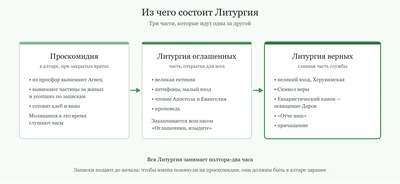
The principal service of the Church, at which the Eucharist is celebrated and the faithful receive Communion. Served in the morning, lasting one and a half to two hours.
Sacraments
Confession
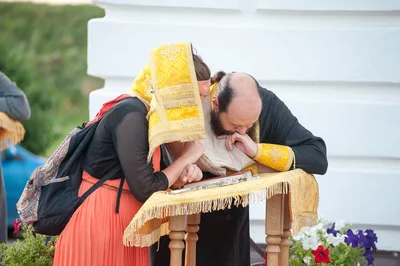
The sacrament of repentance: a person names his sins aloud before God, with the priest as witness rather than judge, and receives forgiveness.
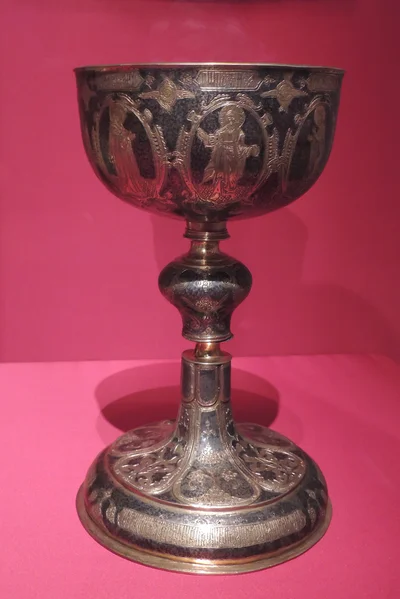
Church utensils
Chalice
The footed cup in which the Blood of Christ is consecrated and from which the faithful receive communion.