
Sticheron
A hymn sung after a verse of a psalm; stichera come in groups and make up much of what is sung at the vigil.
Reading options
The sticheron got its name from “stikh” (verse): it is sung not by itself but paired with a verse from a psalm. The choir sings a verse — and immediately a sticheron, then the next verse and the next sticheron, and so several times in a row.
How it differs from the troparion
The troparion is single and brief; stichera come as a group, from three to ten, and each is noticeably longer than a troparion. If at the All-Night Vigil a long series of texts of roughly equal length is sung one after another — those are stichera.
Where they are heard
The first large group is the stichera at “Lord, I have cried” at the beginning of Vespers, when the deacon censes the church. Then the stichera at the Aposticha, at the end of Vespers. At Matins — the stichera at the Praises, nearer the very end of the service. The last of the group is usually sung after “Glory, both now” and is the main one in meaning.
Stichera are taken from the Octoechos, the Menaion or the Triodion and sung in the tone of the week — or to a melody of their own, if the sticheron is festal.
See also
Books and chant
Tone
Not pitch but a set of melodies. There are eight tones; they change weekly and repeat every eight weeks.
Books and chant
Octoechos
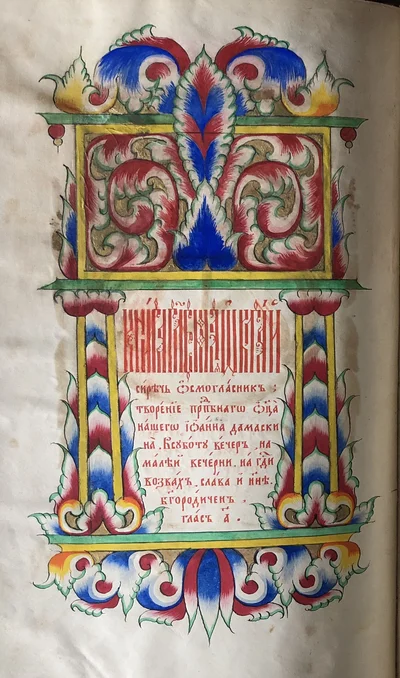
The book of the weekly cycle: eight tones, each with services for every day of the week.
Divine services
Vespers
The first service of the church day, served in the evening; its themes are the creation of the world, the fall, and the waiting for the Saviour.
Divine services
All-night vigil
The evening service on the eve of Sundays and great feasts — Vespers, Matins and the First Hour together. Despite the name it lasts two or three hours, not all night.
Books and chant
Psalter
The book of the 150 psalms — the most-read book in church, divided into twenty kathismata.