
Svyatki (Christmastide)
Other names: Christmastide
The days from the Nativity to the eve of Theophany, 7–17 January — the longest fast-free stretch of the year.
Reading options
Svyatki is the days between two feasts: the Nativity of Christ on 7 January and Theophany on 19 January. They are called the holy days, and the Church does not fast at this time: the Wednesday and Friday within Svyatki are not counted as fast days.
By ancient custom, no prostrations are made on these days and no weddings are performed: the unbroken festal season is interrupted by nothing of the everyday.
Christ-glorifying
The custom of going from house to house and singing the troparion of the Nativity is old and entirely churchly: the priest with the singers visits the homes of parishioners, offering congratulations and serving a short moleben. The folk kolyadki carols grew out of this round of visits.
Fortune-telling
Svyatki fortune-telling has nothing to do with the feast. It is a pre-Christian custom that clung to the holy days by the calendar, not by meaning. The Church takes a directly negative view of it: an attempt to learn the future apart from God is considered a sin and is named separately at confession.
Svyatki end abruptly: 18 January is the Eve of Theophany, a strict fast day, and Theophany begins with it.
See also
Feasts and fasts
Fast-free weeks
Weeks on which the Wednesday and Friday fast is lifted. There are five, each standing beside a great feast or at the threshold of a fast.
Feasts and fasts
The Nativity Fast
A forty-day fast before the Nativity, 28 November – 6 January, also called St Philip's Fast after the day on which it begins.
Parish practice
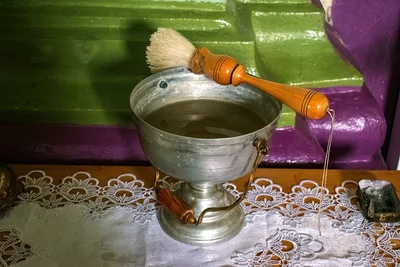
Holy water
Water blessed by the Church: the Great Sanctification at Theophany, or a lesser blessing at other times.
Parish practice
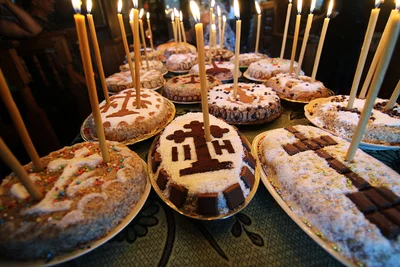
Kutia
A memorial dish of boiled grain with honey and raisins, blessed at the memorial service.