
Venerable
A sainted monastic. The Slavonic word means 'most like' — one who has recovered the likeness of God in which man was created.
Reading options
“Venerable” (“prepodobny”) is a Slavonic calque of the Greek: pre- intensifies, podobny means “similar.” A person is created in the image of God, but in each the image is worn away beyond recognition; monastic life is an attempt to restore the likeness. Whoever has succeeded in this is called venerable, that is, one who has become truly similar.
The rank applies only to monastics. A layperson, however holy his life, is not called venerable — for him there is the word “righteous.”
The first venerable ones were the Egyptian desert dwellers: Anthony the Great, Macarius, Pachomius. In Rus — Anthony and Theodosius of the Kiev Caves, with whom Russian monasticism began; Sergius of Radonezh; Seraphim of Sarov; the Optina elders. Among women — Mary of Egypt, a former harlot who withdrew into the desert beyond the Jordan and lived there for decades; her life is read in full in Great Lent.
Venerable and righteous
The difference is not in the measure of holiness but in the arrangement of life. A venerable one is a monk: vows, obedience, renunciation of family and property. A righteous one is a layperson: home, work, children, and holiness in the midst of all this. Sergius of Radonezh is venerable; John of Kronstadt, a married parish priest, is righteous.
See also
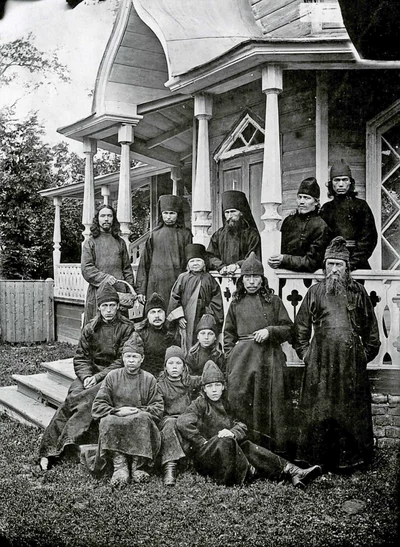
Clergy and ranks
Monk
One tonsured with the vows of obedience, poverty and celibacy; monasticism and priesthood are separate things.
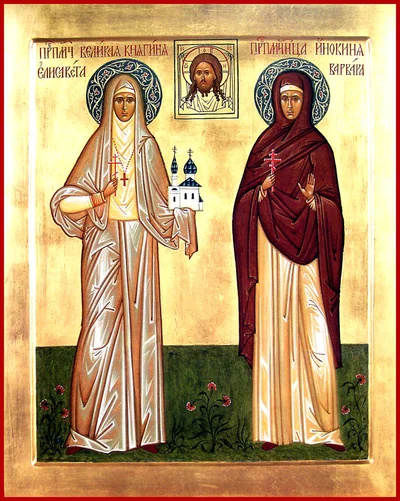
Ranks of sanctity
Venerable Martyr
A monk or nun who died a martyr's death — not the same as a hieromartyr, where the mark is holy orders rather than monastic tonsure.
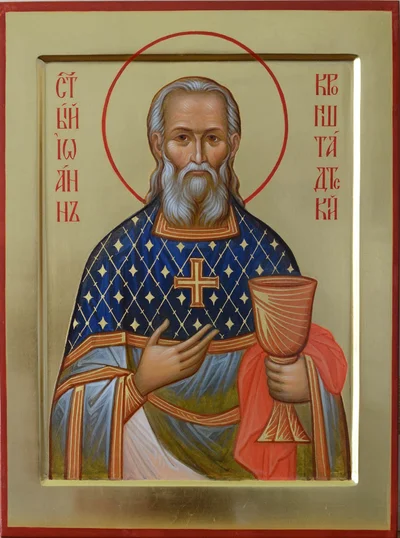
Ranks of sanctity
Righteous
A sainted layperson — one who lived an ordinary life in the world, in a family and at work, and lived it holily.
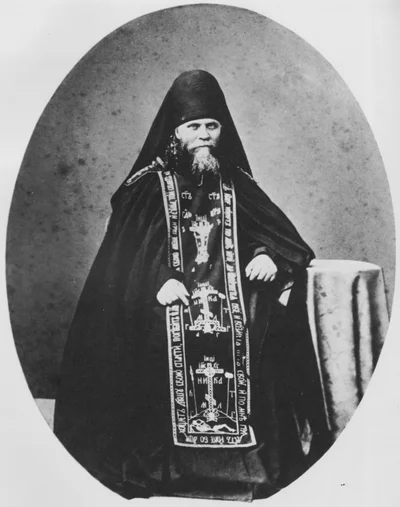
Clergy and ranks
Schema
The highest monastic degree: the great-schema monk takes stricter vows, receives a new name again and wears the kukol and analavos.