
Anaphora (Eucharistic canon)
Other names: Anaphora
The central prayer of the Liturgy, during which the bread and wine become the Body and Blood of Christ. It lasts ten to fifteen minutes.
Reading options
The anaphora is, in Greek, “offering up.” It is one great prayer that the priest reads at the altar table from beginning to end; only its exclamations sound aloud, the rest is read under the breath. It begins with the deacon’s summons “Let us stand well, let us stand with fear” — that is, let us stand properly and not be distracted.
What it consists of
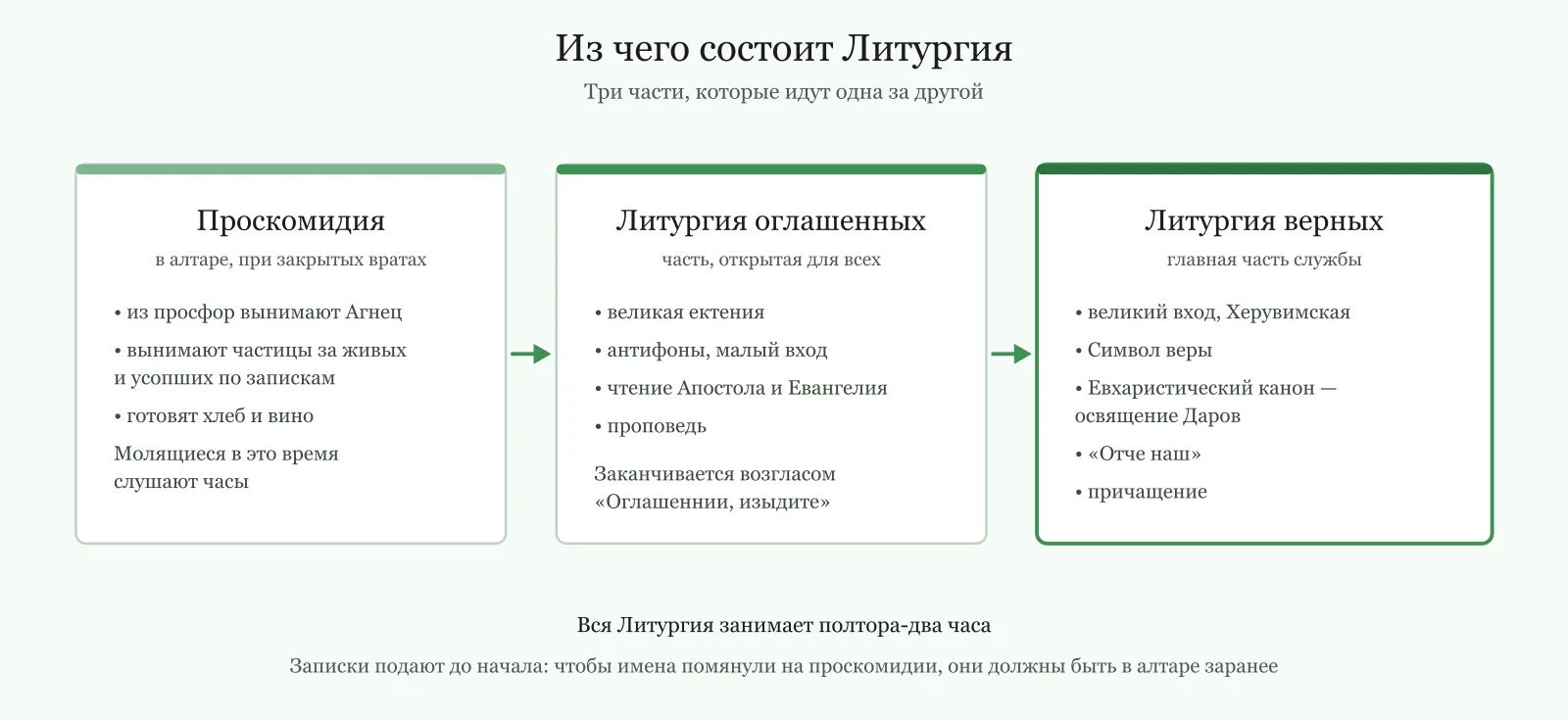
The prayer follows a strict sequence. First the thanksgiving — for the creation of the world and for salvation; at the exclamation “Singing the triumphant hymn” the choir responds with the angelic doxology “Holy, Holy, Holy.” Then the remembrance of the Mystical Supper with the words of Christ: “Take, eat” and “Drink of it, all of you.” Then the main thing — the invocation of the Holy Spirit: the priest asks the Father to send down the Spirit upon the Gifts offered. In the Orthodox understanding they are consecrated precisely here, by the invocation, and not by the words of institution alone. The anaphora is concluded with commemoration — of the Mother of God, the saints, the living and the departed; aloud this is heard as “Especially for our most holy…” followed by “It is truly meet.”
How it looks from the church
The choir sings “A mercy of peace,” then the prolonged “We praise Thee, we bless Thee.” In many churches a small bell is rung at this moment. People stand motionless, often on their knees. If you came in and saw that the whole church had gone still and no one was moving, the anaphora is being read; wait at the entrance until it ends.
Images
See also
Divine services
Liturgy of the Faithful
The main part of the Liturgy, from the Cherubic Hymn to the dismissal: the Eucharist itself and the Communion of the faithful.
Divine services
Divine Liturgy
The principal service of the Church, at which the Eucharist is celebrated and the faithful receive Communion. Served in the morning, lasting one and a half to two hours.
Sacraments
Communion
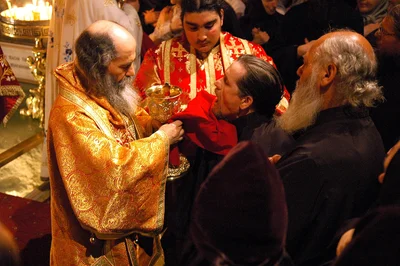
The central sacrament of the Church: at the Liturgy bread and wine become the Body and Blood of Christ, received by the faithful from the chalice.
Church utensils
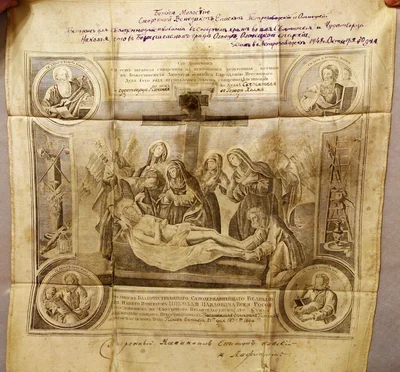
Antimension
A silk cloth showing the burial of Christ, signed by the ruling bishop and containing a relic; without it no Liturgy may be served.
Church utensils
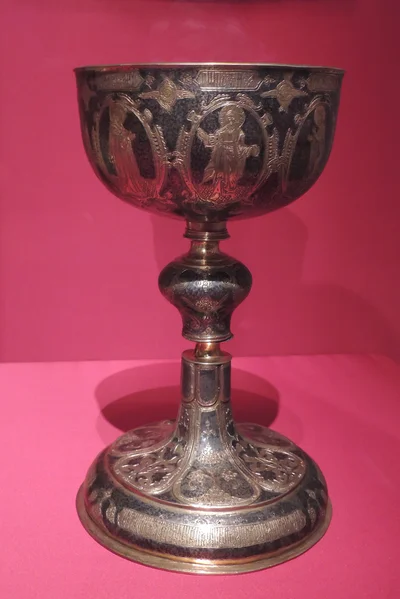
Chalice
The footed cup in which the Blood of Christ is consecrated and from which the faithful receive communion.