
Blessed
One word with two senses: the title of the holy fools, and an honorific for certain ancient teachers such as Blessed Augustine.
Reading options
“Blessed” means “happy,” “having attained blessedness” — the same word with which the Beatitudes begin. In the calendar of saints it works in two different senses, and confusion here is an ordinary thing.
The first meaning: fools for Christ
Blessed is what Fools for Christ are called — those who took on the appearance of madness. Blessed Xenia of St Petersburg, who gave away her property and for decades walked about the city in her dead husband's clothes; Blessed Basil of Moscow, after whom the cathedral on Red Square is popularly named; Blessed Matrona of Moscow, blind from birth. On a card they have “Bl.”
The second meaning: an honorific
Blessed is also used of several ancient writers: Blessed Augustine, Bishop of Hippo, Blessed Jerome of Stridon, Blessed Theodoret of Cyrus. There is no foolishness for Christ in them. This title is a mark of respect with a reservation: the Church venerates these teachers but does not accept everything they wrote, and therefore does not call them hierarchs on a level with Basil the Great or Chrysostom.
The easiest way to tell which meaning is meant is by time and place. A Russian saint called blessed is almost certainly a fool for Christ; an ancient Western or Syrian writer — an honorific.
See also
Ranks of sanctity
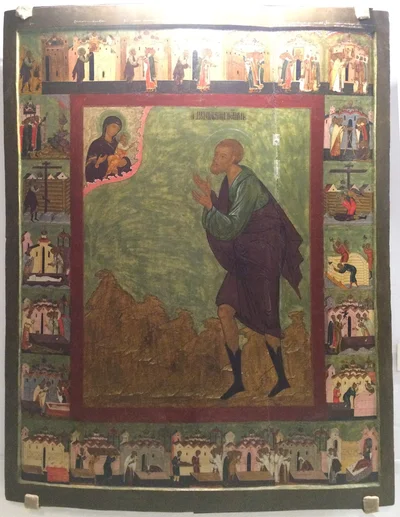
Fool for Christ
A saint who deliberately took on the appearance of madness — renouncing even a good name, and free to tell the powerful what no one else would.
Ranks of sanctity
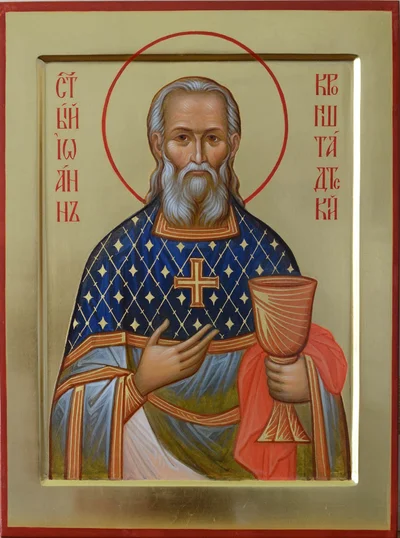
Righteous
A sainted layperson — one who lived an ordinary life in the world, in a family and at work, and lived it holily.
Ranks of sanctity
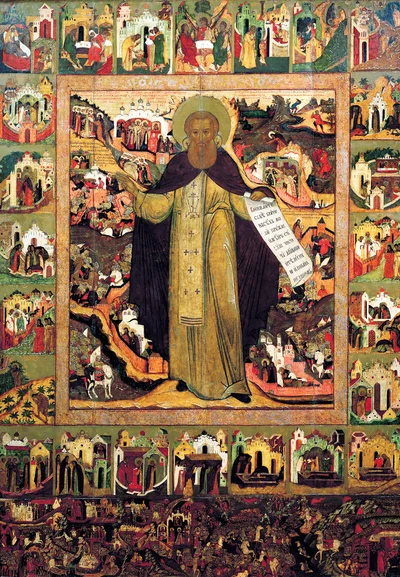
Venerable
A sainted monastic. The Slavonic word means 'most like' — one who has recovered the likeness of God in which man was created.

Ranks of sanctity
Canonization
The Church's decision that a person may be openly venerated as a saint — it does not make anyone holy, it testifies to holiness already evident.