
Divine service
Other names: Worship
The common prayer of the Church served according to a fixed order: an evening service the day before, and the Liturgy in the morning.
Reading options
Divine service is the prayer not of an individual person but of the Church, and therefore it proceeds not just as it happens, but according to an order written down in advance. The order is the same in Samarkand, in Moscow and on Athos; only the chants and the length differ.
Public and private
Services are divided into two unequal parts. Public ones are performed at the appointed time regardless of whether anyone asked for them or not: the Liturgy, Vespers, Matins, the Hours. Private ones are served at the request of a particular person — a moleben, a panikhida, baptism, marriage; they are called trebas (services of need), from the word potreba, need.
Three cycles
The content of a service is made up of three cycles laid one upon another. The daily one repeats every day and sets the skeleton: Vespers, Matins, the Hours. The weekly one is assigned to the days of the week: Monday to the angels, Wednesday and Friday to the Cross, Saturday to the departed, Sunday to the Resurrection of Christ. The yearly one brings the commemoration of today’s saint or feast. That is why two services are never entirely alike.
How it looks in a parish
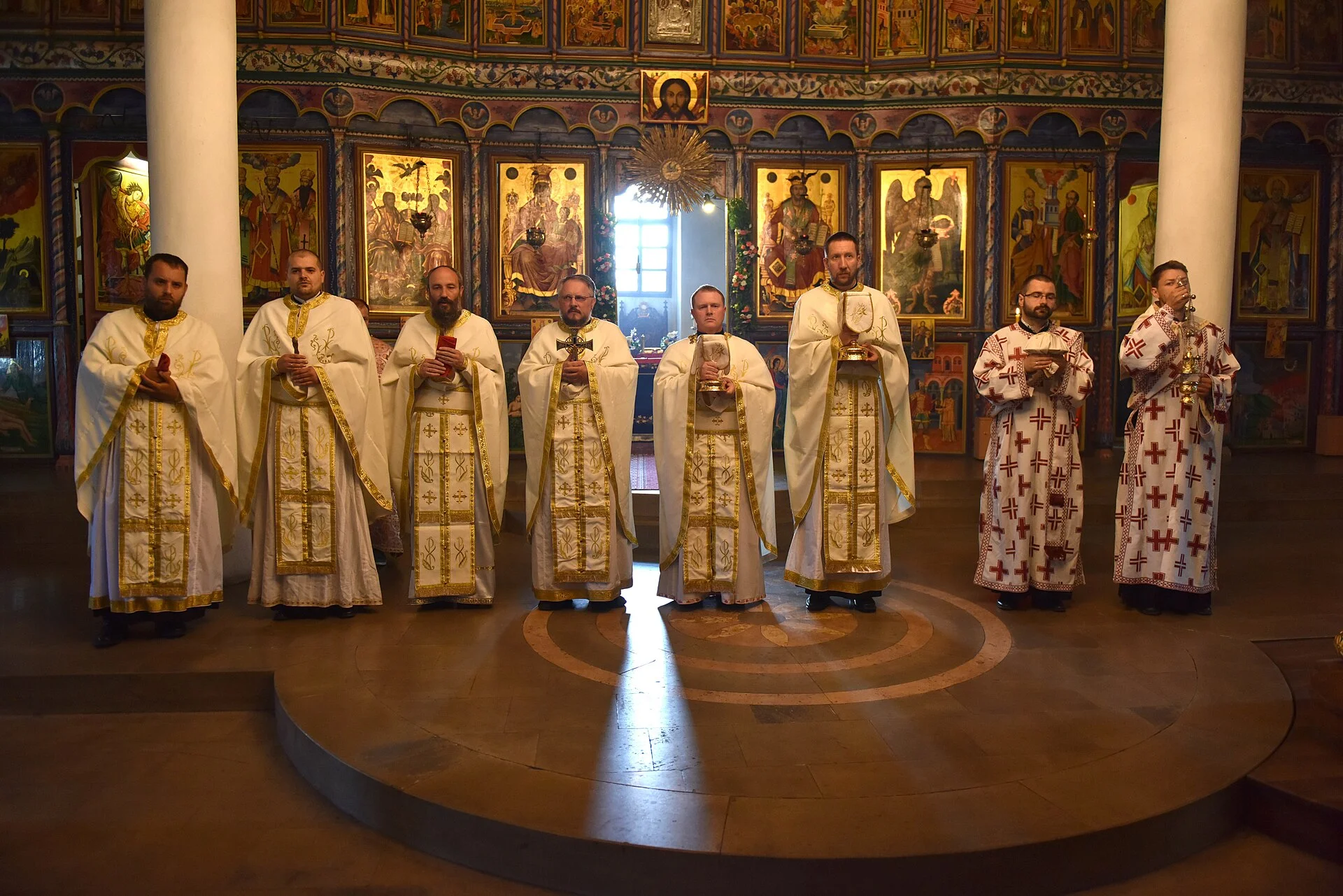
The full typikon is served in monasteries. In an ordinary church there are two services: in the evening of the day before — the All-Night Vigil or Vespers with Matins (two to three hours), in the morning — the Liturgy (an hour and a half to two hours). Everything else — molebens, panikhidas, akathists — is fitted to these two.
The language of the service is Church Slavonic. The sermon, announcements and confession are in Russian.
Images
See also
Divine services
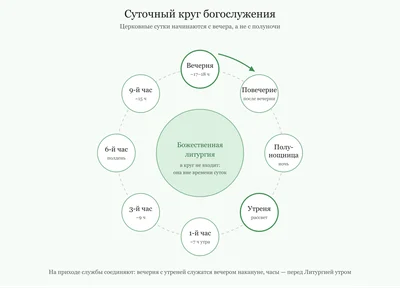
The daily cycle of services
The nine services spread over the day, from Vespers to the Ninth Hour. The church day begins in the evening, not in the morning.
Divine services
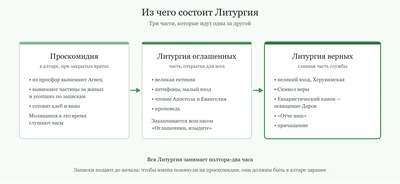
Divine Liturgy
The principal service of the Church, at which the Eucharist is celebrated and the faithful receive Communion. Served in the morning, lasting one and a half to two hours.
Divine services
All-night vigil
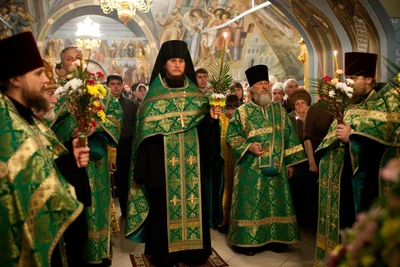
The evening service on the eve of Sundays and great feasts — Vespers, Matins and the First Hour together. Despite the name it lasts two or three hours, not all night.
Books and chant
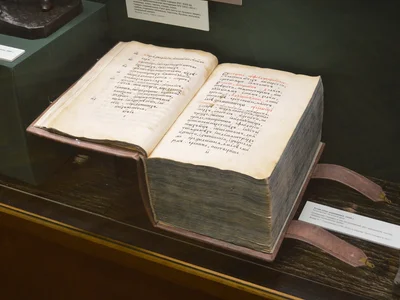
Typikon
The book of rules: what to serve when, and how the other liturgical books fit together. It contains no prayers of its own.
Feasts and fasts
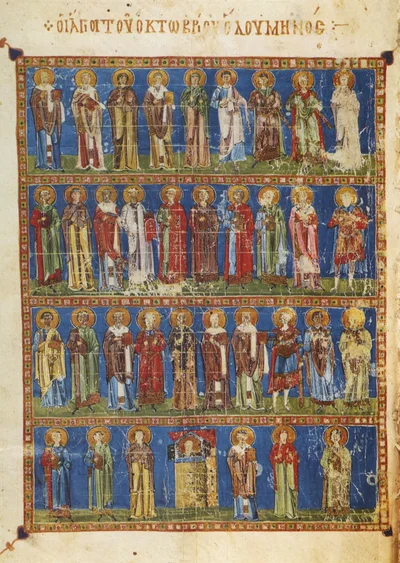
The church year
The yearly round of feasts and fasts. It begins on 14 September and is woven from two overlapping cycles: one fixed to calendar dates, one moving with Pascha.