
Epitimia (penance)
Other names: Penance
A spiritual exercise given after confession — a prayer rule, prostrations, abstinence, sometimes a temporary abstaining from communion. It is medicine, not punishment.
Reading options
Epitimia is what a priest may assign to a person after confession: to read certain prayers, to make prostrations, to abstain from something, to help the needy, and in grave cases — for a time not to approach Communion.
It is constantly understood as a fine: you sinned — work it off. The Church looks at it differently. The sin is already forgiven at confession, by the prayer of absolution, and epitimia does not “pay anything extra.” It is needed for something else: so that the person does not return to the same thing a week later. Hence its form — not suffering but an exercise directly opposite to the sin: for one who judged — to pray for the one he judged; for the greedy — to give away.
Exclusion from Communion
The gravest form of epitimia. The ancient Church canons assigned for serious sins terms of years, and these rules are preserved in the books, but in present practice they are not applied in their full severity: the spiritual father looks at the living person, not at a table. Such an epitimia is not expulsion from the Church: the excluded person continues to attend services, only does not approach the Chalice.
An epitimia is given by the priest, and he also lifts it when the term has passed. If the spiritual father is not at hand — has left, been transferred, died — the epitimia can be lifted by another priest or the ruling bishop. One should not assign it to oneself: the point is that the measure is determined by someone from outside.
See also
Sacraments
Confession
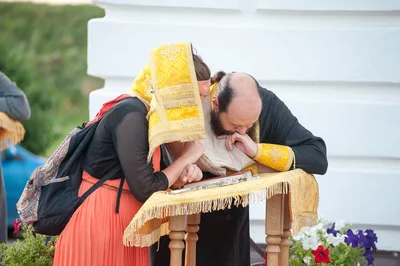
The sacrament of repentance: a person names his sins aloud before God, with the priest as witness rather than judge, and receives forgiveness.
Sacraments
Communion
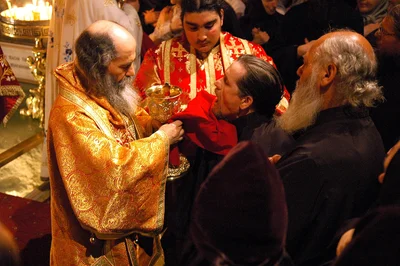
The central sacrament of the Church: at the Liturgy bread and wine become the Body and Blood of Christ, received by the faithful from the chalice.
Parish practice
How to prepare for confession
What to do before confession and how it goes: recall your sins, name them plainly, make peace with people, and speak in your own words.
Parish practice
Prayer rule
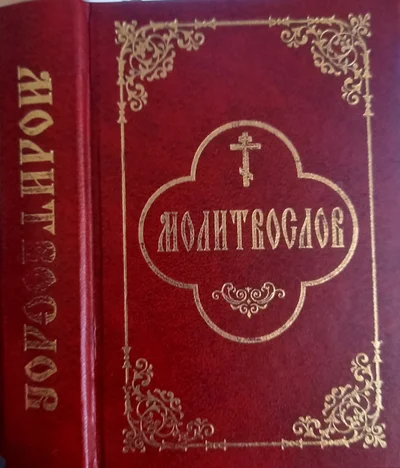
The prayers a Christian reads at home every morning and evening; its extent is set with one's confessor.