
Confession
Other names: Repentance
The sacrament of repentance: a person names his sins aloud before God, with the priest as witness rather than judge, and receives forgiveness.
Reading options
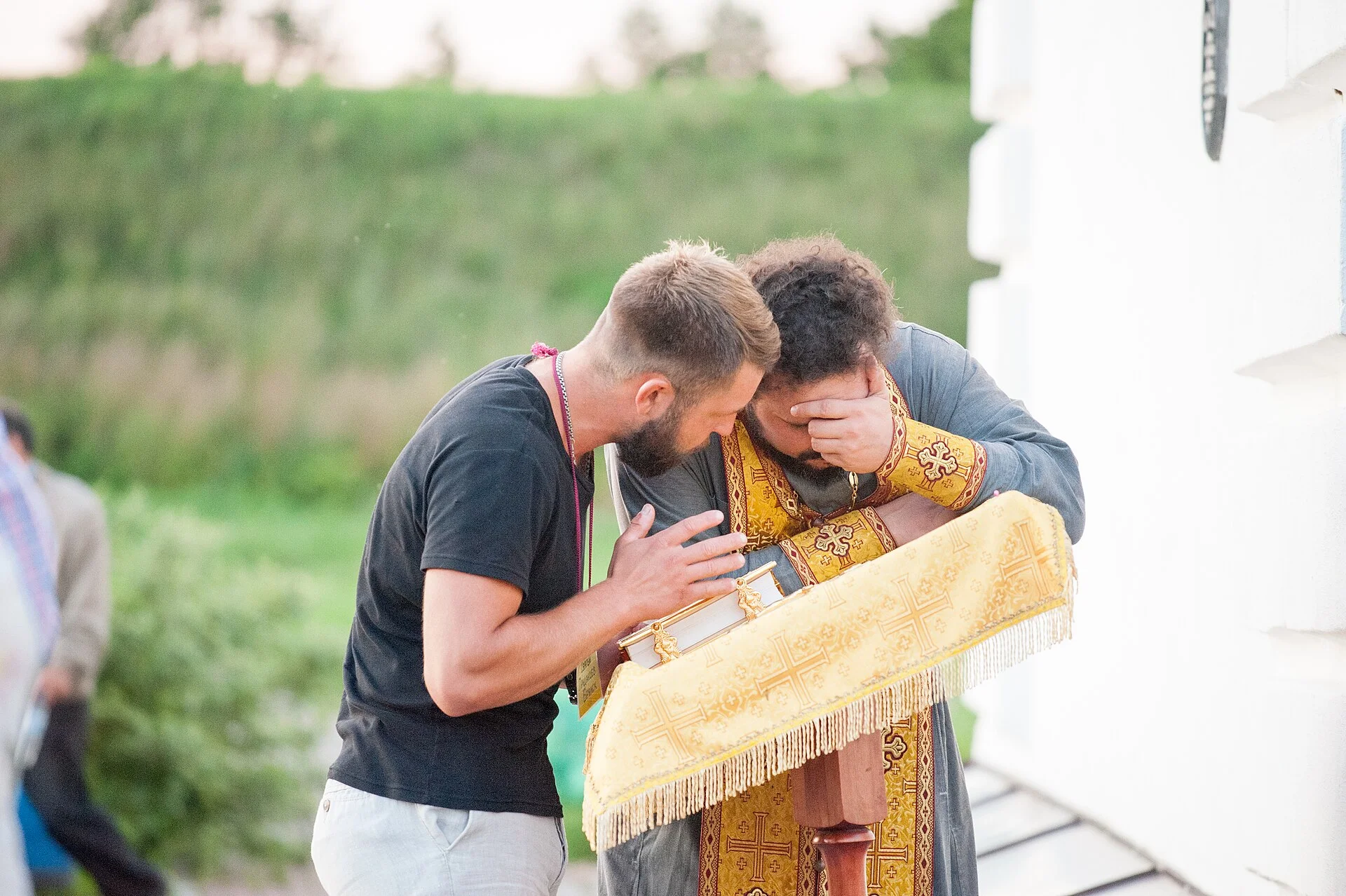
Confession is not a heart-to-heart talk, nor advice, nor a review of a life situation, although all this often happens alongside. The essence is simpler and harsher: a person himself, aloud, names the wrong he has done and asks God for forgiveness. The priest stands nearby as a witness and as the one to whom the Church has entrusted the announcing of forgiveness.
What a person sees
In the church stands an analogion — a tall sloping stand, with a cross and the Gospel on it. People approach it one at a time, the others wait at a distance so as not to hear. The one confessing speaks — briefly, in his own words. The priest may ask a question or say something, or may say nothing. Then he covers the penitent’s head with the epitrachelion and reads the prayer of absolution; after this the cross and the Gospel are kissed.
Everything said at confession the priest has no right to pass on to anyone under any conditions. This is called the seal of confession, and breaking it is a grave offence for the priest himself.
When people confess
Most often in the evening, after the evening service, and in the morning before the Liturgy. In the Russian Church it has come about that confession usually precedes communion: an adult who intends to receive communion first confesses. In the Greek Churches there is no such link — there people confess less often and separately.
There is no need to wait until something terrible accumulates: people confess not only crimes. How to approach confession for the first time and what to say is written separately — see “How to Confess.”
Images
See also
Parish practice
How to prepare for confession
What to do before confession and how it goes: recall your sins, name them plainly, make peace with people, and speak in your own words.
Sacraments
Communion
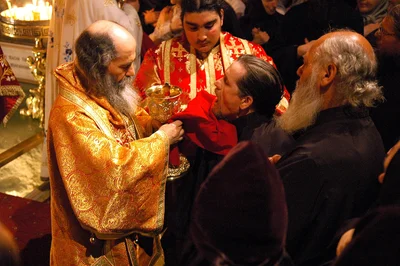
The central sacrament of the Church: at the Liturgy bread and wine become the Body and Blood of Christ, received by the faithful from the chalice.
Sacraments
Epitimia (penance)
A spiritual exercise given after confession — a prayer rule, prostrations, abstinence, sometimes a temporary abstaining from communion. It is medicine, not punishment.
Vestments
Epitrachelion
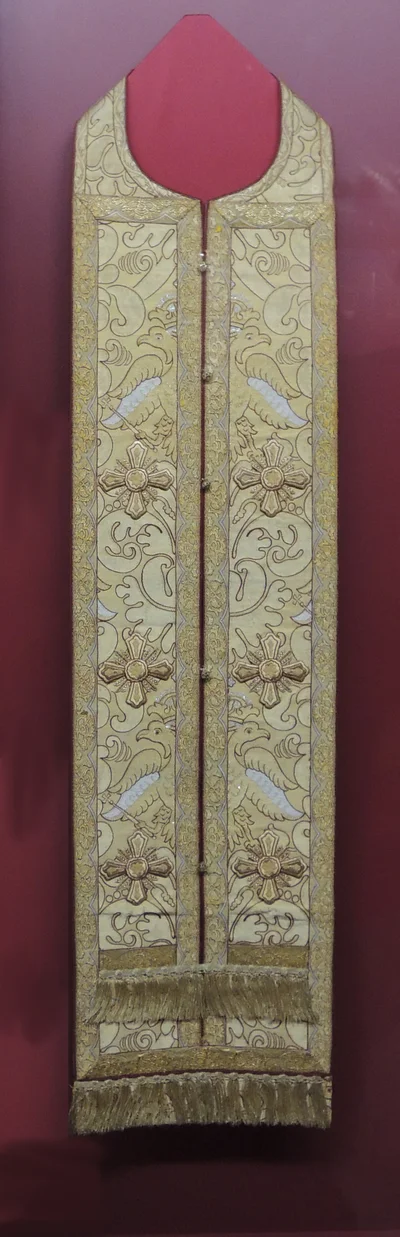
A long stole around the neck — the chief sign of priesthood; no service is served without it.
Clergy and ranks
Priest
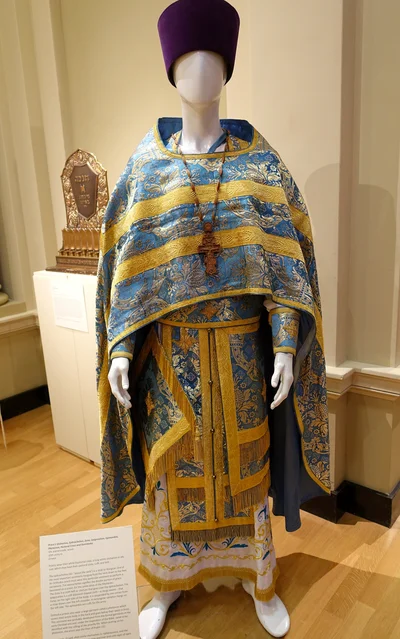
The second degree of priesthood: celebrates the Liturgy and all sacraments except ordination. Recognised by the epitrachelion and pectoral cross.