
How to prepare for confession
What to do before confession and how it goes: recall your sins, name them plainly, make peace with people, and speak in your own words.
Reading options
Confession is a Sacrament, not a conversation with a spiritual father and not psychological counselling. The person himself names what he is guilty of; the priest is a witness who listens and pronounces the prayer of absolution over the penitent. It is God who forgives; the priest does not stand in the way of this, nor does he bargain.
Preparation
One begins not with a book but with silence: sit down and honestly recall what lies on one’s conscience. It is useful to write it down on a sheet of paper — people get nervous at confession and forget. Lists of sins and “helps for the penitent” are of assistance, but they must be used with care: it is easy to read out someone else’s list instead of one’s own life.
Before confession one must be reconciled with those with whom one is at odds — at least take the first step. And decide for oneself what to do about this sin from now on: repentance without the intention to stop is merely a story.
There is no special fast before confession. The fast is usually connected with Communion, not with confession, and many people confess precisely on the eve of receiving Communion — in that case the preparation is shared.
How it takes place
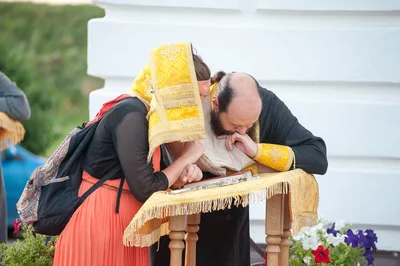
Confession is most often heard in the evening at the All-Night Vigil or in the morning before the beginning of the Liturgy, at the analogion with the cross and the Gospel, to the side of the iconostasis. On approaching, one gives one’s name and speaks — in one’s own words, briefly and to the point: not “I am sinful in everything,” but specifically what one did or failed to do. There is no need to retell the circumstances, to explain who was in the wrong, or to name other people: other people’s sins are not considered at confession.
If you are confessing for the first time, say so at once. The priest will not interrogate you but will ask questions himself, and this is easier.
At the end the priest covers the head with the epitrachelion and reads the prayer of absolution; after this one kisses the cross and the Gospel on the analogion. Sometimes an epitimia is assigned — not a punishment but a medicine: bows, reading, abstinence for a set period. Children begin to confess from the age of seven.
The priest has no right to disclose anything said at confession to anyone under any circumstances.
See also
Sacraments
Confession
The sacrament of repentance: a person names his sins aloud before God, with the priest as witness rather than judge, and receives forgiveness.
Parish practice
How to prepare for Communion
Fasting, the prayer rule, confession and the Chalice itself: what is customary before Communion and how to approach.
Parish practice
Govenie (preparation week)
Several days of preparation for confession and Communion: fasting, services and prayer at home.
Sacraments
Epitimia (penance)
A spiritual exercise given after confession — a prayer rule, prostrations, abstinence, sometimes a temporary abstaining from communion. It is medicine, not punishment.
Clergy and ranks
Priest
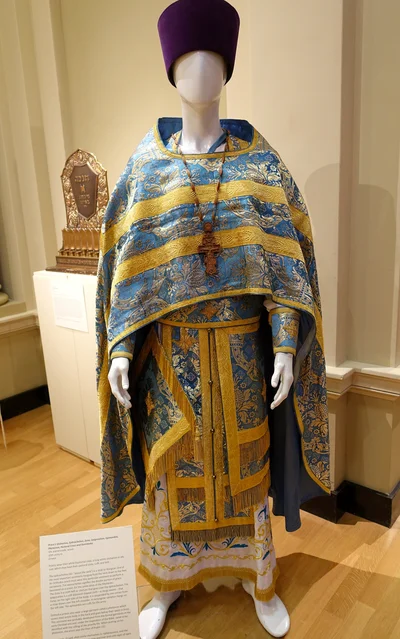
The second degree of priesthood: celebrates the Liturgy and all sacraments except ordination. Recognised by the epitrachelion and pectoral cross.