
Great Lent
Other names: Lent
The longest and strictest fast of the year: 48 days before Pascha, made up of the Forty Days, Lazarus Saturday, Palm Sunday and Holy Week.
Reading options
Great Lent begins on Clean Monday and ends on Great Saturday — 48 days. It has no date of its own: it is reckoned from Pascha and falls on different dates each year.
What it consists of
The Forty Days (Tessarakoste) — the first forty days, from Clean Monday to the Friday of the sixth week. This is the fast proper, a time of repentance, after the pattern of Christ's forty-day fast in the wilderness.
Lazarus Saturday and the Lord's Entry into Jerusalem — two festal days standing between the Forty Days and Holy Week.
Holy Week — the last week, the days of remembrance of the Passion of Christ. It is already not part of the Forty Days: at Vespers on the Friday of the sixth week the hymn “Having completed the soul-profiting Forty Days” is sung — that is, the fast is over, and something different begins: not preparation but the events themselves. The strictness does not slacken, however, but increases; Great Friday, according to the Typikon, is a day of complete abstention from food.
How the services differ
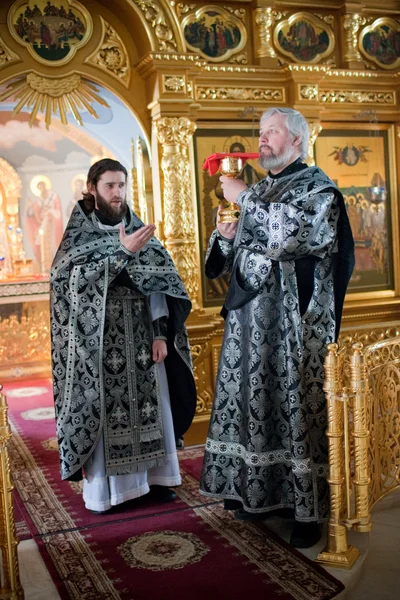
The full Liturgy is not served on weekdays of Lent: in its place the Liturgy of the Presanctified Gifts is celebrated on Wednesday and Friday. In the first week the Great Canon of St. Andrew of Crete is read in parts, and in the fifth week all of it at a single service (“Mary's Standing”). The vestments are dark, and at every service the prayer of St. Ephrem the Syrian is said with prostrations. The Sundays of Lent have names of their own: the Triumph of Orthodoxy, St. Gregory Palamas, the Veneration of the Cross, St. John Climacus, St. Mary of Egypt.
Four preparatory weeks come before the fast, and the entrance to it is Forgiveness Sunday, with the rite of forgiveness in the evening.
See also

Feasts and fasts
Fasting
A time of restraint — in food, amusements and habits — set aside for prayer and repentance: four multi-day fasts, several single days, and most Wednesdays and Fridays.
Divine services
Liturgy of the Presanctified Gifts
A Lenten service at which the faithful receive Gifts consecrated in advance, on the previous Sunday; no Eucharist is celebrated at it.
Books and chant
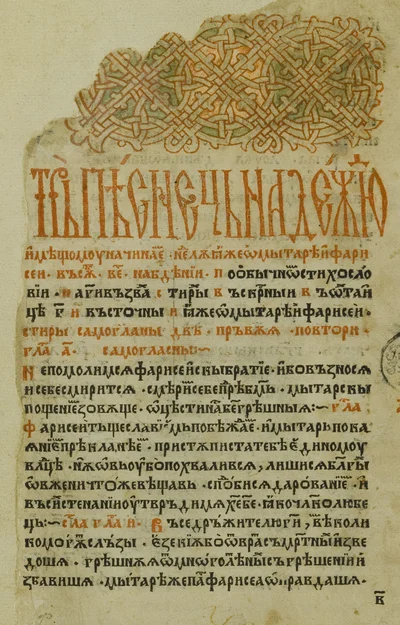
Lenten Triodion
The book for the weeks before Great Lent, Lent itself and Holy Week.
Feasts and fasts
Meatfare and Cheesefare
Two thresholds before Great Lent: meat is eaten for the last time on Meatfare Sunday, dairy on Cheesefare Sunday, with Maslenitsa standing between them.
Feasts and fasts
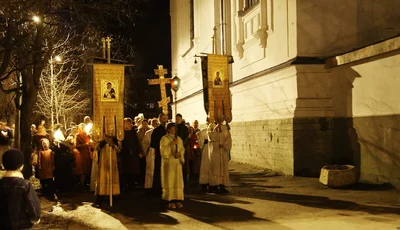
Pascha
The Resurrection of Christ, the feast of feasts. Its date moves between 4 April and 8 May on the civil calendar.