
Litany
Other names: Ektenia
A series of short petitions proclaimed by the deacon, to each of which the choir answers «Lord, have mercy».
Reading options
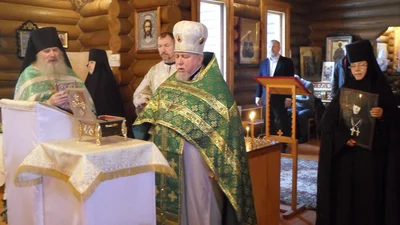
The litany is the most recognizable part of the service. The deacon comes out onto the ambo and utters petitions one after another: for peace, for the church, for those who travel by sea and on journeys, for the sick. After each the choir answers with a short phrase, and so on in a round until the petitions are finished. The word is Greek and means “fervent,” “extended.”
The deacon utters the petitions raising the end of the orarion with three fingers — with this gesture he at once draws the attention of the worshippers and gives a sign to the choir.
What kinds there are
The Great Litany, also called the Litany of Peace — the longest, about twelve petitions; it begins with the words “In peace let us pray to the Lord” and opens almost every service.
The Little Litany — its abbreviation, of three petitions, beginning with “Again and again in peace let us pray to the Lord.” It divides the parts of the service.
The Augmented Litany — “intensified”: it begins “Let us all say,” and at each petition the choir sings “Lord, have mercy” three times. Here the names from the submitted notes are also commemorated.
The Litany of Supplication — begins “Let us complete our prayer to the Lord,” and its response is different: “Grant this, O Lord.”
The Litany for the Departed — petitions for the departed; its basis is the memorial service and the funeral service, but it is also heard at the Liturgy when there is someone to pray for.
Every litany ends with an exclamation by the priest from the altar.
See also
Clergy and ranks
Deacon
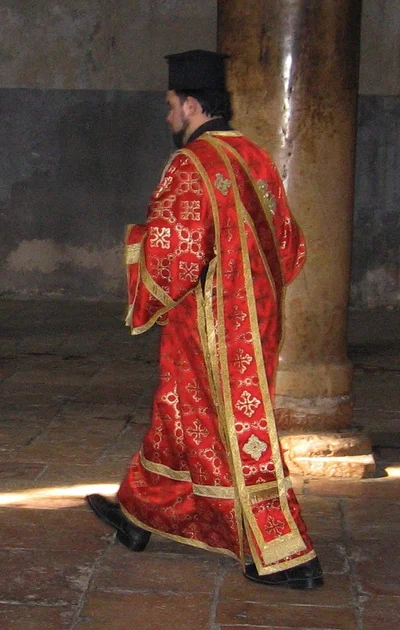
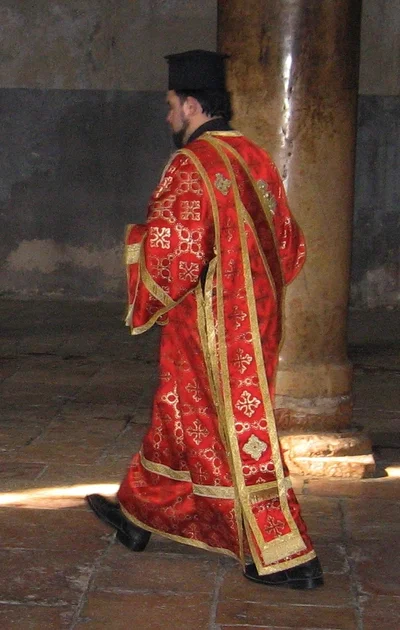
The first degree of priesthood: he assists at services and chants the litanies but celebrates nothing himself. Recognised by the orarion.
Divine services
Divine Liturgy
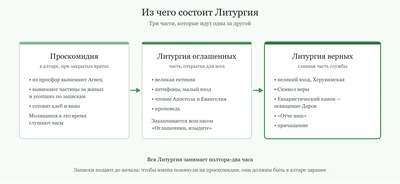
The principal service of the Church, at which the Eucharist is celebrated and the faithful receive Communion. Served in the morning, lasting one and a half to two hours.
Divine services
Vespers
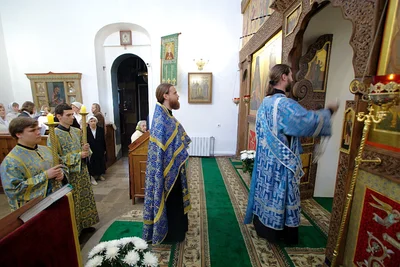
The first service of the church day, served in the evening; its themes are the creation of the world, the fall, and the waiting for the Saviour.
Divine services
Panikhida (memorial service)
A memorial service for the departed that may be served any number of times — on the third, ninth and fortieth day, on anniversaries and memorial Saturdays.