
Litia
A word with two meanings: a part of the vigil at which bread is blessed, and a short memorial service served at the grave or at home.
Reading options
Litia is, in Greek, “earnest supplication.” In church this word is heard in two quite different cases, and there is more confusion here than with many other terms.
The litia at the All-Night Vigil
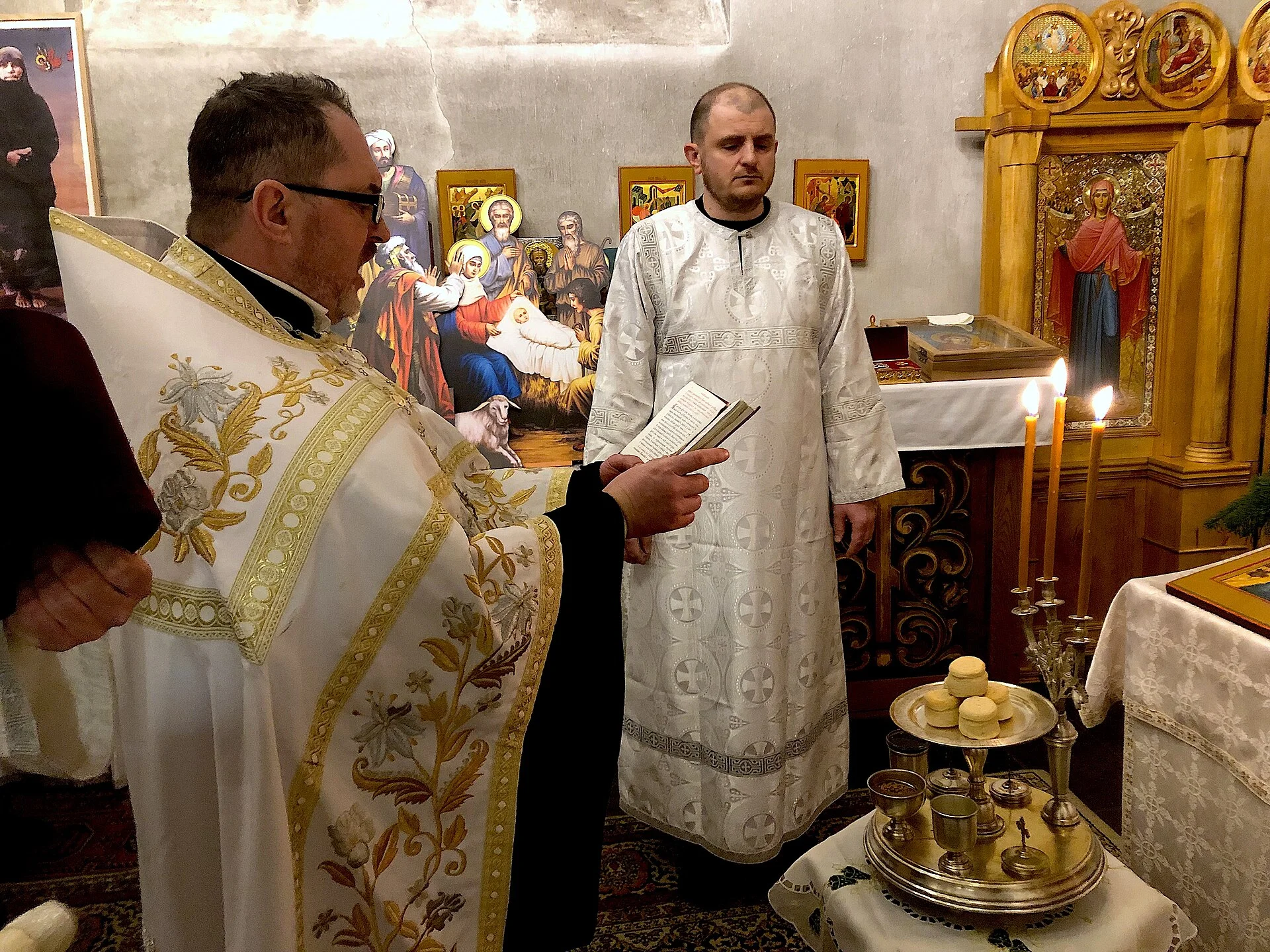
This is part of Great Vespers on feast days. The clergy come out of the altar into the western part of the church, to the narthex, and there pronounce long petitions — for the authorities, for the city, for deliverance from famine, plague and war. The meaning of the procession is ancient: people prayed not in the altar but nearer to the doors, together with those who, being in penance, did not enter the church.
The litia ends with the blessing of five loaves, wheat, wine and oil. The loaves stand on a special table; they are blessed and afterwards distributed to those praying; in olden times this strengthened those who remained for the whole night. All this takes ten to fifteen minutes.
The litia for the departed
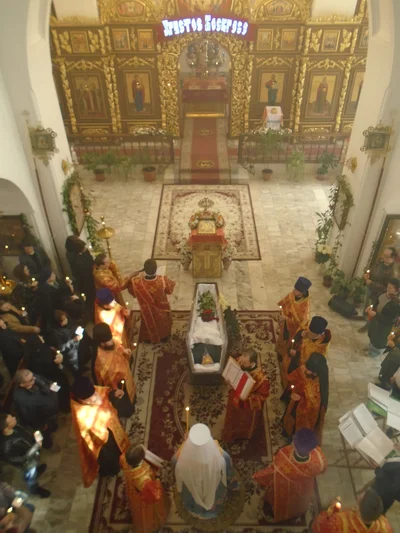
A quite different service: a short supplication for the departed, of about five to ten minutes. It is served at the cemetery at the grave, at home, at the carrying out of the body, and in church — at the kanun, often immediately after the Liturgy, for the notes handed in.
It differs from the panikhida in length: the panikhida is a full order lasting twenty to thirty minutes, the litia is its abbreviation. The litia in its lay form can be read by a layman, without a priest; for this there is a short printed text that people take with them to the cemetery.
Images
See also
Divine services
All-night vigil
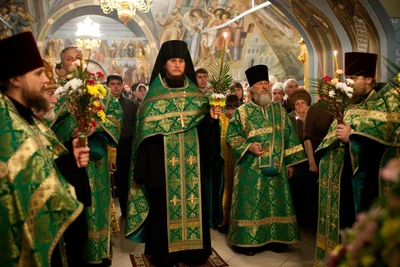
The evening service on the eve of Sundays and great feasts — Vespers, Matins and the First Hour together. Despite the name it lasts two or three hours, not all night.
Divine services
Vespers
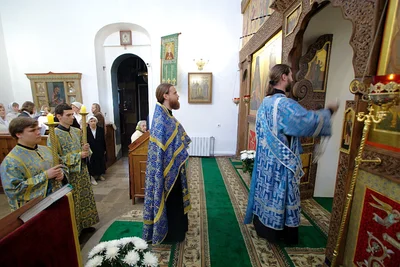
The first service of the church day, served in the evening; its themes are the creation of the world, the fall, and the waiting for the Saviour.

The church building
Narthex
The first room inside the church doors, between the porch and the nave; once the place of catechumens and penitents.
Divine services
Panikhida (memorial service)
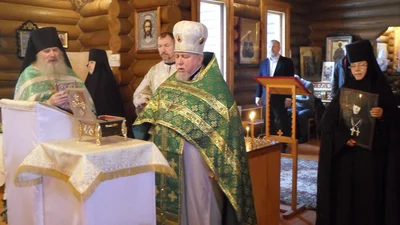
A memorial service for the departed that may be served any number of times — on the third, ninth and fortieth day, on anniversaries and memorial Saturdays.
Divine services
Funeral service
The order of Christian burial, served over the body of the departed once and once only. It is constantly confused with the panikhida.