
Movable feasts
Other names: Moveable feasts
Days with no fixed date: they are counted from Pascha and cover some eighteen consecutive weeks of the year.
Reading options
Movable, or moveable, feasts have no fixed date in the calendar: they are reckoned from Pascha and fall on a different day each year. The nearest example is Maslenitsa, which in one year falls in February and in another in March.
The reckoning is strict, however: the days counted from Pascha never shift in relation to one another:
- 70 days before Pascha — the Sunday of the Publican and the Pharisee, the beginning of the preparation for the fast;
- 48 days before — Clean Monday, the beginning of Great Lent;
- 7 days before — the Lord's Entry into Jerusalem;
- the fortieth day after Pascha — the Ascension;
- the fiftieth — Trinity;
- a week after Trinity — the beginning of the Apostles' Fast.
Why they make up a whole layer of the year
The movable cycle runs without interruption from the Sunday of the Publican and the Pharisee to the Sunday of All Saints — about eighteen weeks. For all that time the services are sung not from the Octoechos and the Menaion but from two special books: the Lenten Triodion before Pascha and the Pentecostarion after it.
How they meet the fixed feasts
The two cycles overlap, and the coincidences can be sharp. The Annunciation, which stands on the fixed date of 7 April, may fall both on Great Friday and on Pascha itself — the latter coincidence is called Kyriopascha. For each such case the Typikon gives a separate instruction on how to combine the two services into one; whole chapters of it are devoted to these rules.
See also
Feasts and fasts
Pascha
The Resurrection of Christ, the feast of feasts. Its date moves between 4 April and 8 May on the civil calendar.
Feasts and fasts
The Paschalion
The rule by which the date of Pascha is found — the first Sunday after the first spring full moon — and the tables that set out that rule for centuries ahead.
Books and chant
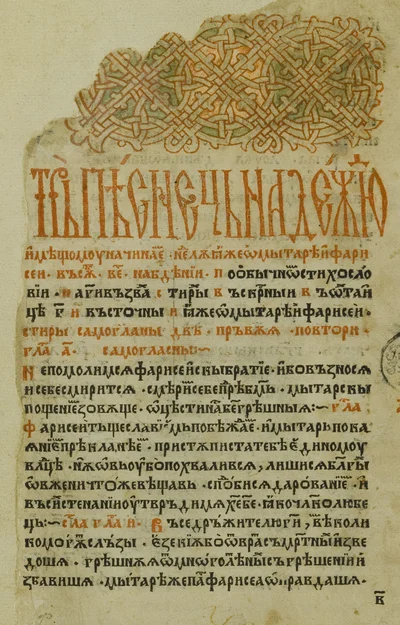
Lenten Triodion
The book for the weeks before Great Lent, Lent itself and Holy Week.
Books and chant
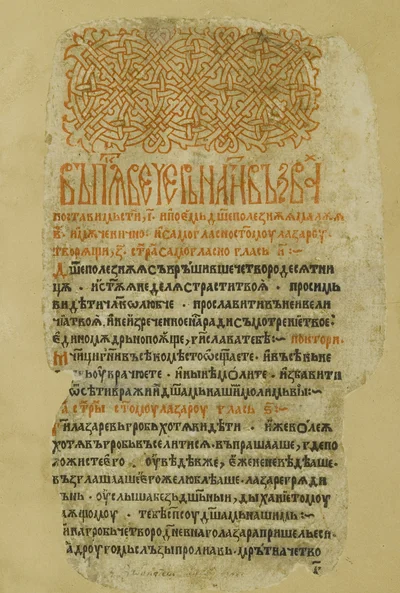
Pentecostarion
The book for the paschal season, from Pascha to the Sunday of All Saints.
Feasts and fasts
Sedmitsa and nedelya
In church language nedelya means Sunday, while the seven-day week is a sedmitsa — without this no notice board in a church makes sense.