
Prophet
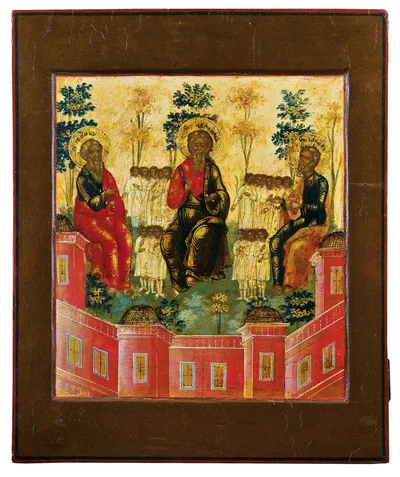
Not a foreteller of the future but one who speaks on God's behalf. The prophets are saints of the Old Testament; the last of them is John the Forerunner.
Reading options
The Greek prophetes means “one who speaks for” — in place of God, in His name. Foretelling the future is secondary here. A prophet conveys the word that has been given to him, and most often this word is unpleasant: about injustice, about judgment, about the people living wrongly. For this prophets were beaten, thrown into pits and killed — Christ speaks directly of this as their usual end.
Four are called the Major Prophets — by the size of their books, not by importance: Isaiah, Jeremiah, Ezekiel, Daniel. The twelve others are called the Minor, again by size. Moses, who led the people out of Egypt, and Elijah, whom Rus has always venerated especially, stand apart: his memory is 2 August (20 July Old Style).
The last prophet
John the Forerunner closes this whole series. He did not speak of Christ from afar — he pointed to Him with his hand as to one standing nearby. Hence the name: the Forerunner, one who goes directly before.
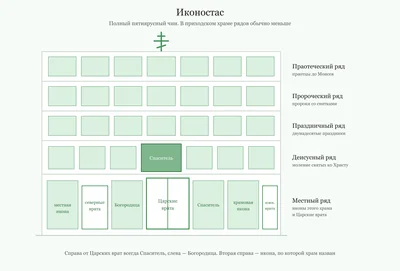
In the iconostasis the prophets are given a separate row, above the festal one. They hold scrolls with their words about Christ and are turned toward the centre, where the Mother of God with the Child is — toward the One of Whom they spoke.
In abbreviated form the card says “Proph.” — both for men and for prophetesses, of whom there are few in the calendar of saints.
See also
Ranks of sanctity
Forefather
An Old Testament righteous one who lived before Christ, above all His ancestor after the flesh; women of this rank are called foremothers.
The church building
Iconostasis
The icon screen dividing sanctuary from nave; its icons are arranged in tiers, each with its own meaning.
Books and chant
Psalter
The book of the 150 psalms — the most-read book in church, divided into twenty kathismata.
Ranks of sanctity
Righteous
A sainted layperson — one who lived an ordinary life in the world, in a family and at work, and lived it holily.