
Ordination
Other names: Holy orders, Cheirotonia
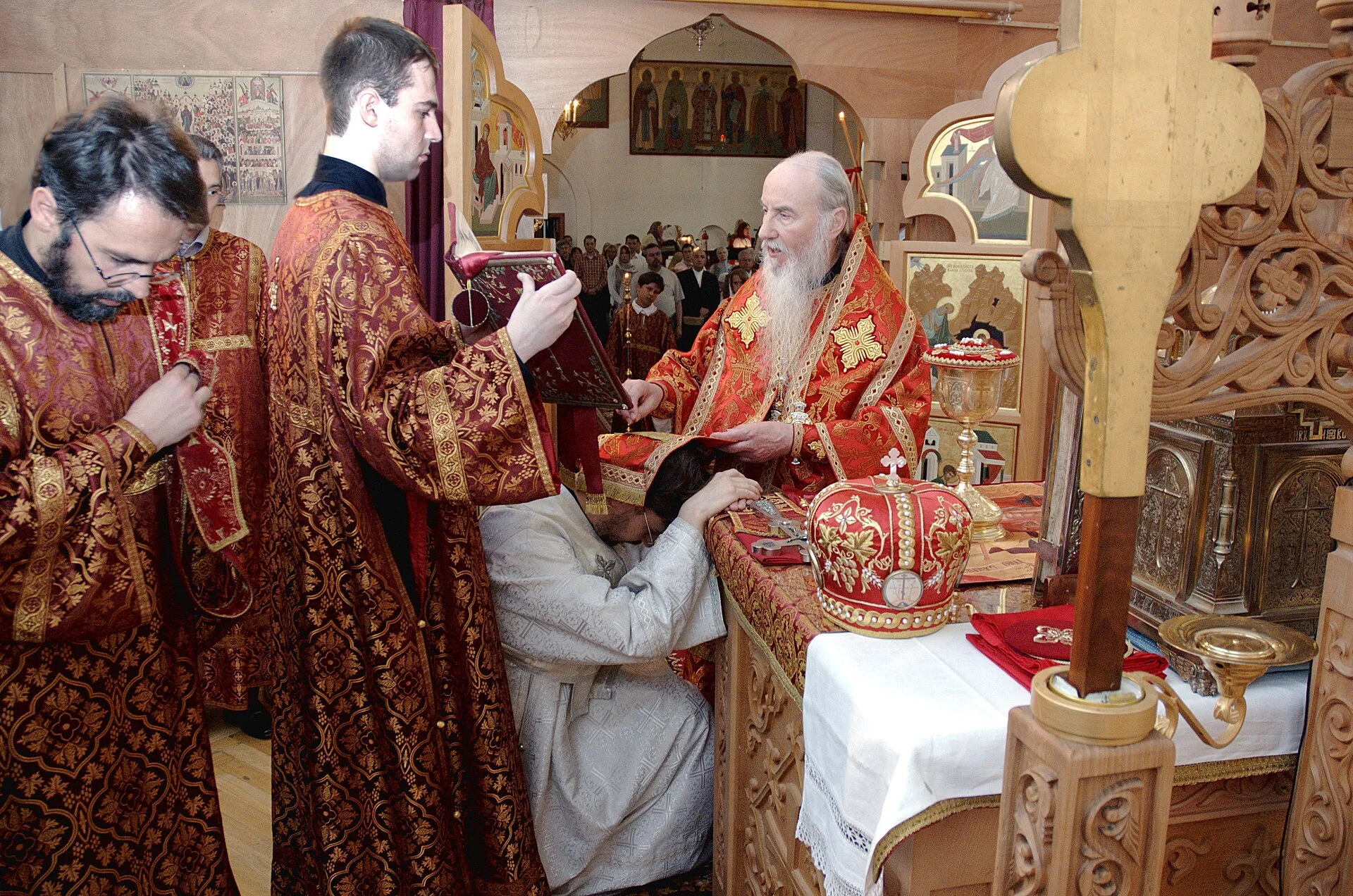
The sacrament in which, by the bishop's laying on of hands, a man is made deacon, priest or bishop. It is served only at the Liturgy and only by a bishop.
Reading options
Ordination is the only Sacrament performed only by a bishop. The candidate is led three times around the altar table, he kneels, the bishop lays a hand on his head and reads a prayer; after this the newly ordained is vested, and the church responds with the exclamation “Axios!” — Greek for “he is worthy.” This is no formality: thus the community aloud receives the one who will serve it.
Three degrees and three moments of the Liturgy
People are ordained deacon, priest and bishop — each time anew, skipping no step. The moment in the service is different for each degree: a bishop is ordained at the beginning of the Liturgy, before the reading of the Apostle; a priest after the Great Entrance; a deacon only after the consecration of the Gifts. The logic is simple: the higher the degree, the greater the part of the Liturgy the newly ordained must perform himself.
A bishop is ordained not by one bishop but by a council — by the Church canons, by no fewer than two bishops.
Cheirotonia and cheirothesia
A reader, subdeacon or altar server is also appointed with prayer and the laying on of hands, but outside the altar and not at the Liturgy. This is cheirothesia — a setting apart, not a Sacrament: it admits a person to the church ministers but does not give a degree of priesthood.
Marriage and rank
One may marry before ordination, not after. Therefore a married man preparing to become a priest enters marriage in advance; a widowed or unmarried candidate remains celibate. Bishops are chosen only from among the monastics.
Images
See also
Clergy and ranks
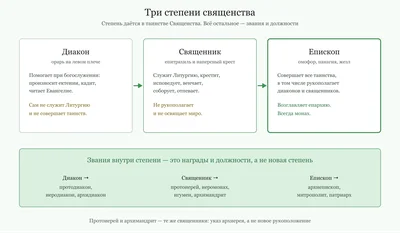
The three degrees of priesthood
Deacon, priest and bishop are the only three degrees; archpriest, hegumen and metropolitan are titles within them, not further degrees.
Clergy and ranks
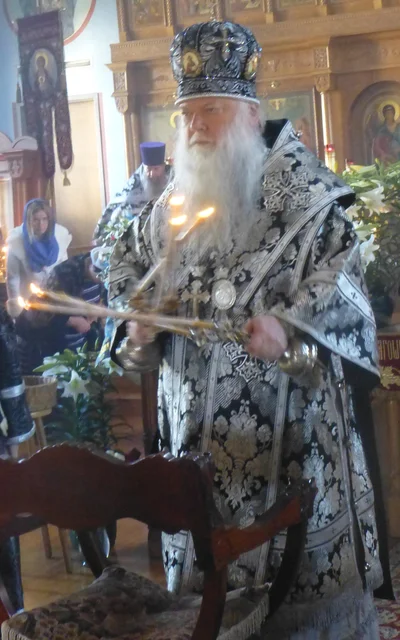
Bishop
The highest degree of priesthood: only a bishop ordains clergy and governs a diocese. Recognised by the omophorion, panagia and staff.
Clergy and ranks
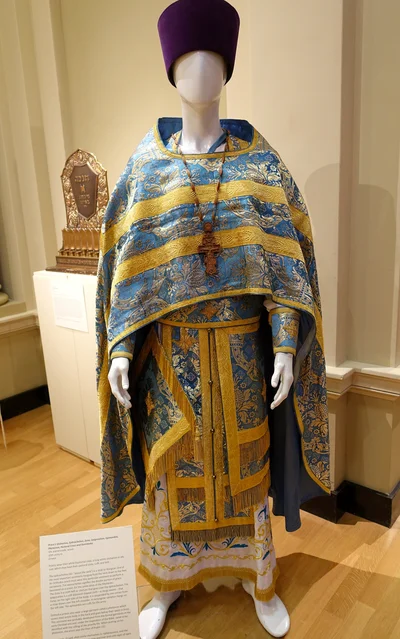
Priest
The second degree of priesthood: celebrates the Liturgy and all sacraments except ordination. Recognised by the epitrachelion and pectoral cross.
Clergy and ranks
Deacon
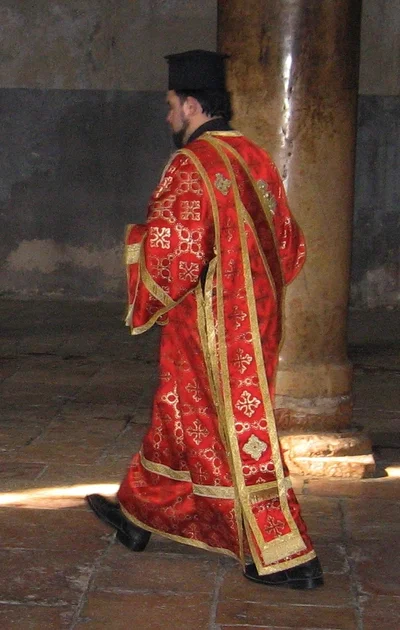
The first degree of priesthood: he assists at services and chants the litanies but celebrates nothing himself. Recognised by the orarion.
Vestments
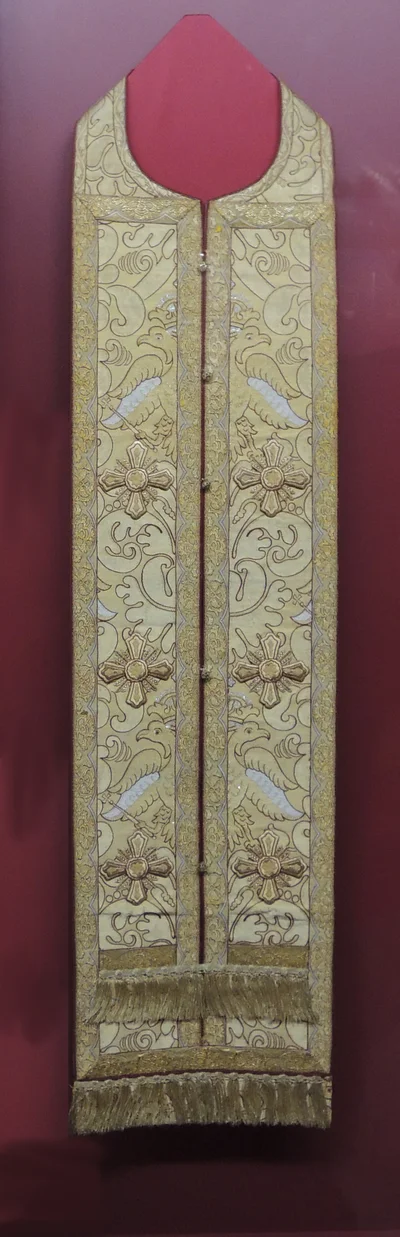
Epitrachelion
A long stole around the neck — the chief sign of priesthood; no service is served without it.