
Sacrament
Other names: The seven sacraments, The seven Sacraments
A church action in which something invisible is given through something visible — water, bread, wine, oil, the laying on of hands. There are seven of them.
Reading options
A Sacrament is not a rite with an especially solemn order of service. The difference lies elsewhere: in a Sacrament, through quite ordinary things — water, bread and wine, oil, a priest’s hand on the head — a person is given what he cannot do for himself. The water in the font remains water, and yet after immersion in it the person is considered new.
A Sacrament and a rite are not the same thing
A moleben, a panikhida, the blessing of a house, of Easter cakes or of a car are rites. They are good and needful, but established by Church custom, and the Church can change them, add to them, shorten them. The Sacraments were not established by custom: their basis is in the Gospel and in the life of the apostles, and the Church does not consider itself entitled to abolish them or to invent an eighth.
Why seven
Baptism, Chrismation, Confession, Communion, Marriage, Ordination, Unction. The number itself was not fixed at once: early Church writers have lists of different lengths, and the familiar seven was established in theological books considerably later than apostolic times. But its composition was never in dispute — the argument was about the count, not about the Sacraments themselves.
Who performs them
All seven are performed by a priest or a bishop, and Ordination only by a bishop. The only thing that, in danger of death, any baptized layman can do is to baptize the dying; the Church recognizes such a baptism as valid.
At the same time the Church insistently repeats that it is not a man who acts in the Sacrament. Therefore a Sacrament performed by an unworthy priest remains a Sacrament: its power does not lie in who performed it.
See also
Sacraments
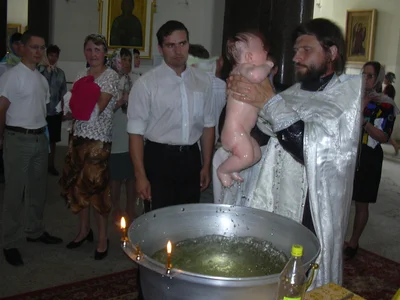
Baptism
The sacrament by which a person enters the Church: threefold immersion in water in the name of the Trinity. It happens once and is never repeated.
Sacraments
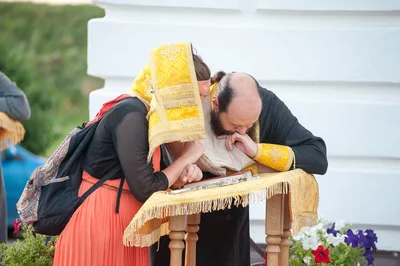
Confession
The sacrament of repentance: a person names his sins aloud before God, with the priest as witness rather than judge, and receives forgiveness.
Sacraments
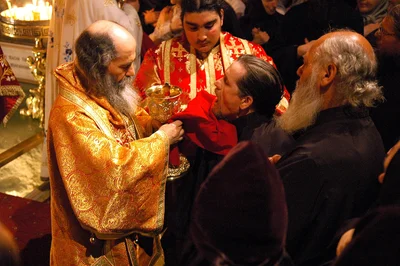
Communion
The central sacrament of the Church: at the Liturgy bread and wine become the Body and Blood of Christ, received by the faithful from the chalice.
Sacraments
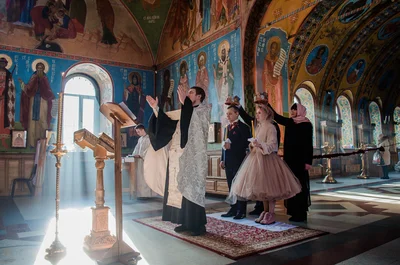
Marriage (crowning)
The sacrament of marriage: crowns are held over bride and groom, they drink from a common cup and circle the analogion three times. It does not replace civil registration.
Sacraments
Unction
The sacrament in which the sick are anointed seven times with blessed oil, with prayer for healing and for forgiveness of forgotten sins. It is not only for the dying.