Church utensils
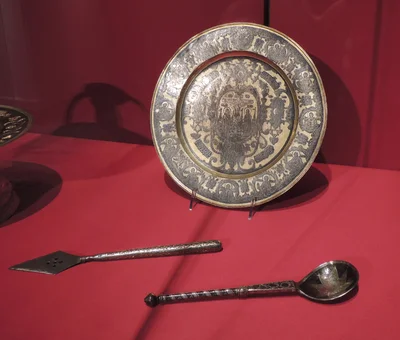
Liturgical spear
A flat double-edged knife shaped like a spearhead, used to cut the Lamb and the commemorative particles from the prosphora.

Что означают слова, которые звучат в храме: облачения, богослужения, таинства, устройство храма.
The seven sacraments of the Church: Baptism, Confession, Communion, Marriage, Unction and the rest.
Liturgy, vigil, vespers, moleben, panikhida — what each service is and how they differ.
Cassock, riassa, phelonion, epitrachelion, mitre — the clergy's garments and what they mean.
How to submit a commemoration note, light a candle, ask a blessing and prepare for confession.
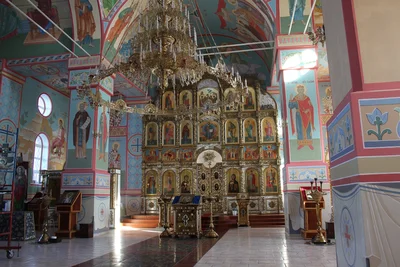
Narthex, altar, iconostasis, solea, ambo, kliros — the parts of a church and their purpose.
Chalice, diskos, censer, lampada, antimension, epitaphios — the objects used in worship.
Patriarch, bishop, archpriest, deacon, reader — who is who in church and how to address them.
What an icon is, how it differs from a painting, and how to recognise the most common images.
The Twelve Great Feasts, the patronal day, the four fasts, old and new style.
Typikon, Menaion, Octoechos, Triodion; troparion, kontakion, sticheron, litany.
Martyr, hierarch, venerable, blessed — why saints are titled differently and what it means.
Found: 229
Church utensils
A flat double-edged knife shaped like a spearhead, used to cut the Lamb and the commemorative particles from the prosphora.
Divine services
The older and longer form of the Liturgy, served only ten times a year — on the Sundays of Great Lent and a few other days.
Divine services
The ordinary form of the Liturgy, served on almost every day of the year — the one heard on any Sunday outside Great Lent.
Divine services
The second part of the Liturgy, from the opening exclamation to the Gospel and the sermon — the part the unbaptised were allowed to attend.
Divine services
The main part of the Liturgy, from the Cherubic Hymn to the dismissal: the Eucharist itself and the Communion of the faithful.
Divine services
A Lenten service at which the faithful receive Gifts consecrated in advance, on the previous Sunday; no Eucharist is celebrated at it.
Vestments
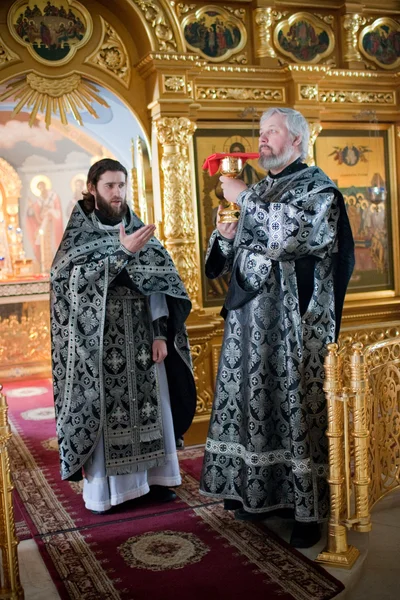
A long sleeveless cloak: plain black for a monk, coloured and striped for a bishop.
Sacraments
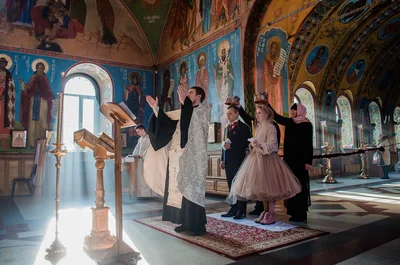
The sacrament of marriage: crowns are held over bride and groom, they drink from a common cup and circle the analogion three times. It does not replace civil registration.
Ranks of sanctity
Literally a witness: a Christian who could have renounced the faith and lived, and did not.
Divine services
The longest service of the daily cycle. Appointed for the morning, but in parishes it is served in the evening as the second half of the vigil.
Feasts and fasts
Two thresholds before Great Lent: meat is eaten for the last time on Meatfare Sunday, dairy on Cheesefare Sunday, with Maslenitsa standing between them.
Feasts and fasts
Days of general commemoration of the departed: two universal ones before Maslenitsa and Pentecost, three in Great Lent and one in early November.
Books and chant
The book arranged by calendar date: for each day, the service to its saint or feast. Twelve volumes, one per month.
Clergy and ranks
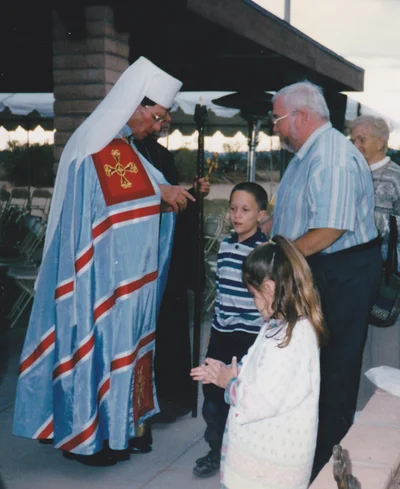
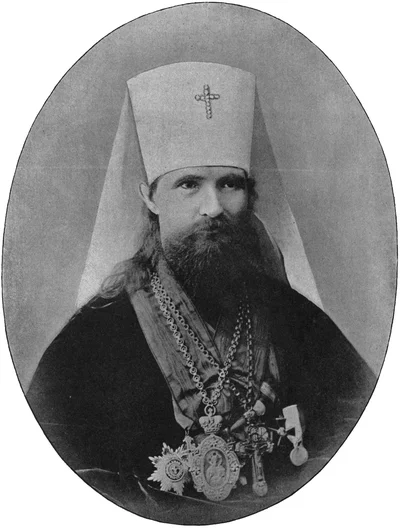
The senior title of a bishop, usually heading a major see or a metropolia; recognised by the white klobuk with a cross.
Icons
An icon linked with attested answers to prayer. It is the Church's veneration that makes an icon miraculous, not a property of the board itself.
Divine services
A short service of petition or thanksgiving, usually served after the Liturgy and lasting twenty to forty minutes.
Clergy and ranks
One tonsured with the vows of obedience, poverty and celibacy; monasticism and priesthood are separate things.
Feasts and fasts
Days with no fixed date: they are counted from Pascha and cover some eighteen consecutive weeks of the year.
Ranks of sanctity
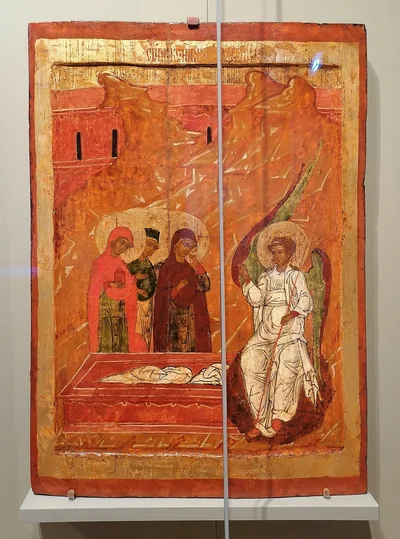
The women who came at dawn to the tomb to anoint the body and were the first to learn of the Resurrection.
Vestments
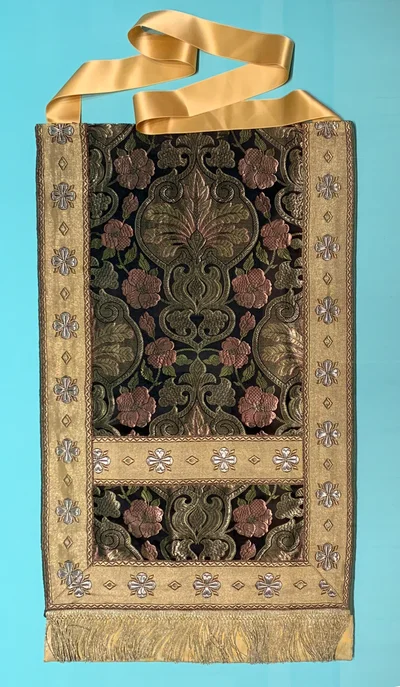
A rectangular cloth hung at the right hip — the first liturgical award given to a priest.
Parish practice
The feast of the saint whose name one bears — a personal church feast, unrelated to one's birthday.
The church building
The first room inside the church doors, between the porch and the nave; once the place of catechumens and penitents.
The church building
The main space between narthex and sanctuary where the congregation stands.
Ranks of sanctity
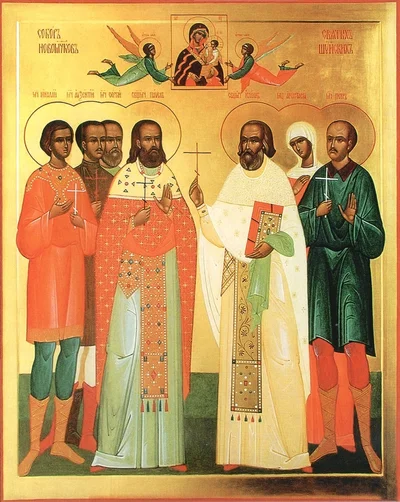
Those who suffered for the faith under the Soviet persecutions; their joint commemoration is the Synaxis of the New Martyrs and Confessors of the Russian Church.
Icons
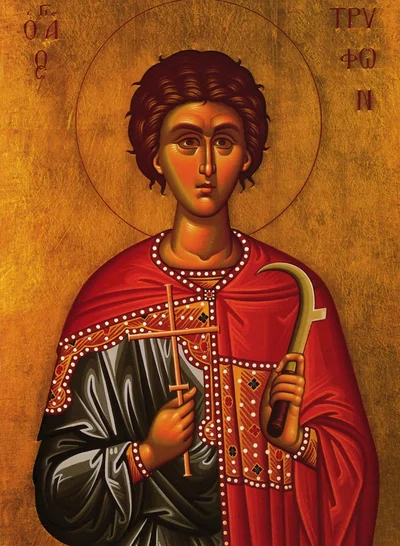
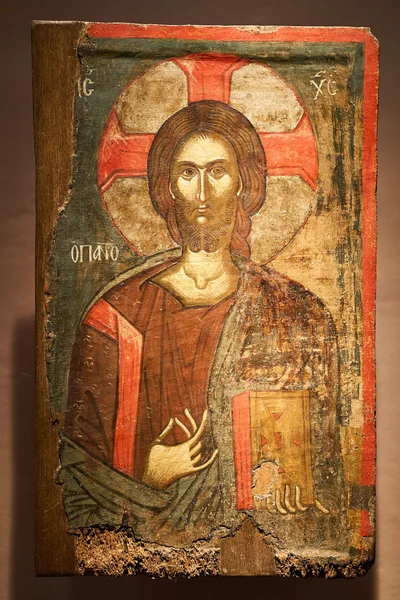
The circle of light around the head. Christ's always contains a cross and the letters Ο ΩΝ; everyone else's does not.
Divine services
The midnight service recalling the prayer in Gethsemane and the sudden coming of Christ; in parishes it is served once a year, before the Paschal Matins.
Clergy and ranks
One living in a monastery under obedience but not yet tonsured and bound by no vows; he is free to leave.
Books and chant
The collection of the most commonly used chants — and the plain melodies an ordinary parish choir sings most of the time.
Books and chant
The book of the weekly cycle: eight tones, each with services for every day of the week.