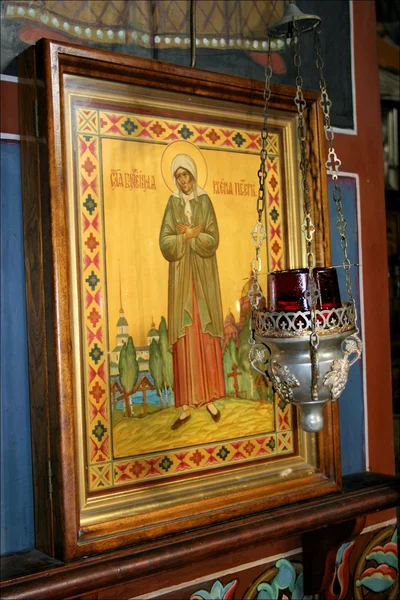
Ranks of sanctity
Blessed
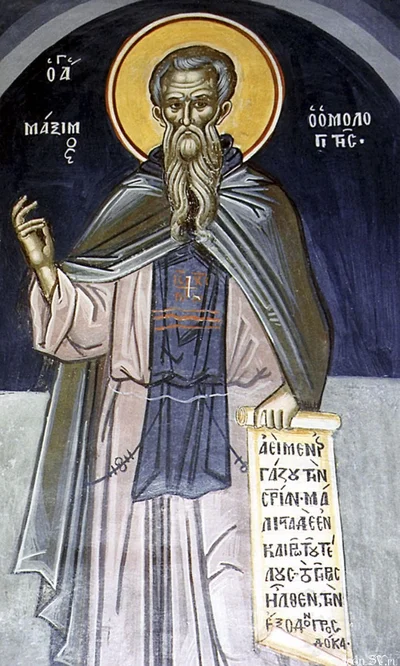
One word with two senses: the title of the holy fools, and an honorific for certain ancient teachers such as Blessed Augustine.

Что означают слова, которые звучат в храме: облачения, богослужения, таинства, устройство храма.
The seven sacraments of the Church: Baptism, Confession, Communion, Marriage, Unction and the rest.
Liturgy, vigil, vespers, moleben, panikhida — what each service is and how they differ.
Cassock, riassa, phelonion, epitrachelion, mitre — the clergy's garments and what they mean.
How to submit a commemoration note, light a candle, ask a blessing and prepare for confession.
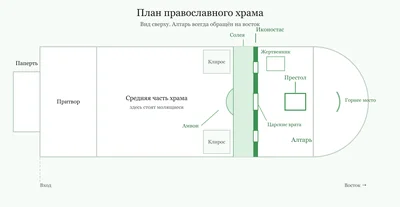
Narthex, altar, iconostasis, solea, ambo, kliros — the parts of a church and their purpose.
Chalice, diskos, censer, lampada, antimension, epitaphios — the objects used in worship.
Patriarch, bishop, archpriest, deacon, reader — who is who in church and how to address them.
What an icon is, how it differs from a painting, and how to recognise the most common images.
The Twelve Great Feasts, the patronal day, the four fasts, old and new style.
Typikon, Menaion, Octoechos, Triodion; troparion, kontakion, sticheron, litany.
Martyr, hierarch, venerable, blessed — why saints are titled differently and what it means.
Found: 229
Ranks of sanctity
One word with two senses: the title of the holy fools, and an honorific for certain ancient teachers such as Blessed Augustine.
Parish practice
A blessing asked of a priest and given by him; it replaces an ordinary greeting.
Parish practice
Bows from the waist and to the ground; the latter are not made on Sundays or from Pascha to Pentecost.
Feasts and fasts
The week after Pascha, served as one unbroken day: the royal doors stand open, there is no fasting, and a procession follows the liturgy daily.
Books and chant
The longest hymn of the service: nine odes, each with an irmos and several troparia, read at Matins.
Ranks of sanctity
The Church's decision that a person may be openly venerated as a saint — it does not make anyone holy, it testifies to holiness already evident.
Sacraments
Preparation for baptism — the talks explaining what a person is about to enter. In the Russian Church they are required before an adult is baptised.
Church utensils
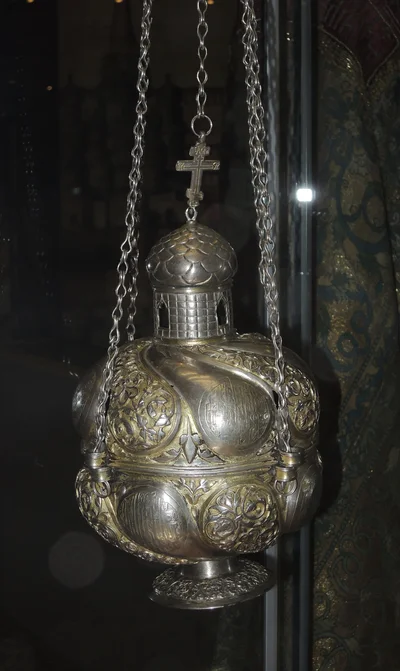
A metal bowl on chains where incense burns over hot charcoal, used to honour the holy things and the people.
Church utensils
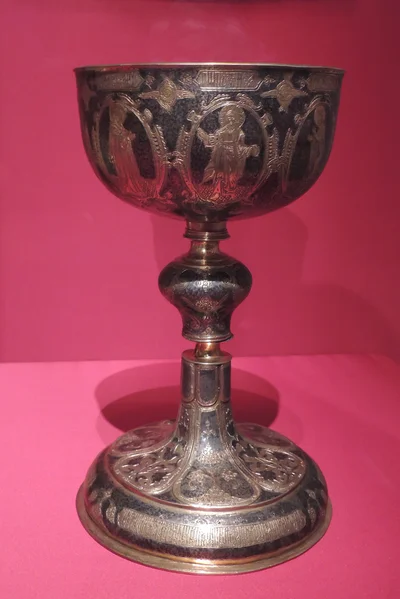
The footed cup in which the Blood of Christ is consecrated and from which the faithful receive communion.
Church utensils
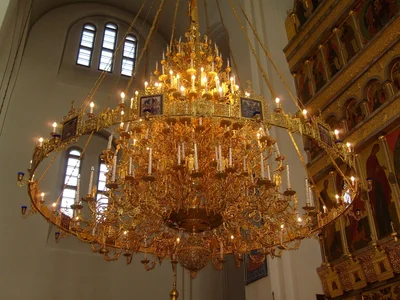
The great chandelier hanging under the dome, lit at the most festive moments of the service and extinguished for the penitential ones.
The church building
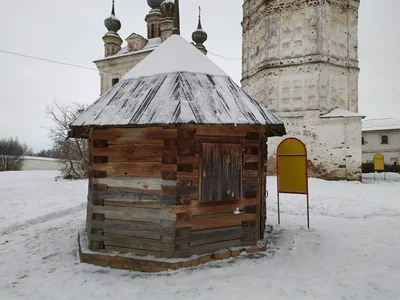
A small building with icons but no holy table; prayers and memorial services are served there, but not the Liturgy.
Books and chant
The Liturgy hymn sung while the Gifts are carried to the altar table, divided in two by the Great Entrance.
Sacraments
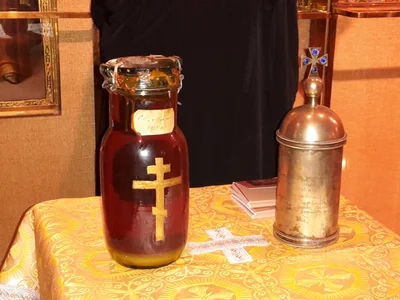
The sacrament that follows baptism at once: the priest anoints forehead, eyes, ears, breast, hands and feet with holy myrrh, saying 'The seal of the gift of the Holy Spirit'.
Parish practice
The name given at baptism — the one said at the Chalice and written in notes.
Icons
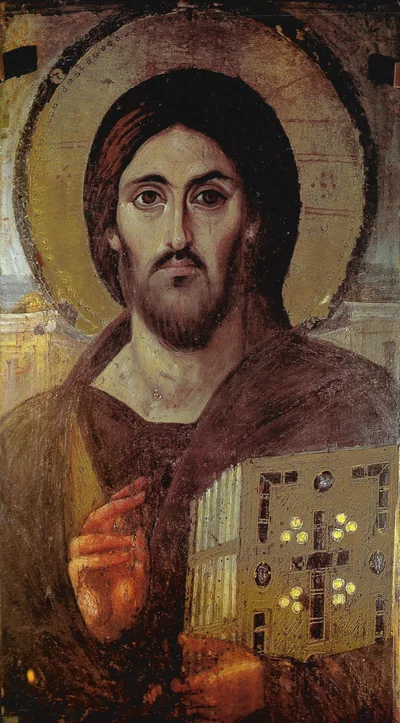
The principal image of Christ: the right hand blessing, the Gospel in the left. Found in the dome, to the right of the royal doors and at the centre of the deisis.
Parish practice
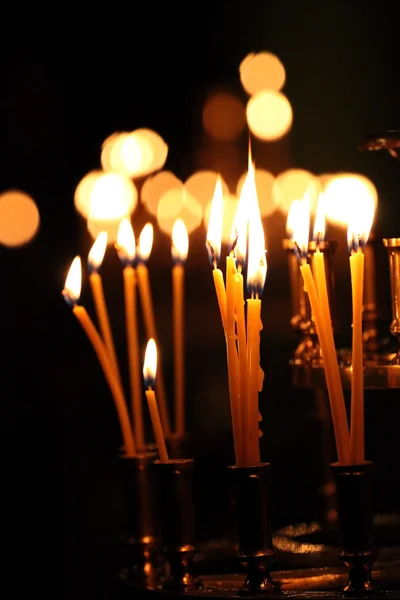
A wax candle set before an icon or on the memorial stand — a visible sign of prayer and a small offering.
The church building
The raised platform and steps before the church doors, still outside the building.
The church building
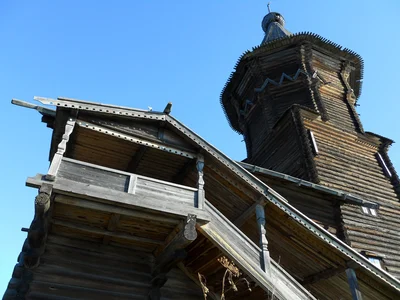
A building consecrated for divine service, divided into narthex, nave and sanctuary, with the sanctuary facing east.
Clergy and ranks
A layman responsible for the parish's practical affairs — the building, finances and property — elected by the parish assembly.
Clergy and ranks
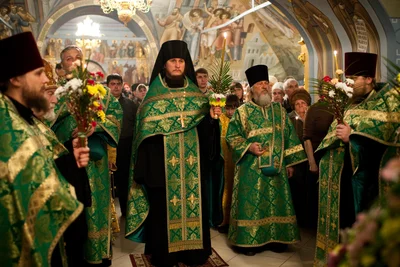
Those ordained to serve in the Church — deacons, priests and bishops — divided into married (white) and monastic (black) clergy.
Parish practice
A slip of names handed in at the church shop so that those people are commemorated at the service.
Sacraments
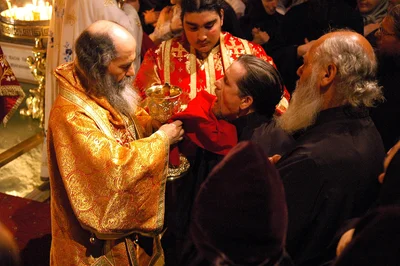
The central sacrament of the Church: at the Liturgy bread and wine become the Body and Blood of Christ, received by the faithful from the chalice.
Church utensils
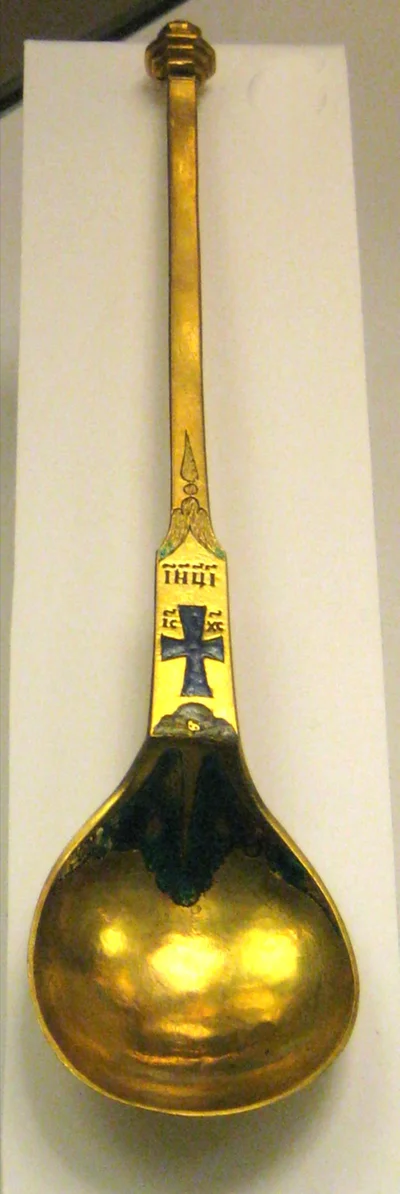
The long-handled spoon, topped with a cross, used to give communion to the laity.
Divine services
A short service before sleep, read after supper; in parishes it is heard mainly during Great Lent and on the eves of Nativity and Theophany.
Sacraments
The sacrament of repentance: a person names his sins aloud before God, with the priest as witness rather than judge, and receives forgiveness.
Ranks of sanctity
One who openly confessed the faith under persecution and suffered for it — prison, exile, torture — but survived.
Vestments
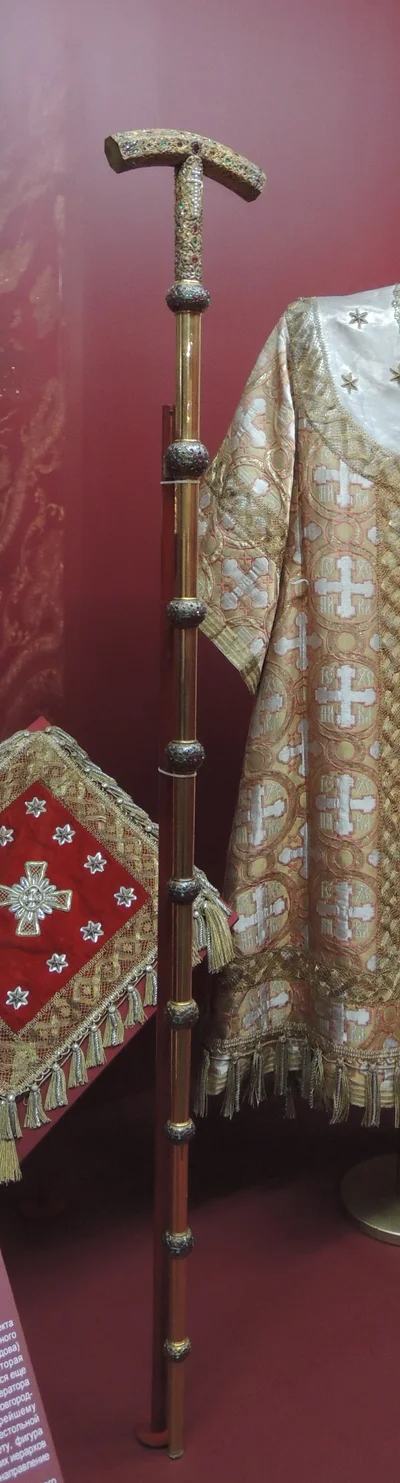
The bishop's staff — a sign of pastoral authority, held by a subdeacon during services.
Clergy and ranks
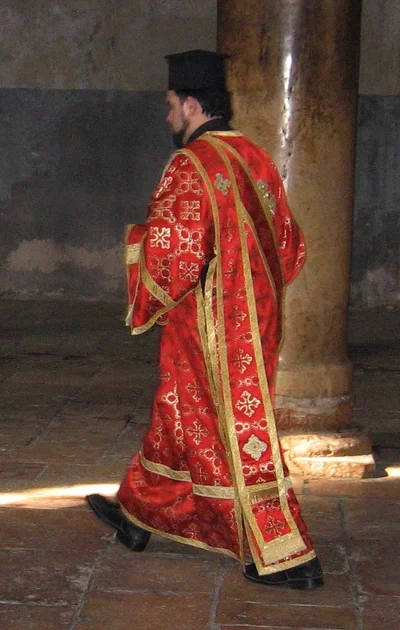
The first degree of priesthood: he assists at services and chants the litanies but celebrates nothing himself. Recognised by the orarion.
The church building
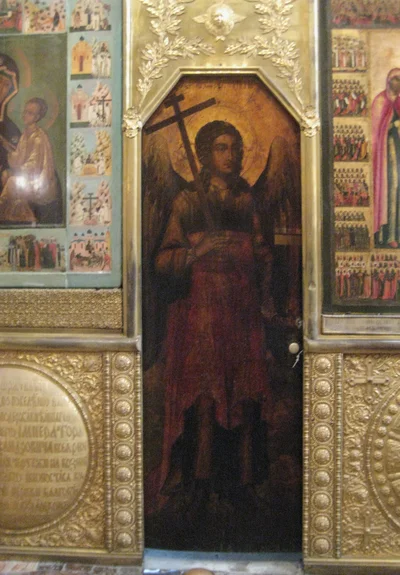
The single side doors of the iconostasis, north and south, used by deacons and servers.
Icons
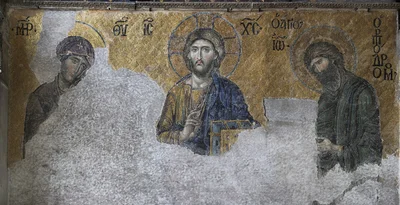
Christ between the Mother of God and John the Baptist, both turned to him in prayer; the second tier of the iconostasis is named after it.